阅读视图

发现新文章,点击刷新页面。
✇Tomshardware

‘World’s first fully transparent video game console’ is on its way to Kickstarter — Arduview handheld’s shell, PCB, and display are all transparent

作者 Mark Tyson

The first units of the ‘world’s first fully transparent video game console’ are shipping to founders, and now the project is on its way to Kickstarter. Above and below you can see images of the new Arduview. As you can see, it isn’t just another clear-shell console or handheld; the makers of this device have fully embraced the latest in transparent electronics. Thus, here we have a crystal shell handheld with a see-through motherboard, using a transparent display.
Arduview transparent handheld game console
Arduview
Arduview transparent handheld game console
Arduview
Arduview transparent handheld game console
Arduview
Arduview transparent handheld game console
Arduview

There have been quite a few transparent shell consoles over the years, with some of the best-known probably being the Game Boy Color in Atomic Purple and the N64 Funtastic series. Earlier this year we saw the new Commodore release a dazzling Starlight edition of the C64U. Most recently, Microsoft has revealed its translucent green Xbox Series X25.

Adruview founder Louis Huang told Tom’s Hardware that while he has always loved transparent consoles and clear-shell mods, he was disappointed that the transparency always just stopped at the frame. “So we pushed it further with a transparent OLED screen, board, and case. You can see straight through the whole device,” wrote the Babson College student.

That's enough about the console’s appearance, what about the guts of this handheld? Well, the Arduview project is based on the open-source Arduboy. You guessed it, this console is based on the Arduino platform, designed for DIY electronics tinkering and coding, and here it is purposed for playing hundreds of community-made 8-bit games on the ATmega32u4 microcontroller with its meager resources (2.5KB RAM, 32KB storage).

Huang highlights that the Arduview weighs just 50g (

If you are interested in this kind of handheld, the Arduview early access program still appears to be open, despite the site mentioning it runs “in August 2026.” I guess we are only just into September… I clicked the button and could still reserve a unit for $5 and benefit from the $49 'founder price.' Apparently it will be $100 at retail.

We don’t have a date for the Kickstarter launch yet, and perhaps there will be similar cheaper-than-$100 offers for early birds, and so on. However, the Kickstarter backers won’t get their hardware until 2027.

As an open-source platform, there are other makers and suppliers of Arduboy hardware, such as Seeed Studio. If the Arduview’s clear charms aren’t reeling you in but the portable platform appeals, you can grab the not-very-transparent Arduboy FX-C available on Amazon at $79.99, for example.

✇Tomshardware

Japan to mass-procure 3D-printed rocket-powered drone interceptor — Terra B1 capable of countering one-way attack platforms

作者 Mark Tyson

Japan’s military has decided to mass-procure Terra B1 interceptor drones. These drones are fabricated using 3D printers and are based on the tried and tested A1 model from Terra Drone, which began to be deployed by Ukraine earlier this year. A demo of the Terra B1 impressed Japan’s Maritime Self-Defense Forces enough to swing the mass-procurement agreement. These interceptors are expected to capably counter notorious drone threats like the Shahed designs and anti-radar loitering munitions such as the IAI Harpy, notes 3D Printing Industry news.

The Japanese Acquisition, Technology, and Logistics Agency (ATLA) is the body that rubberstamped the deal with Terra Drone. According to a press release from the latter, the Terra B1 is being mass-produced in Japan after successfully passing trials. It was just one of a range of designs put forward by 38 separate companies. To be chosen by ALTA, the B1 had to satisfy a number of criteria such as “effective range, flight duration, flight distance, maximum and cruising speed, guidance method, number of aircraft that can be controlled simultaneously, launch and recovery methods, integration with other systems, safety measures, [and] operational track record,” says Terra Drone. The first Terra B1 interceptors are expected off the domestic production lines sometime this month.

We witnessed the clamor for cheap and effective anti-drone solutions when the conflict between the U.S. and Iran erupted earlier this year. Gulf states seen as U.S. allies or sympathizers were repeatedly targeted by airborne Iranian threats, but their anti-air missiles weren’t designed to counter such attacks. Patriot missiles, for example, are too expensive and in too short supply to match drone threats 1-to-1. It wasn’t sustainable. It didn’t take long, therefore, for battle-proven Ukrainian anti-drone tech to be bought in.

Now we see Japan proactively following the cheap-yet-effective drone interceptor route. 3D printing is another emerging tech that will be applied here to enable Japan’s Self-Defense Forces “to acquire more effective drone countermeasure equipment with greater speed.” After a successful initial deployment by the Maritime Self-Defense Force, Japan’s Air Self-Defense Force and Ground Self-Defense Force may also look at customizing Terra B1 interceptors for their needs.

This isn't the first example of important synergies between drone and 3D printing technologies. We also recently reported on drones, drone parts, and other maintenance and repair essentials being 3D printed aboard the USS Essex. This was all done inside a compact containerized factory as the ship sailed to take part in RIMPAC 2026 around Hawaii.

✇Tomshardware

Iconic Packard Bell brand rises from the ashes after 13 years with the DotBook 14 at IFA — colorful and affordable Intel Twin Lake laptop is Europe-only, for now

作者 Mark Tyson

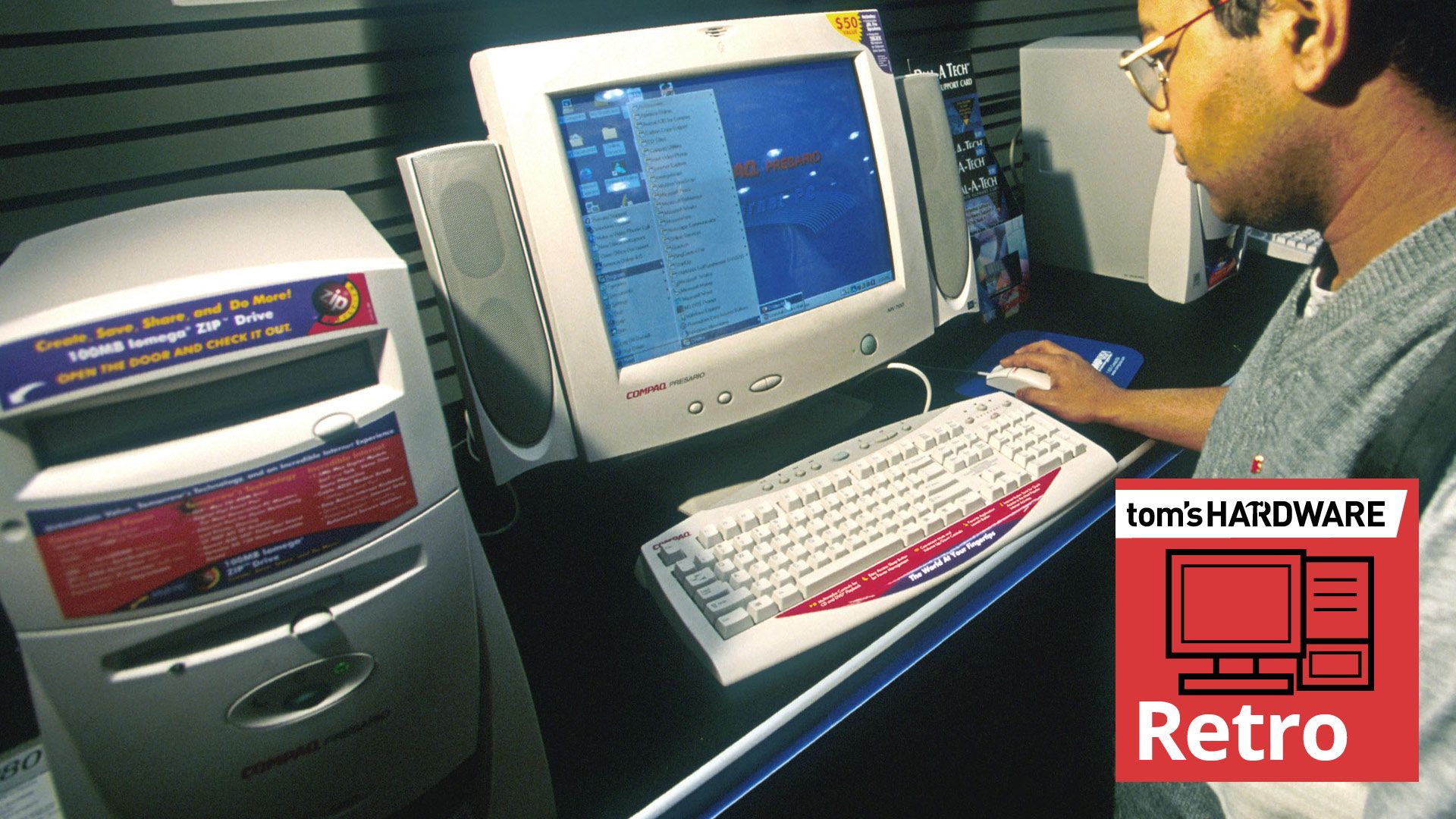
Many a 20th-century PC enthusiast’s first taste of computing came through the purchase of a Packard Bell pre-built, for rosy-tinted-spectacles good or scarred-for-life bad. It was a huge player in the mid-90s, with over 45% retail market share in the U.S. at its peak. Now Packard Bell is back, under the wing of Acer at IFA 2026, with the Taiwanese PC maker’s unveiling of the Dot family, including a laptop, headphones, input peripherals, and more. However, Packard Bell products will be European market exclusives for now, reports ComputerBase (machine translation).

Packard Bell Dot family devices and accessories
Acer / Packard Bell
Packard Bell Dot family devices and accessories
Acer / Packard Bell
Packard Bell Dot family devices and accessories
Acer / Packard Bell
Packard Bell Dot family devices and accessories
Acer / Packard Bell

The Dot series of products, including the headlining DotBook 14, are aimed at the cheap and cheerful end of the market, and it looks like they intend to cut through with quirky and vibrant designs. “Who needs a Formula 1 car for shopping?” asks Acer / Packard Bell on the official product page.

Looking more closely at this laptop’s hardware, it is a 14.5-inch model powered by a last-gen Intel Twin Lake chip.

Packard Bell DotBook 14 specs

CPU

Intel Core 3 processor N355, Intel Graphics

RAM/storage

Up to 16GB DDR4 RAM and 512GB storage

Display

14.5-inch 1,920 x 1,200 pixels IPS screen with up to 300 nits brightness

I/O

1 x USB C 3.2 Gen 1, 3 x USB A, 1 x HDMI 1.4, 1 x MicroSD Card Reader, 1 x 3.5mm headphone/speaker jack

Network

Wi-Fi 6 Wireless LAN, 802.11a/b/g/n/ac+ax, Supports Bluetooth 5.1 or above

Physical

324.0 (W) x 227.6 (D) x 17.9/17.99 (H) mm (12.76 x 8.96 x 0.7/0.71 inches) 1.3 kg (2.87 pounds)

Battery

45.6Wh 6000mAh, Battery life up to 7 hours

Audio

Two built-in stereo speakers, two built-in microphones

The Intel Twin Lake processor seems decent, with eight cores (all E-Cores) and running up to 3.9 GHz. The relatively poor touted 7-hour battery life is partly due to a smallish battery.

Design rather than tech specs will likely be an aspect of the DotBook that catches the eyes of laptop buyers. Acer shows off a bright orange clamshell design. The curious orange-among-the-white keys are the Escape, Enter, P, and B keys – does it make some sense now?

The price of the new Packard Bell DotBook 14 looks a little high considering the specs. We’ve seen sources suggesting a €499 price tag, which is roughly $580. But remember European prices include applicable sales tax so the price you see is what you pay. We note that cheap, performant, new Wildcat Lake laptops such as the Chuwi UniBook we reviewed are already around to spoil the DotBook party. Chuwi’s laptop costs $449 and ran for over 14 hours of battery life in our tests. Maybe our nostalgic U.S. readers should not be upset the DotBook is Europe-only.

Other Packard Bell Dot products showcased at IFA include colorful keyboards and mice. There are also some Dot headphones, speakers, a feature phone, a ring light, a food steamer, and even a turntable, for some reason. Mr. Leon Packard and Mr. Herb Bell could never have foreseen such gadgets when the corporation was originally founded nearly 100 years ago.

✇Tomshardware

Steve Wozniak-signed Apple 1 motherboard expected to achieve up to $800,000 at auction — fully working board also comes with a signed letter from Steve Jobs

作者 Mark Tyson

A “beautifully preserved in working condition” Apple 1 computer motherboard signed by Steve Wozniak, accompanied by a letter signed by Steve Jobs, is up for auction next month at Bonhams in New York. The official estimate for this precious piece of computing history is US$500,000 - US$800,000, but we note that this ‘Hatfield’ Apple 1 previously sold for $686,000 in 2013. Let’s take a closer look at what you could get for your slightly under a million dollars.

This isn’t just an artifact to be encased in a glass cabinet. You could do that, of course, but Bonhams assures auction watchers that this Apple 1 is a working model. It also seems to come with all the essential accessories you'd need to get some computing done.

The ‘Hatfield’ Apple 1 auction

(Image credit: Bonhams)

The motherboard is the centerpiece of the sale, of course. It is labeled “Apple Computer 1 / Palo Alto. Ca. Copyright 1976,” on the component side, with ‘NTI’ stamp underneath (second batch), and the board is complete with a white ceramic MOS Technology 6502 microprocessor, keyboard interface and connector, 3 original Sprague ‘Big Blue’ capacitors, 8KB RAM, expansion connector, cassette board connector, original Apple cassette interface board labeled ‘Apple 1 Cassette Interface Copyright 1976,’ explains the auctioneer description of the lot.

A period-appropriate monitor, cassette recorder, and pair of ASCII keyboards make up the 'Hatfield' Apple 1 hardware offering. Then there is also a selection of manuals, which would have come with the hardware bought in the late 1970s. An original Apple-1 Operation Manual; an original Preliminary Apple BASIC Users Manual with a green coversheet bearing Apple's original Newton logo, and an original Apple 1 Cassette Interface manual are included in the sale.

Another attraction of this auction is undoubtedly the Steven Jobs-signed letter. It is a letter from Jobs (dated 1978) to the original owner, Fred Hatfield, authorizing the exchange of the Apple 1 for an Apple II 4k board. The letter came in response to Hatfield complaining about the lack of software for the Apple 1. Jobs signed the letter making the offer, and it includes his title at the time: Vice President, Operations of Apple Computer Inc.

We’ve reported on Apple 1 auctions before, and this Hatfield sample is one of the most desirable Apple hardware artifacts, being from a batch personally designed and hand-built - then signed - by Steve Wozniak. The Apple 1 computer was first demonstrated in early 1976. Fellow Homebrew Computer Club members and Byte Shop visitors would buy up the first batch of (50) Apple 1 devices in the summer of 1976. Fred Hatfield, a computing enthusiast working at Computer Data Systems in Columbus, Ohio, bought his model sometime in 1976 from the second batch made available. In total, less than 200 Apple 1 systems were made.

The Hatfield Apple 1 last changed hands in 2013, achieving $686,000 at auction. Now, 13 years later, the estimated range of US$500,000 - US$800,000 might seem low, but sometimes auctioneers do this to catch broader interest. This Apple 1 will be sold as part of the History of Science, Technology & Computing auctions at Bonhams, New York, between October 4 and 14. You will be able to take part in the auction online.

✇Tomshardware

Tape companies ship 160 exabytes of storage in 2025, AI data demands drive 'unprecedented data growth' — capacity shipped in Q1 2026 rose 57% YOY driven by AI, LTO‑9 momentum, and early LTO‑10 uptake

作者 Mark Tyson

Tape storage companies continue to celebrate substantial growth. The format might seem archaic in the mid 2020s but on Tuesday, the LTO Program Technology Provider Companies (TPCs), HPE, IBM, and Quantum Corp., boasted of capacity shipment growth of 57% YOY, in Q1 2026. You guessed it: AI data center demands have contributed to bumper tape shipments, but so have the requirements for traditional archive workloads and cyber-resilient backups.

Last year, when we pondered over the LTO shipment numbers, we contrasted the medium’s undeniable success with Elon Musk’s DOGE crusade to wipe it out. It was criticized and dismissed for being “old technology.” But there’s certainly life in this old dog, as there were 176.5 exabytes of compressed LTO tape capacity shipped in 2024. Shipments were thus up 15.4% vs. the prior year and hit new records.

There was a small dip in LTO capacity shipped in 2025, an aberration characterized as "bad weather" by the TPCs on social media. This modest 9% YOY decline meant that 160.3 exabytes of tape storage were shipped last year. However, “shipped capacity was higher than any other year in history save 2024 itself,” wrote an LTO program representative in an email to Tom’s Hardware. The latest figures also show LTO demand is back with a vengeance, with shipped capacity in Q1 2026 a stunning 57% higher than in Q1 2025.

“We are seeing unprecedented data growth combined with increasing cost, energy, and cyber resilience pressures across the industry,” said Hugues Meyrath, CEO, Quantum. “As organizations adapt to this new reality, tape is increasingly viewed as a strategic component of modern data infrastructure, delivering predictable economics and resilient long-term data retention at scale.”

LTO-10 40TB announcements

(Image credit: The Linear Tape-Open (LTO) Ultrium Format companies)

Other contributors to growth, evidenced by the latest figures, were the market’s readiness for LTO-9 and LTO-10. The former is still being promoted by TPCs as a very worthwhile upgrade to stickers reliant on older generations. LTO-9 tapes support up to 18TB uncompressed or 45TB of compressed data according to the program companies. 2026 capacity shipment figures have also benefited from the early ramp of LTO-10. With these latest-gen cartridges up to 40TB of data per cartridge natively, or up to 100TB compressed, can be stored. Meanwhile, TPPCs are ensuring tape will continue to be attractive with roadmaps extending to LTO-14, which offers up to a gargantuan 576TB native capacity per cartridge, and can fit up to a touted 1,440TB compressed.

It is difficult to argue with the strong start for LTO shipments in 2026. The TPCs assert this is due to tape belonging “in every storage mix as an anchor against disruption.” LTO is also heralded as the storage medium possessing “the lowest cost per terabyte, provides excellent cyber-resilience, and is highly power-efficient.”

❌