❌

普通视图

发现新文章,点击刷新页面。
昨天 — 2026年10月25日Tomshardware

YouTuber escapes the modern AI tech market by recreating his 1996 PC

These days, it's exceedingly difficult not to be jaded and weary about the tech market. Memory, graphics cards, and now storage are becoming impossible to obtain; there's basically no new consumer hardware being released; and there's AI everywhere. Technology YouTuber TrashBench (TB), too, is tired and was harkening back to the halcyon days when everything was fresh and straightforward — so he went back in time with a retro build.

More specifically, he recreated a facsimile of the first machine his parents bought him in 1996 when he was a wee lad, to play The Need for Speed: Special Edition — a PC-improved version of the first ever game in the series. According to the man, it was thanks to this machine that he fell in love with computers in general.

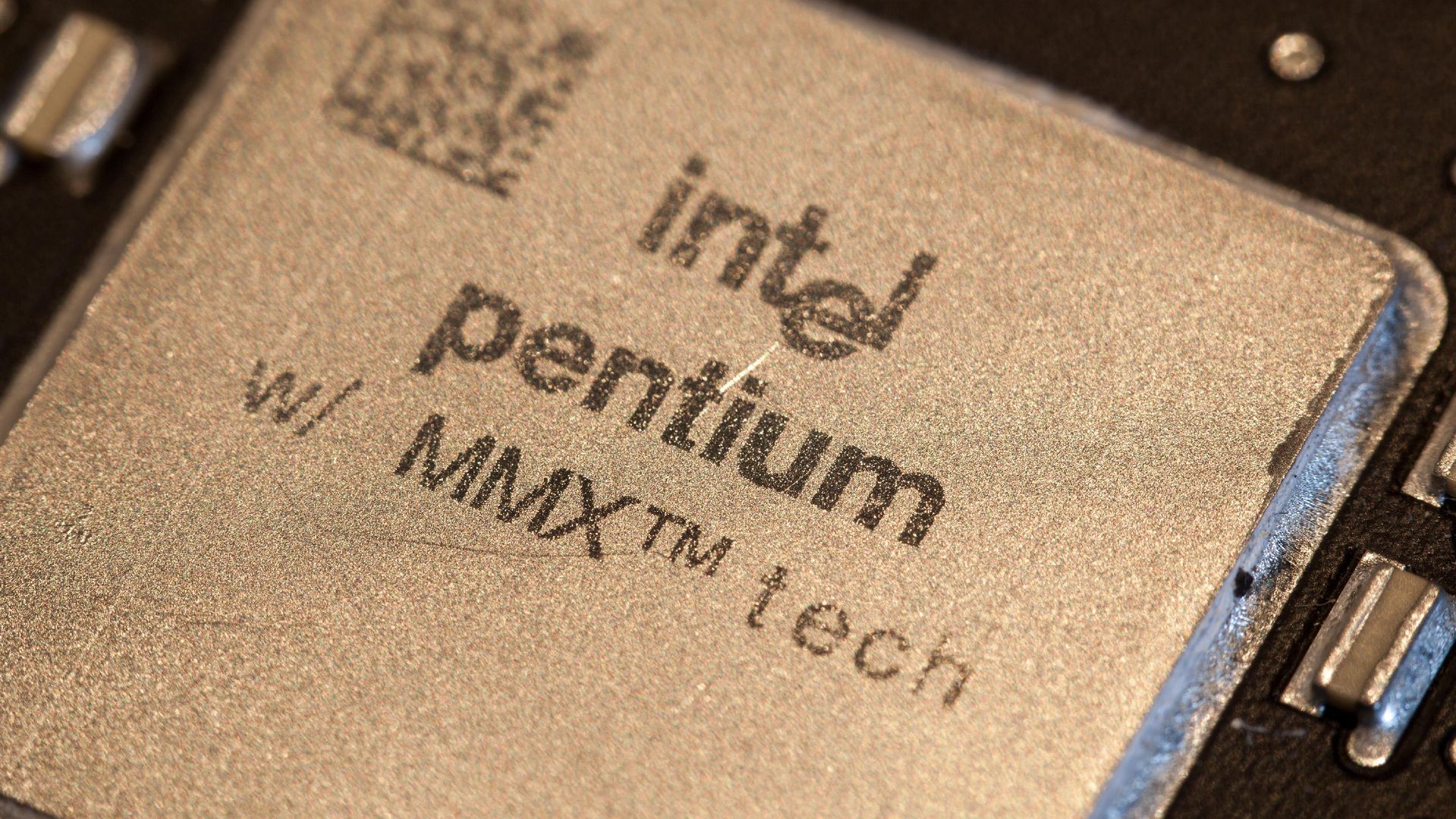
TB kicked things off with an Intel Pentium MMX 200 MHz CPU sitting atop an Epox Pronix EP-P55-BT motherboard, boasting what was at the time a new, fresh, convenient ZIF (Zero Insertion Force) socket. This motherboard popped up during the RAM transition from SIMM to DIMM, which is why you'll see two slots of each on the top. 32 MB of RAM went right in, a generous amount for the year.

Funnily enough, the CPU barely needed cooling, which is why a simple 40-mm fan suffices, although anyone who's lived through this era will tell you that those were guaranteed to start whining after just a few months of heavy usage. There is no case cooling, as it's just not needed.

However, he did need to correctly set the motherboard's jumpers, as such luxuries like automatically detecting CPU speed and voltage were just becoming normal. Yes, this meant that you could burn out a CPU if you played the jumper game wrong.

For graphics card duty, he enlisted an S3 Trio32 card, which was pretty, ahem, modest even in the era, and had no 3D rendering capabilities whatsoever. In this era, the now-ubiquitous 3D accelerator cards were just coming into fashion, and he eventually replaced the S3 with a Matrox Mystique 3D, another offering of dubious quality. Yet those were happy days, as any form of 3D acceleration was far better than none.

Storage comes by way of a Western Digital Caviar 22100 hard drive with a whopping two gigabytes of storage and the uncanny ability to emulate the dulcet tones of a jackhammer. TB eventually swapped it later for a roomier 80 GB unit. Again, due to the idiosyncrasies and constant transitions of the era — hardware doubled in speed and capacity nearly every year — he had to set a jumper to clip it to the likely amounts of either 8.4 GB or 33.4 GB, as the addressing space of BIOSes and disk controllers of the time were limited.

The build wraps up with an OG Sound Blaster 16 sound card and a CD-ROM drive. After test-driving the machine with Need for Speed, he moved on to Microsoft Flight Simulator 98, which necessitated a joystick. Naturally, he got the much-beloved Quickshot QS-123, a staple in many home PCs, and one that needed replacement in about six months, as its build quality matched its price.
昨天以前Tomshardware

Deepseek's latest AI model is smarter than ever, but its low running costs come at a price

Deepseek just upgraded its V4.1 Flash open-weight model to revision 1017. What looks like a mere point revision may actually be a significant step forward in model efficiency. On the product page, Deepseek uses the slogan "wish-driven programming made real," a likely reference to the colloquial "vibe coding," implying the model is a good fit for open-ended tasks with broad descriptions. However, while the model is indeed cheap and scores well, it can be hallucination-prone.

LLMs are roughly divided into two categories: closed commercial efforts from frontier labs, whose models are expensive to run but deliver excellent results, and Chinese open-weight competitors that broadly exchange reliability for a much cheaper running cost, particularly for long-running agentic tasks.

Deepseek V4.1 Flash (DSF) is a Mixture-of-Experts (MoE) model with 552B total parameters, 16B of which are active during runs. The model is multimodal, accepts both text and images as inputs, and its context window length measures the now-standard 1 million tokens.

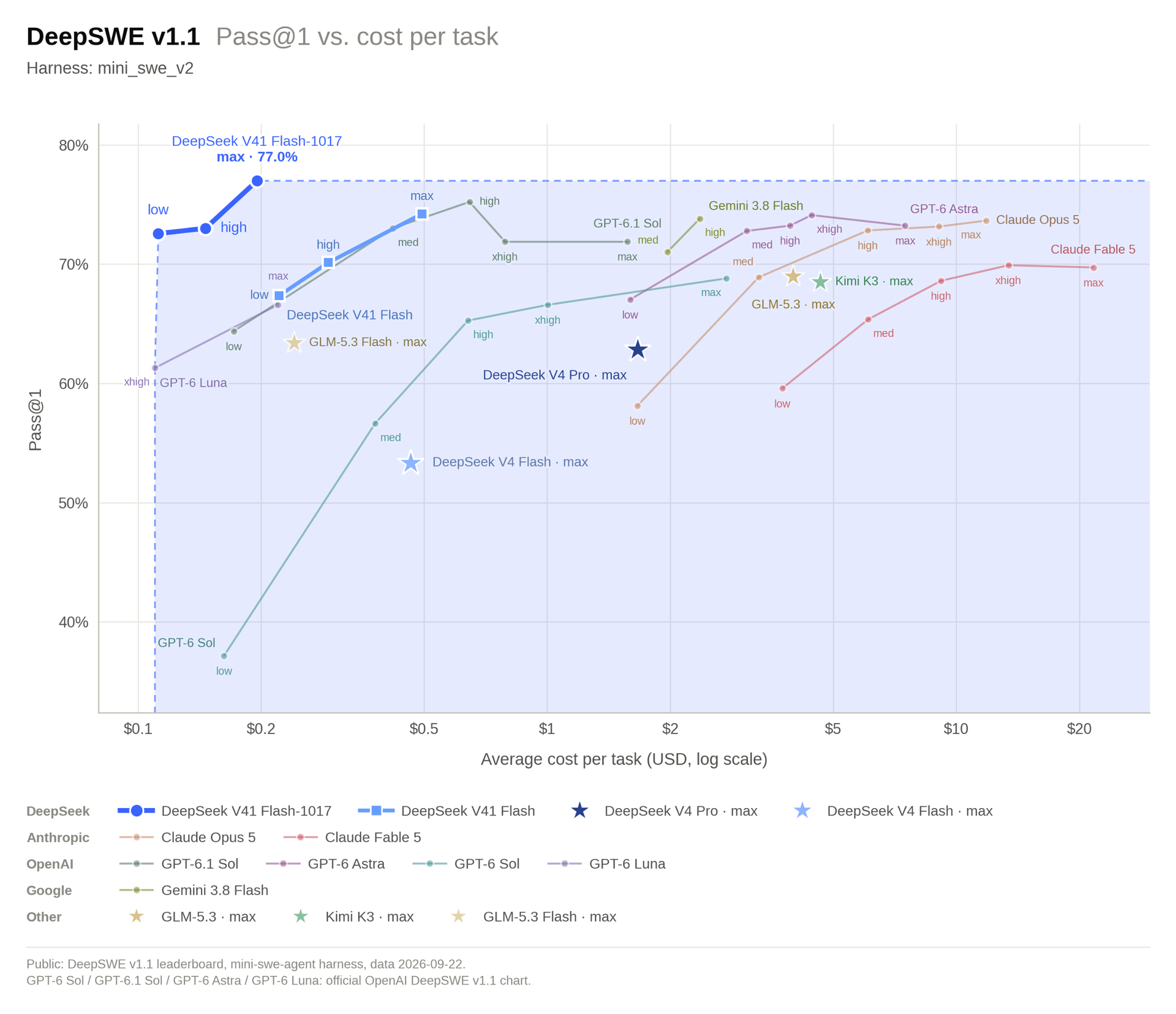
According to Deepseek's internal benchmarks, the model slots in neatly between GPT-5.6 Sol and Claude Opus 5, even beating Anthropic's LLM in task tests. That's already a strong showing, but this latest revision of DSF shines in the performance-per-task base and token efficiency. The upgrade from V4 Flash to V4.1 Flash significantly slashed hardware requirements, with V4.1 using only one-quarter of the HBM and one-eighth of SSD storage for its KV cache compared to its predecessor, spending only 890 bytes per token entry.

The company illustrates the point with a cost-per-task graph based on DeepSWE's dataset from September 2, adding its own data points for both DSF and DSF-1017. Both variants cluster in the desirable top-left area, and even low-effort runs of DSF-1017 offer a task completion rate in the ballpark of "max" settings for pricey competitors. It's worth noting that DeepSWE is only one of many benchmarks, but this is nonetheless an impressive result.

DeepSWE - Deepseek V4.1 Flash - 1017

(Image credit: Deepseek)

Even at Deepseek's own pricing (remember, this is an open-weight model you can run anywhere), the price at off-peak times per million tokens is just $0.15 for input and $0.6 for output. On cache hits, the input token cost drops to a mere $0.003. It's worth keeping in mind that third-party providers have undercut Deepseek API in the past, so those figures could go lower if you shop around inference providers. Deepseek also offers search functionality at $0.75 per 1,000 queries, an amount that undercuts competitors, with the closest one being Parallel at $1.

DeepSWE isn't the only benchmark around, either. Artificial Analysis ranks DSF-1017 (max) as only #2 on its intelligence index within the large open-weight class, with a score of 45. For reference, the most seemingly intelligent model, Claude Opus 5.5 (max with fallback), rings in at 58. It's one of the fastest models in its category, too, and its cost-per-task is edged out only by Xiaomi's MiMo V2.6-Pro.

This all sounds too good to be true, but everyone knows the adage of "fast, cheap, and reliable, pick two." So what's the catch? In one word: hallucination. Just because a model is smart doesn't mean it's reliable. Broadly speaking, users prefer models that don't answer when they lack supporting facts, and DSF-1017 doesn't seem very good at knowing what it doesn't know.

Artificial Analysis' Omniscience benchmark is quite clear on this matter, ranking the model among the lowest. It answered questions correctly 43% of the time, which is among the best for open-weight models, but inferior to the proprietary competition. That would be perfectly acceptable if it skipped answers without a foundation, but it hallucinated 67% of non-answers.

The benchmark's main index grants points for good answers and deducts them for wrong ones, and non-answers don't count. DSF-1017 gets 5 points, compared to Kimi K3-max's 20, with the frontier models coming in at 42+. Ultimately, this means DFS-1017 is by no means incompetent — much the opposite —but one should be careful about which tasks to assign to the model.

Tasks with verifiable outputs like programming, OCR with review, and format conversions will be fine, as the agent can run verification steps against its work and try again. However, open-ended research, looking up facts, and interpreting or drafting highly precise documents are tasks better suited to a frontier model — or, you know, a human — as hallucinations likely won't be properly reined in and results won't be very trustworthy.

"Fast and loose" seems to be a forming trend for highly competent open-weight models, too. Several months ago, when Kimi K3 was released, everyone raved about how effective and cheap it was, and how it proposed to offer frontier-level intelligence for a fraction of the price. My personal experience with Kimi was short-lived, as even short but precise fact look-ups came up with hallucinated information, and Artificial Analysis' data seems to back this observation up.

Nevertheless, open-weight models remain important both to make AI agents more accessible in absolute dollar terms and potentially as a tool to drive down the cost of intelligence when facing down potential price rises from frontier labs.

Leaked private keys for eight CA certificates let any attacker impersonate any domain

Most everyone in the tech space has been living in interesting times, but this week isn't done yet, and it's already quite special for systems administrators worldwide. They already had to deal with the critical PHP RCE vulnerability, but they also have to update untold amounts of machines and software, thanks to eight insecure intermediate CA certificates that can allow attackers to impersonate any domain and/or pretend their malware is from a legitimate source.

An attacker anywhere in the path of your network traffic, like, say, in a company or government network, public Wi-Fi, your ISP, or one of any number of government entities, can intercept your connection and pretend that they're any website, like apple.com, amazon.com, or bankofamerica.com. If not updated, your operating system and installed software would be none the wiser. Additionally, with the code signing certificates, an application you download can be shown as completely legitimate from, say, Microsoft or Google.

The way that software checks a certificate is legitimate is by verifying its "chain." For example, a website like tomshardware.com has a certificate, issued and signed by an intermediate Certification Authority (or CA, a certificate-selling company), and whose certificate, in turn, is trusted and signed by root certificates — whose exceedingly precious keys are kept offline in safes. In this week's event, Indian CA firm eMudhra issued six TLS and two code-signing intermediate certificates with easily guessable keys.

Your operating system and potentially tens of different applications on your machine all keep a list of which root certificates and CAs are trusted. Browsers also keep a list of those not to trust, called a revocation list. These lists are updated periodically as screw-ups happen, just like the one that took place this week. And now they all need to be updated again, by revoking the eight CAs, removing the one affected root certificate, or just hard-coding a rejection of all eight affected keys.

There's a silver lining: recent versions of Chrome, Brave, Firefox, and Safari all enforce a feature called Certificate Transparency that consults a public read-only log of certificate issuances, and blocks any that aren't mentioned. Google reports that no certificates signed by the six affected intermediate CAs were logged, so if regular web browsing is all you did, you should be safe — but still check all your software for updates nonetheless.

The problem here is the sheer amount of machines and software that needs updating: PCs, servers, operating systems, phones, tablets, routers, web browsers, web browsers wrapped in apps, virtual servers, virtual machines, Docker and other containers, programming languages like Python, Go, Node.js, Rust, standalone download utilities like curl, and probably tens or hundreds of other categories. Additionally, we discussed things that are expected and likely to get updates. Old routers, smart and IoT appliances, and old computers could eventually present a problem.

As for the technical details, eMudhra issued six intermediate CA certificates and two intermediate code-signing certs with rather unadvisable private keys. The private key is the secret half of the two parts of a certificate, and for some reason, those of the aforementioned certs were only 1 byte long — thus a number from 0 to 255, trivial to brute-force in a split second. How the heck that happened is still under investigation.

AMD's FSR 4.1 now works on Radeon RX 6000 cards, Xbox Series X and S, and Ryzen AI Max, AI 9, and Z2 SoCs

Earlier this year, AMD brought the previously RX 9000-exclusive FSR 4 upscaling tech to Radeon RX 7000-series graphics cards and promised an early 2027 release for RX 6000-series products. Christmas has come early for RDNA 2 and many other Radeon gamers, as Radeon honcho Jack Huynh has announced an FSR 4.1 release for Radeon RX 6000-series cards, Xbox Series X and Series S consoles, Ryzen Z-series handhelds, and machines with Ryzen AI Max and AI 9 chips today.

To accomplish this feat, AMD says it tweaked FSR 4.1's neural network model to support the INT8 shader hardware (as opposed to the higher-precision FP8 matrix acceleration hardware on Radeon 9000 cards). Additionally, the version specific to handhelds is slimmed down even further, to less than half the size of the full one.

AMD says that compared to FSR 3, games on the aforementioned GPUs and APUs will now deliver better image quality, all else equal. With Cyberpunk 2077 running in FSR Balanced mode at 4K, our quick testing with a Radeon RX 6900 XT shows that running FSR 4 costs just about 13% performance, a small price to pay for sharper and more stable visuals, especially in motion.

And the higher upscaling quality of FSR 4.1 might let gamers use Performance mode where they might previously have used Balanced, or so on, which might offset that performance cost.

There are more goodies in store, too. The Radeon team says that FSR Frame Generation now ought to have better frame pacing, resolving a longstanding complaint with the tech and potentially making for smoother gameplay with framegen enabled. Support for the Vulkan API with FSR 4.1 is set to arrive at some point, as well, a boon for some games and console emulators. Finally, AMD says FSR Ray Regeneration will also be coming to more games, too. The company showed the tech running in Warhammer 40,000: Darktide, and that integration is available now.

To get all this goodness into your GPU, you can download the just-released Radeon 26.10.1 drivers from the AMD Adrenalin application or directly from AMD's website. The updated software also adds support for Call of Duty: Modern Warfare 4, Star Wars: Galactic Racer, and Final Fantasy Resonance. You can check out the full release notes here.

For owners of Xbox and Ryzen Z2-series handhelds, AMD says that an update from their manufacturers will be forthcoming, as those devices depend on OEM-specific drivers.

We're pleased to see that Radeon gamers are getting upgrades for their existing graphics chips along the lines of what Nvidia has been delivering throughout 2025, because the way things are going, it looks like it'll be around 2077 before there will be a new gaming graphics card launch. If you're an RDNA 2 gamer, go give FSR 4 a shot and see what you think.

US restarts three shut-down nuclear reactors to feed AI data centers

The current and expected power draw of AI data centers has been the subject of strong discussion, but today, there appears to be some good news. Three U.S. nuclear reactors are being restarted after many years offline, expected to bring 2.25 GW total to the grid. According to a report, the Palisades Nuclear Plant in Michigan, the Crane Clean Energy Center on Three Mile Island (Pennsylvania), and the Duane Arnold Energy Center in Iowa are getting a fresh set of proverbial tires to get rolling again.

The Palisades plant was under active decommissioning, apparently marking this event as the first time a nuclear reactor is being put back to work after dismantling had begun. Despite what sounds like a tough starting point, this plant is the one that's furthest along, as it was loading fuel in August 2026 and is expected to generate 800 MW around March 2027.

Much like the other projects mentioned here, the Holtec Palisades firm running the reactor took a loan from the U.S. Department of Energy. Palisades borrowed from the DoE under the Biden administration's 2024 investment in nuclear energy, while the others were issued under the purview of the Trump administration's 2025 push.

The second reactor is the Crane Clean Energy Center on Pennsylvania's Three Mile Island, repurposing the facility's Unit 1. The project started in 2024, with Constellation Energy saying it would spend $1.6 billion total for the reactor. The firm then took a $1 billion loan from the Department of Energy in 2025. Microsoft is set to be the main customer, with a 20-year contract. This facility is projected to bring 835 MW online sometime in 2027.

This facility was famous in 1979 for the partial meltdown of its Unit 2, although mercifully the event had relatively tame environmental consequences. Constellation's ongoing project is restoring and refurbishing Unit 1, which didn't show significant issues until its 2019 decommissioning and has undergone a safety inspection from the Nuclear Regulatory Commission. This entity still needs to grant its blessing before the reactor starts loading fuel.

The Duane Arnold Energy Center in Iowa is the third unit being brought back to the grid, in a collaboration between NextEra Energy and Google. The predicted output is 615 MW, with the juice expected to start flowing in 2029. Next Energy CEO John Ketchum stated that the firm was happy with its cooperation contract with Google, as it meant that "none of the costs are being paid by residential customers in Iowa."

All three facilities had previously been shut down at various points as they were deemed too expensive to run, as labor and maintenance costs made nuclear-generated watts pricier than alternative means of production.

But the financial landscape for power has shifted, plus with such overwhelming demand and grid connections being a primary blocker for data center buildouts, their operators are likely willing to pay for premium power as long as they get it now instead of in a few decades.

Some quick browsing indicates that Michigan is going to need somewhere between 1.2 and 2.3 GW for data centers alone around 2030. Pennsylvania's forecast has a wide range of 0.8 to 3.4 GW, while Iowa's range is 1.55 to 2.8 GW. These figures are loose, as they include planned capacity for data center projects that may or may not end up being built, and whose timetables may slip due to economic conditions, hardware availability, and public resistance against expansive buildouts.

Modern software is built on the backs of low-paid maintainers, opening the door to potential threats

Modern computing systems and devices typically require pieces of crucial open-source software, typically maintained by unpaid or low-paid volunteers. Recently, a report collated a list of critical open-source projects, noting which of them are chronically underfunded and/or understaffed. The information is sobering: 11 out of 23 of the listed projects currently only have one or two maintainers, and funding is generally scarce and sometimes nonexistent.

The Data Drop's report on open-source maintainers identifies that having only one or two sets of eyes on critical pieces of software means that sooner or later something breaks — and it tends to do so in spectacular fashion, given its ubiquity. So, what happens when these projects, which are widely used across software, go underfunded or understaffed?

Lessons from the past

In 2014, the same year as Heartbleed, Shellshock made waves: a vulnerability in the Bash shell that's present in Linux, macOS, and Unix-type systems. The problem was traced back to a line of code present since 1989, displaying how even software that's thought to have all the bugs hammered out of it can still fall prey to attacks. A quick look at Bash's commit history shows it's almost exclusively maintained by Chet Ramey.

In 2016, ImageMagick was exploited, providing attackers with remote code execution. This library is used for image manipulation across a wide range of software, in webpages, mobile apps, and more. A 2020 analysis revealed that hundreds of security issues had been found over the years in its extensive codebase. Nearly every code contribution in the past couple of years has been done by an individual named Dirk Lemstra.

Contemporary examples include 2021's Log4Shell exploit, a critical vulnerability in the Apache Log4j logging library used in millions of servers. The libwebp image-handling library saw a zero-day vulnerability in 2023, and the xz compression library used across Linux and iOS was compromised in 2024.

Thankless work

Key points in the report mention specific repos, which might be under threat. Somewhat unsurprisingly, the low number of overall maintainers and the unpaid nature of the work make it unattractive to perform.

The main time-zone file used across Linux-based operating systems is maintained pro bono by Paul Eggert, a UCLA teacher. Core-js, a piece of support software that lets new JavaScript work in old browsers and is estimated by the author to be used in half of the busiest websites in the world, is handled by Denis Pushkarev. He once had to endure criticism from the community because he added a command-line message to the library's installer asking for help or a job.

The HarfBuzz library developed by Behdad Esfahbod is a cornerstone in ligatures and text shaping in Middle Eastern languages. In those writings, a letter changes shape and/or orientation according to what's around it. Esfahbod handles that vast majority of the project's code, and doesn't mention public or corporate funding.

Libjpeg-turbo handles JPEG images on Android, Firefox, LibreOffice, and every Chromium-based browser. It's kept ship-shape by D.R. Commander aka DRC, who occasionally is contracted for library-specific work, though at arguably modest values of "3-4 figures rather than 6 or 7." Libxml2, just like the label says, handles XML reading and writing across numerous applications and operating systems. Nick Wellnhofer, the original maintainer, stepped down in September 2025, after years of work with little income.

The SQLite project provides a one-file database that's exceedingly easy to integrate into most software, instead of complicated, resource-heavy databases, while still retaining standard SQL language and accouterments. Thanks to its ease of use, it found its way into an astonishing number of applications. Examples include WhatsApp, Dropbox, Android, Windows, and all major browsers.

The project estimates that there are about a trillion instances of SQLite in use. Just four people keep this critical project together, and they've gone to the length of removing their names and photos from the project's page, as "there are a lot of crazy people in the world who might misuse that information." The project is funded by the offering paid support via the founder's company, though there's no word on effective income, especially when it presumably needs to feed four mouths.

Funding is there, but scarce

It's not all doom and gloom, though. Take curl (the software), for example. Almost every developer has used it, thanks to its URL-fetching abilities and extensive scripting options. The project was started by Daniel Stenberg, who is now paid to work full-time on it. The team has now grown to 11 and has received funding through Open Collective and Germany's Sovereign Tech Agency, among others.

Likely due to the lessons learned from their past respective debacles, both the Log4j and OpenSSL projects are likewise funded by the Sovereign Tech Agency, as are the FFmpeg video file handler and the OpenSSH secure shell software that's ubiquitous in Linux servers.

All things considered, it's easy to argue that the critical importance of all the aforementioned software merits sizable investments from industry players, especially those whose commercial products benefit the most from the community's efforts. Plus, even if the firms feel no moral obligation to contribute, in the day and age where AI agents are finding exploitable vulnerabilities in hours, donations to these open-source projects could also be considered investments.

Typo-squatting attacks with major domains are still viable

When the IETF decided to allow Unicode characters in domain names, many techies saw the move as commendable, but also fraught with danger, as hundreds of unique characters can look similar or identical across multiple alphabets. This can be used for typosquatting attacks, wherein bad actors create functioning websites with deliberately misspelled web addresses that look identical to the real URL, thus launching attacks against unsuspecting visitors who land on the site due to search results generated when the user mistypes an address. The Chromium browser has the most advanced ruleset for finding and preventing mischievous domains masquerading as legitimate ones, but even the best code has odd edge cases, as a blog post from Have I Been Squatted (HIBS) explains in great detail.

Using "аррӏө.com" as an example — which is in fact not identical to the real "apple.com" — the researchers show how specific combinations of characters can still evade multiple layers of protection, thanks to the particular circumstances surrounding the use of specific Cyrillic characters. This alphabet has lookalikes for many Latin letters. For example, а → a, е → e, о → o, р → p, and с → c. We forgive you if you can't spot the differences.

Trying to sneak the one homoglyph into the middle of standard Latin ones triggers Chromium's safeguards and makes the browser display the domain name in its Punycode format. For example, using the Cyrillic "а" with "pple.com" would show up as "xn--pple-43d.com". With few exceptions, domain names with non-Latin characters ending in .com only pass the check if they're all from the same alphabet.

Having said that, opting to try "аррӏе.com," using all Cyrillic lookalikes, would also go bust. Chromium keeps a list of 29 Cyrillic characters that routinely masquerade as their Latin counterparts, and composing a domain name using only characters from that list is a no-no.

So how does "аррӏө.com" pass? Allow us to illustrate with bigger text below. Note how the right-hand Cyrillic character is actually an oval with a line across it.

[e] ≠ [ө]

As you can surmise by now, the "ө" character is not in that special list of 29. While a more recent release of Chromium can and probably will add it, this reveals the difficulty of the problem: since there's no one-size-fits-all solution for detecting typo-squatting, even the best set of rules will sooner or later end up on the wrong side of a corner case.

It takes many watchful eyes to play Unicode Pokémon and catch'em' all, especially given the character set continually evolves and now counts nearly 173,000 entries — though only a subset of those are eligible to be used as domain names or TLDs in practice.

Chromium is reportedly the best browser at detecting domain lookalikes, as a 2020 study showed that it caught 64.1% of the attempts, with Firefox and Safari trailing behind. As a reminder, Chromium underpins the Chrome, Edge, and Brave browsers.

Besides many other rules and per-alphabet verifications, Chromium keeps a list of over 8,000 popular domains bound to be typo-squatted, and runs stronger checks against 836 of them. Domain registries, likewise, make reasonable efforts to prevent typo-squatting, like having strict rules about what characters can go into which TLDs, but that's not nearly enough to fully solve the problem.

All things considered, HIBS recommends that companies afraid of impersonation try to register any lookalike domains and try to encourage passkey use by users. Passkeys are always tied to a specific domain, so a user wouldn't be able to log in to a sneaky website with them.

Grab an RTX 5090 for a discounted $5,300 as part of an MSI Infinite ZS prebuilt gaming PC

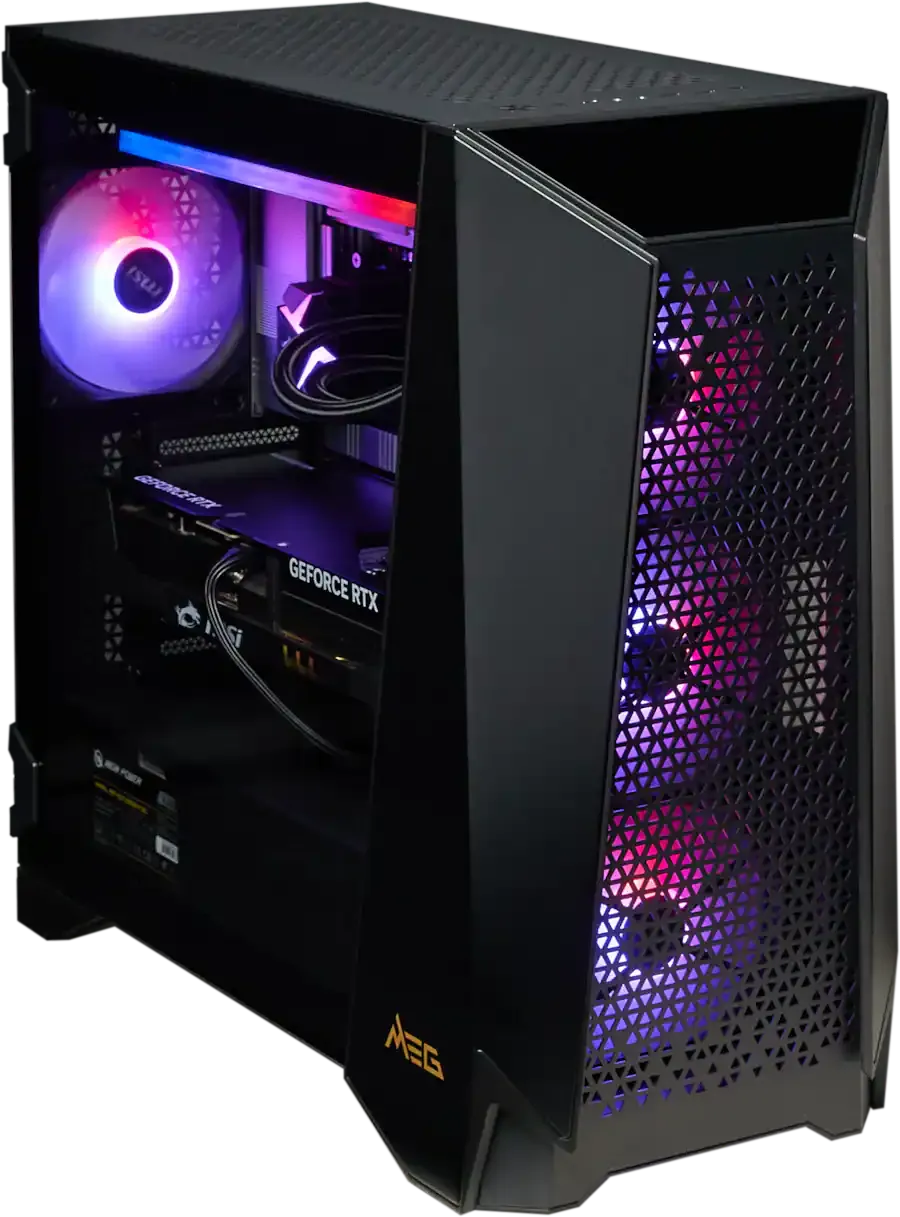
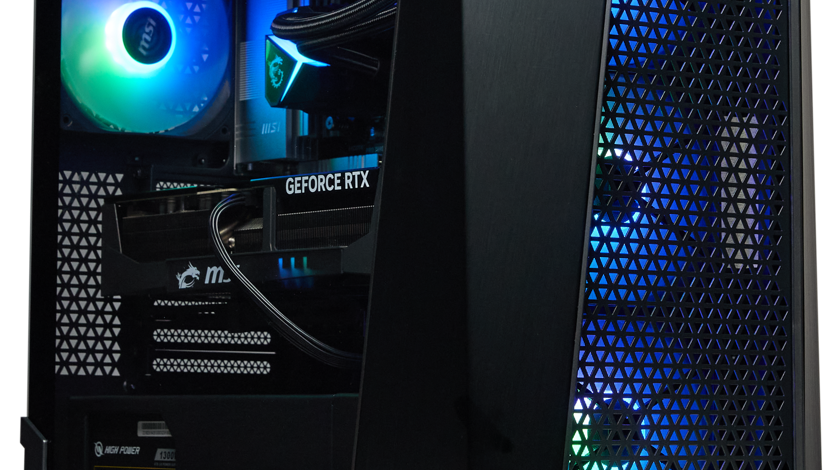
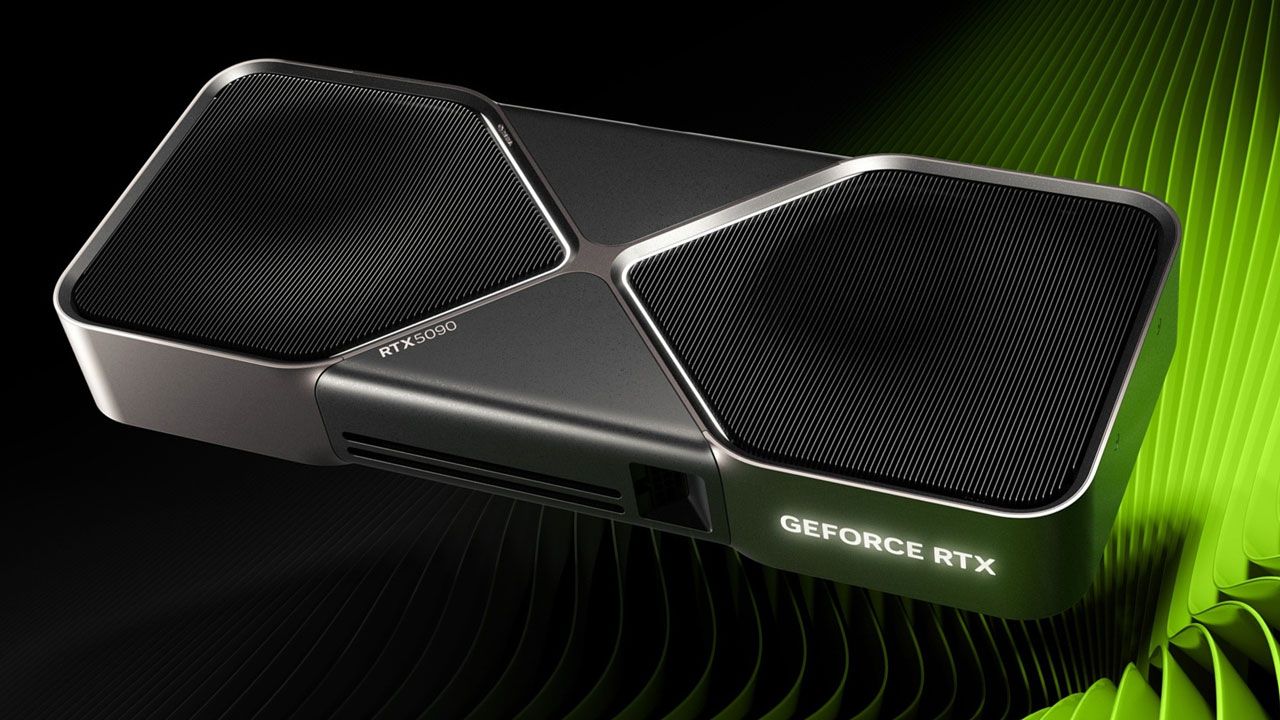
This one will be short and sweet. So remember how there are apparently no more RTX 5090s available most anywhere, even though Nvidia's Senior Vice President just said that the company definitely hasn't stopped making them? If you had been saving up for Nvidia's greatest card, there's still hope for you. Best Buy has an MSI Infinite ZS in stock with an RTX 5090 ensconced within for $7,599, making for roughly $5,300 for the RTX 5090 and $2,300 for the rest of the PC.

Yes, over five grand is definitely a lot to ask for a graphics card, but it's worth ponying up the cash if you want the best gaming card in recent years (and likely future, too). Besides, it's not like these will be in stock anytime soon (if ever), and they were commanding $7,500 or more in stores before they vanished.

Infinite ZS Gaming Prebuilt w/ RTX 5090: was $7799 now $7599
The MSI Infinite ZS prebuilt with a Nvidia RTX 5090 and a Ryzen 9950X3D CPU is probably one of the last few chances of getting ahold of the mighty GPU for anything resembling an acceptable price.View Deal

The rest of the PC around the humongous card is equally powerful. The Ryzen 9 9950X3D ($670) is probably the best desktop CPU in the current market, offering a high core count of 16 cores and 32 threads, fast clocks with a 5.7 GHz turbo speed, and 128 MB of cache. It'll run games and heavy applications with equal aplomb.

That chip sits atop an MSI B840-VC motherboard ($250 est.) with PCIe 5.0 support thanks to its AMD B840 chipset. An MSI CoreLiquid 360mm CLC ($110) keeps the processor cooled. There are 32 GB of RAM ($450 est.) on tap — though MSI doesn't mention the speed, 6000 MT/s is a good, reasonable guess for a high-end machine.

The machine is powered by an unspecified MSI 1300W Gold PSU ($170 est.), and all the hardware sits inside a MSI MEG Prospect 700RL case ($250 est.). A Windows 11 Home license currently sets you back about $130. For those keeping track at home, the PC core goes for over $2300. There are no weak spots we could find, too — pre-builts often skimp on one of their core parts, but there are no shortcuts here.

Nvidia reportedly insists the RTX 5090 isn't dead despite severe shortages and removed listings at multiple retailers

Last week, gamers still holding any hope that the GPU market would somehow stabilize had their hopes dashed. A while after Nvidia reportedly put the RTX 50 Super series on hold, rumors started flying that production of the already-rare RTX 5090 was stopping, likely to use precious silicon manufacturing capacity for more AI accelerators. Now, the company's senior VP Jeff Fisher reportedly said that card was not discontinued and would continue to be shipped. The statement comes after a myriad of websites, including Tom's Hardware, have asked the company for official comment, but to no avail.

The information comes from Taiwanese websites including 4Gamers and SJTV, which both are quoting a purported post-event interview where Fisher offered a brief explanation of the situation. According to the VP, supplies of the GPU are limited, but Nvidia is seemingly going all out to get the product to market (paraphrased from the Taiwanese reports).

"The supply chain (capacity) is indeed somewhat constrained, but NVIDIA is doing everything it can to get the product on the market. Although there are other variants of the RTX 5090 (chip), production has not been discontinued, and NVIDIA will continue to ship, which is very important," Fisher reportedly said to 4Gamers.

He also reportedly reiterated a common quote from Nvidia execs, stating that without GeForce, Nvidia wouldn't be where it is today, and likewise, the AI market wouldn't exist as it does today.

The claim that the card isn't gone after all merits some spot-checking, so we did a cursory browse of the common retailers. At Amazon, RTX 5090s are selling for about $8,500, but from third-party sellers. Best Buy has a grand amount of naught cards on offer, while Newegg lists 5090s for about $7,300, but from what are likely Chinese sellers, judging by the shipping time. The ever-famous U.S. tariffs would likely add quite a chunk of change to that price tag, too. Finally and perhaps most poignantly, the card remains absent from Nvidia's own marketplace and Micro Center as of this writing.

Some would say that these statements are nothing but a means to keep the company in gamers' minds, even though gaming-related revenue is now a vanishingly small piece of Nvidia's ever-larger money pie.

Jensen's firm isn't the only one seemingly keeping up appearances, as Intel has repeatedly stated that its long-awaited refresh of consumer GPUs isn't dead, and last year AMD said it still intends to deliver "the best mainstream gaming GPUs on the market." Yet there are no new GPU launches from any of the three, and their quarterly launch figures keep doubling down on AI.

We reached out to Nvidia for comment on the situation and received no reply.

Modder finishes nine-year Xbox 360 voltage glitch mod with a $4 microcontroller, cracks the console open

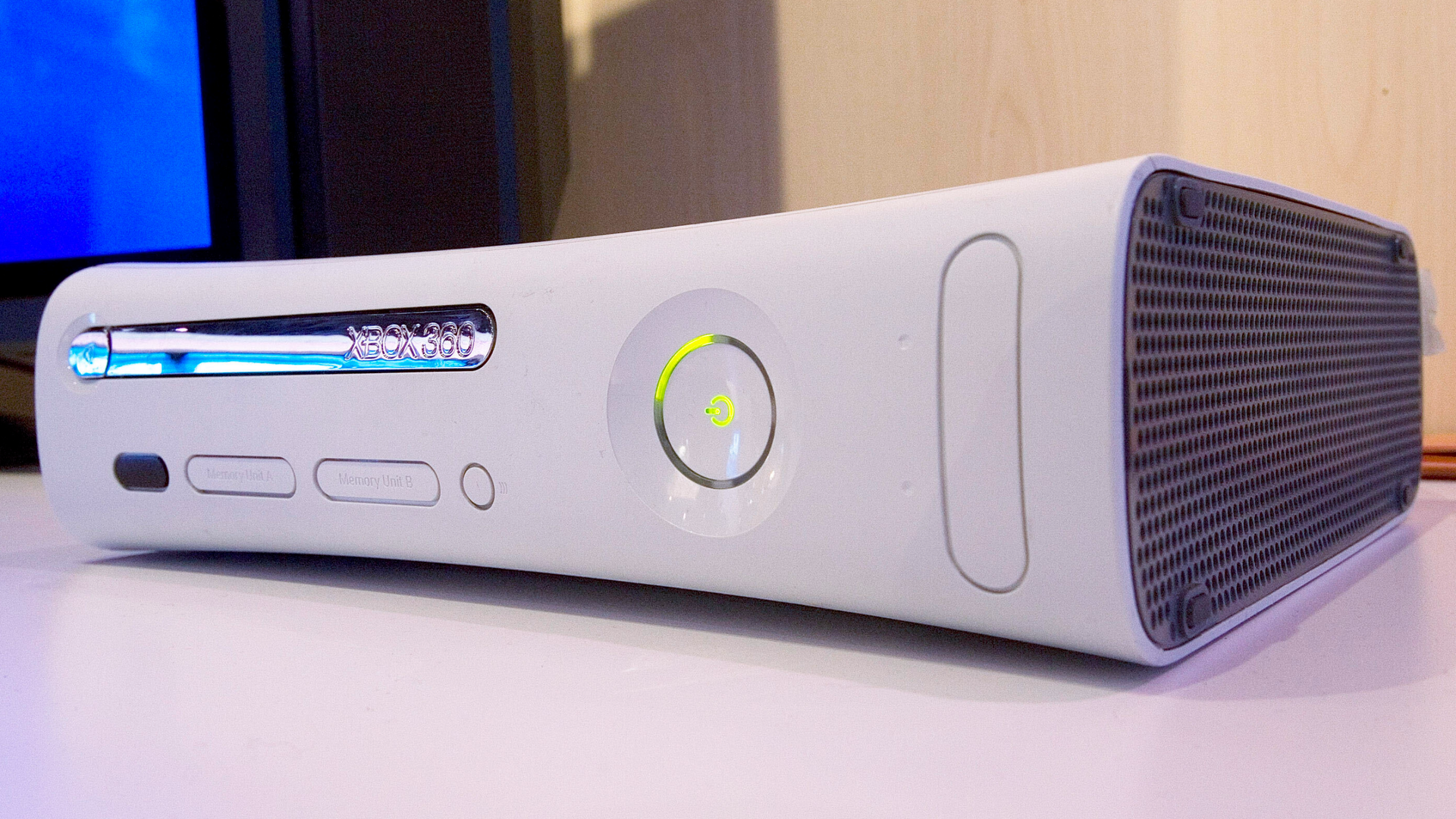
The Xbox 360 has been cracked open multiple times over the years, and almost every time Microsoft's updates plugged whichever hole let hackers through. The first method was modded DVD firmware in 2006, a hypervisor hack followed in 2007, and a wiring hack exposing JTAG debugging ports was revealed in 2009. The longest-lasting physical hack was 2011's CPU force-reset exploit. That maneuver needed specialized hardware along with a voltage-glitching chip, but an enterprising techie showed how it can be performed nowadays with the assistance of a Raspberry Pi Pico, costing all of $4 (or about 5€ / £5). The crack marks the culmination of a nine-year effort by the modder.

To get the elephant out of the room, yes, just last week the PeerPressure Xbox 360 persistent soft-mod was released. But we're here to talk signals and wires. The aforementioned reset exploit involves sending a teeny weeny tiny signal directly into the CPU's reset pin. You'd think this would do what it says on the label, but what happens instead is that the CPU executes the current instruction incorrectly.

Naturally, someone figured out how to leverage that to run any code on the CPU, thus completely bypassing Microsoft's impressive and frankly rather effective layers of cryptography within the console. Sending said signal for an effective hack, though, requires spectacularly precise timing with a resolution down to nanoseconds, and glitch-chips may even require several attempts to get a successful "latch."

Joshua Kennedy, a Scottish hacker, bought a Matrix Coolrunner Rev D modchip board back in 2017 to hack his console this way, but it required soldering wires, NAND, and programmers, and patience. He once tried rolling his own programmers using an old PC's parallel port (a common substitute), but never got the project off the ground and shelved the idea.

Fast-forward to 2026, and a new tool presented itself: the highly successful Raspberry Pi Pico, a highly capable microcontroller-on-a-stick, whose price starts at all of $4. Armed with this, he started the procedure. He connected the Pi Pico to the NAND interface header on the console to be able to dump the console's NAND flash firmware — a task easily accomplished with just some wiring and the PicoFlasher utility. Although the post doesn't mention it, Kennedy likely took the NAND data, patched it with XeLL, and reuploaded it.

He moved on to download Octal450's Timing Files, a set of mini-programs triggering the glitch chip at the best possible timing to try and reset the CPU. These are necessary because the window of opportunity is different across every hardware revision of the Xbox 360. Enlisting the Pi Pico once again, he uploaded the timing files to the Matrix Coolrunner, and presumably ran the rest of the hack process. And thus the task was complete, and "a project that defeated [Kennedy] in 2017 was made trivial in 2026 by a £5 microcontroller."

Linus Torvalds posts his first AI-assisted patch to the Linux kernel, synthetic test clocks 23x performance leap

After a few revisions of his position on AI-assisted contributions to the Linux kernel, Linus Torvalds has posted his own first LLM-assisted patch. The development branch purports to fix an old issue with massive cache contention when many CPUs are reading the same file — a scenario potentially encountered when using shared libraries, databases, and web servers. Several developers had already made attempts over the years at fixing the issue, all with varied results, none quite ideal as an all-encompassing solution.

Torvalds posted his own draft for solving the problem in early 2024, and has used it on his own laptop since that time. However, he recently took the plunge and decided to "try to actually solve this thing using an LLM." He's now posted his solution in a development branch, and claims that he's seen a 23x performance improvement in a dedicated synthetic benchmark, though he notes that actual real-world impact will be far less significant, as "no real load" will witness those figures. If we had to guess, this improvement would benefit server workloads far more than desktop machines.

Over time, Torvalds has broadly taken a pro-AI stance on LLM tooling, at least within the purview of the tightly controlled, review-heavy environment of the Linux kernel code. Last July, he stated he's "willing to absolutely put [his] foot down" on AI haters, pointing out that an automated code review tool the kernel team uses outperforms humans, and that it caught basic programming mistakes that shouldn't have been submitted in the first place.

The team is even changing its policy to no longer require that patch authors disclose they used an AI tool when generating their code. Torvalds once again took an assertive stance, reiterating that users should treat LLMs as yet another tool, likening it to compilers or editors. In his view, he simply expects that "people do their best and [...] understand what they are doing."

Some might say that few people in the world are better-suited to properly employ an LLM than Torvalds, and by extension, kernel maintainers. There's an entire universe of difference between a senior master programmer using the LLM to speed up the boring parts of his work, and some newbie with a credit card going "claude make linux faster plz no mistakes."

However, It's not all roses. Thanks to how adept AI agents have become at recognizing common security flaw patterns, the Linux security mailing list became "unmanageable" earlier in the year. Linux has been fixing CVEs at an astonishingly rapid pace of around 2,000 per release. Still, the team's hand is being forced into dropping older hardware drivers, as they're often the target of numerous security reports, despite their negligible install base.

Russian chipmakers demo homegrown RISC-V and Arm chips with retro games

Geopolitics and sanctions have mostly cut off the Russian public from Western hardware — at least officially. In recent ages, the country's homegrown chip designs are Arm, RISC-V, and Elbrus architectures. A handful of interesting designs were on display at the Microelectronics 26 (ME26) forum in Sochi, using retro gaming as a demonstration point. A couple of years back, the government even issued an order to create a high-end gaming console, albeit with relatively little success. The result of that initiative didn't appear to be on display at the event.

На выставке МЭ26 в Сочи показывали сразу несколько игровых применений русских процессоровБайкал: консоль и визитка на Ушке BE-U1000Элвис: полноценная приставка на Гиперком У (бывш. СКИФ)МЦСТ: «игровые» ПК на ЭльбрусахНе серьёзно, но занимательно#riscv #innoru #pureru https://t.co/QGlRTMnvLROctober 11, 2026

The report comes from Dmitrii Kuznetsov, a RISC-V and Rust enthusiast who displayed photos from the event. The first units on display use Baikal Electronics' BE-U1000 microcontroller. According to our digging, the chip packs a CPU with three CloudBear cores (32-bit RISC-V) — two BR-350s clocked at 200 MHz, along with a BM-310 at 100 MHz.

Given the microcontroller nature, embedded resources are intentionally sparse, with 256 KB of flash and 192 KB of SRAM — though there's support for external flash. A host of I/O interfaces, including USB 2.0, I2C, I2S, UARTs, and 48 GPIO lines, round out the 10x10 mm QFN-88 package. These parts are seemingly aimed at robotics, automation, IoT, sensors, and similar applications.

There was a business card-sized controller-and-console on display with a BE-U1000 chip, along with an "Ushka" console styled like the original NES (with matching controllers). The game on display appears to be Chip 'n Dale: Rescue Rangers.

Next up, there's the Elvis Hypercom-U, a SoC packing four Arm Cortex-A53 CPU cores at up to 1.2 GHz, dual ELcore-50 DSPs, a PowerVR GE8300 GPU, and dedicated video, image, and navigation processing blocks. The main silicon can be paired with up to 8 GB of LPDDR4, and supports USB 3.0, Gigabit Ethernet, Wi-Fi, and Bluetooth connectivity, and HDMI output.

This product is apparently aimed at multimedia, navigation, SBCs, and smart cameras. At the show, a board with the Hypercom-U was shown playing the original Super Mario as a demonstration.

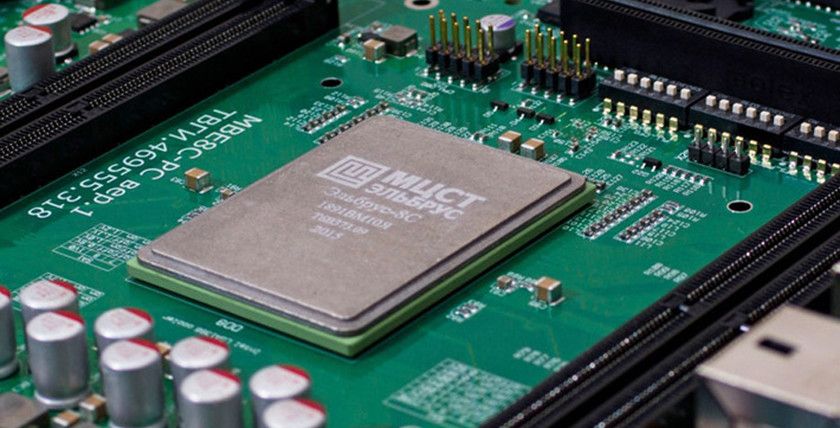
Finally, there were MCST's Elbrus-based PCs, though the tweeter offered few details on which were on display. For context, Elbrus is a Russian-developed chip architecture, often poised as the basis for high-end desktop and server applications.

Our best guess is that the machines at the forum were based on the leading-edge Elbrus-16S chip with 16 cores at up to 2 GHz and up to 8 channels of DDR4-3200 RAM. The chip is manufactured on a 16 nm process and comprises 12 billion transistors. There are dual-processor server prototypes with up to 2TB of RAM using this design.

The other chip likely being demoed is the Elbrus-2S3, a chip targeted at mini-PCs and laptops. We've covered the Rostec MP21 previously, a Raspberry Pi-like machine with 8GB of RAM and SSDs up to 480GB. The 16-nm SoC is fairly decent, clocked at up to 2 GHz and capable of 196 GFLOPS. There's support for DDR4-3200 and PCIe 3.0, but power consumption can be fairly nasty, as the MP21 board can chew around 40W.

AI sector wipeout risks global financial contagion, IMF report warns

Watchers and reporters in the AI space have long pointed out how its circular economy could implode, potentially taking associated investments with it. The IMF has examined those fears in its latest Global Financial Stability Report, and its conclusions are stark. In the IMF's view, the global economy is becoming increasingly dependent on capital flows to the AI world, and a crash could result in harm to global GDP, investment, and consumption by 2028.

The report makes a distinction between "core" AI firms and others in the space. Presumably, core firms include companies like TSMC, Nvidia, and AMD, memory makers like SK hynix and Micron, and storage vendors like Western Digital. Those firms are seeing historical windfalls, and most of their production is currently spoken for years in advance. In other words, in this gold rush, these are the companies making bank selling the shovels.

In theory, if non-core players fail, only their investors would suffer harm, but according to the report, there's still risk to worry about. Hedge funds have increased leveraged positions and margin borrowing, further exposing themselves to the blast radius of a potential bubble pop. Adding to that, the IMF states that the share of single stocks in leveraged ETFs increased to 28%, likely fueled by demand for AI and tech stocks. By our reckoning, a sharp drop in those equities could trigger a massive sell-off by the ETF issuers and lenders, triggering a feedback loop.

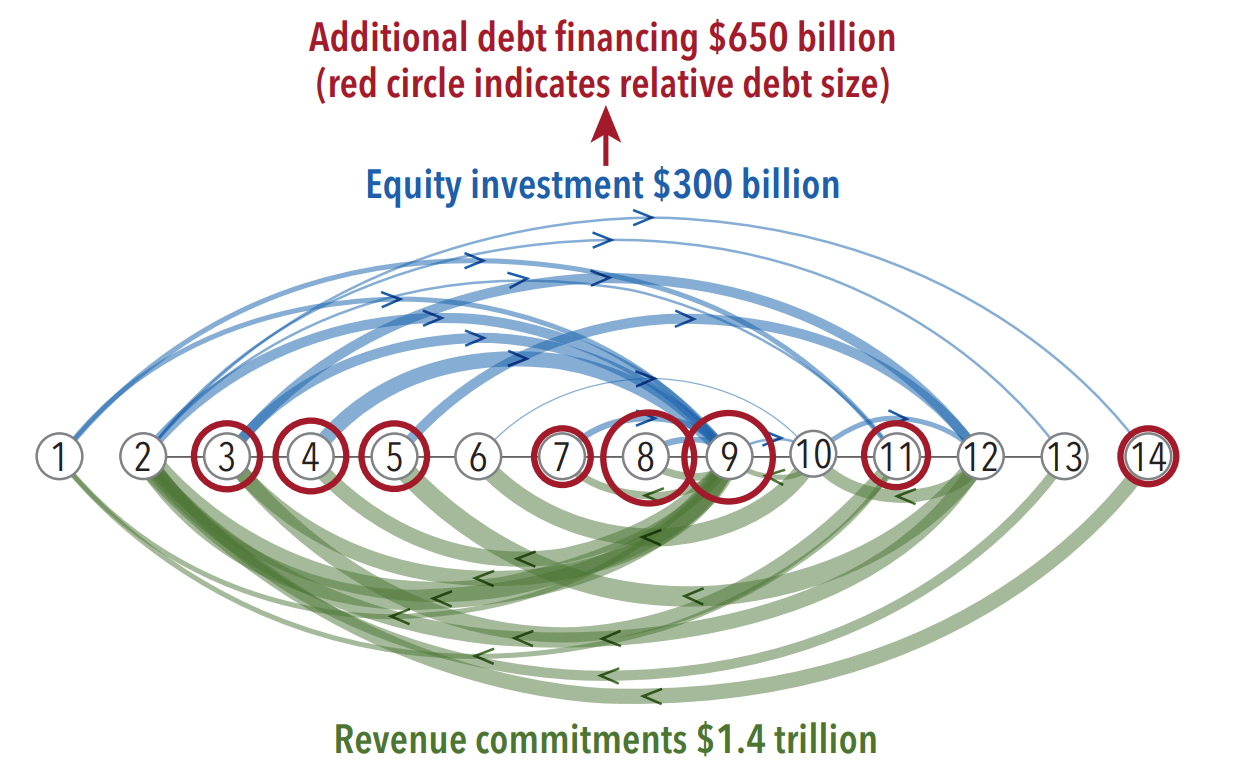
IMF report - circular debt illustration

(Image credit: IMF)

The section of the report that focuses on circular investments within the industry further emphasizes the problem. The IMF tracked fourteen public transactions since 2023 and found that $300 billion invested in "financially weaker" AI companies (mostly by hyperscalers), along with $650 billion in debt, accounted for $1.4 trillion in revenue from services and chip orders. Most of those virtual dollars are concentrated in only a handful of companies, too, increasing the risks that if one catches a cold, the herd might get the flu.

The IMF points out that "AI has become an important source of support for the global economy and financial markets." The silver lining is that according to the Fund, this investment has helped prop up global economies at a time when the current war in Iran is affecting energy prices and creating policy uncertainty. Furthermore, a recent global stress test on banks indicated that they'd "remain broadly resilient" even with a combination of an energy pricing shock, higher inflation, and an AI-driven market correction.

As for said correction, the IMF believes it may happen thanks to "weaker or less durable AI investments and profitability," stating that the necessary AI computing may not need such a high investment level, and likewise may be less profitable than expected or hoped. Under that hypothetical scenario, the IMF predicted that global GDP could drop 0.4%, investment by 1.3%, and consumption by 0.6% by 2028. However, the Fund notes that the excessive debt and leveraging flowing through the industry might make for a harsher shock to the system.

Hyperscalers now represent 10% of investment-grade bond issuance, up from under 1% in 2024. Since demand for AI compute remains intense, these companies are also making a mint. Yet they're increasingly strapped for cash due to their outsized investments in AI gear, necessitating substantial loans to keep the business rolling. Only time will tell whether investors will continue to have an appetite for the debt these companies are issuing in order to continue the gold rush.

Store-bought hardware crypto wallets had secret chips installed that enabled stealing crypto recovery phrases

Cryptocurrency enthusiasts are often advised to acquire a hardware wallet like one of the Ledger models, theoretically adding the ultimate layer of security. And yet not even that approach is 100% safe, as a currently unfolding investigation revealed that Ledger resellers in Southeast Asia and Europe are carrying hacked wallets laden with eSIM and LTE modules for exfiltration of recovery phrases. At least $93 million (and going) has already reportedly been siphoned off users' balances. Hardware sold directly by Ledger is so far unaffected.

The first booby-trapped wallet originated from reseller Cryptobilis, which has currently ceased all sales of hardware wallets of all brands. The offending unit came from a store in Malaysia, though Cryptobilis also sells in Indonesia and the Philippines. Researcher Mark Karpelès has been looking into hacked wallets for a while now, and one of them came via Amazon Japan, bought from a Chinese seller and shipped from Malaysia. Cryptobilis also sells other brands of wallets such as Trezor, Coolwallet, and Tangem, though so far there is no news of contamination beyond Ledger.

JUST IN: UP CLOSE VIDEO SHOWS HOW HACKERS STOLE OVER $80,000,000 SILENTLY CORRUPTING LEDGER #BITCOIN WALLETSA SCAM SHOP IN MALAYSIA WAS LISTED AS AN "OFFICIAL AUTHORIZED RESELLER FOR YEARS"BEHIND THE SCENES, CRIMINALS WERE INSERTING MICROSCOPIC SPY CHIPS ON EVERY WALLETTHEY REPACKAGED THE DEVICE AND SHIPPED IT TO UNSUSPECTING VICTIMSALL THE WHILE IT WAS SILENTLY CAPTURING THEIR PRIVATE KEYS THIS IS WILD ‼️October 11, 2026

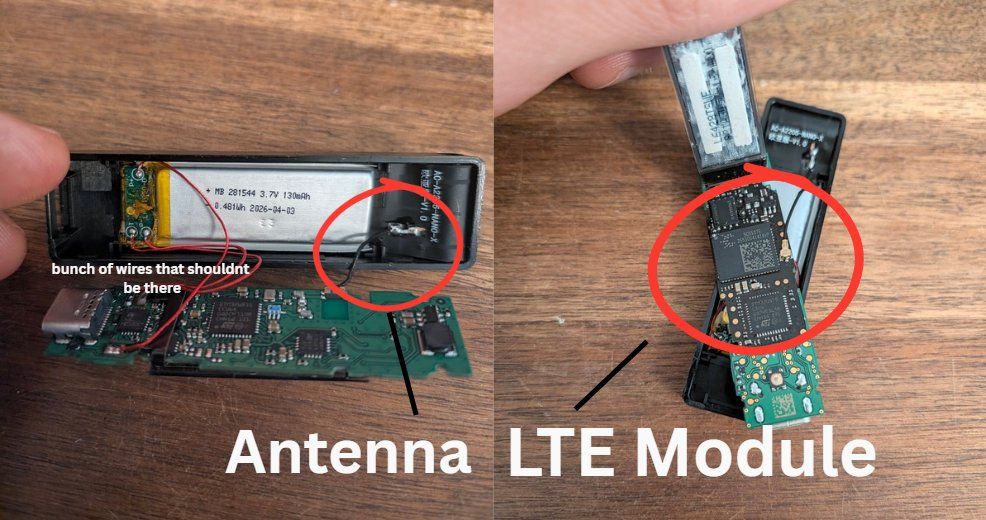
Ledger recommends that users who bought wallets from Cryptobilis in the past 90 days do not perform their initial setup, as that's where the private key exfiltration reportedly occurs. To those who have already done so, Ledger recommends moving their assets to a new wallet with a new seed. The data theft is performed by hiding a flexible PCB under the display assembly to capture the pixels showing the private key entered during the first setup. The information then heads off to the aforementioned eSIM+LTE combination for exfiltration.

Meanwhile, new reports have come in from Europe, as techie Johannes, seemingly located in Germany, found at least two hacked wallets at MediaMarkt, a well-known tech and appliances retailer. He bought one unit and found that it had the same exact hardware modifications as its Asian counterparts, suggesting that the Asian and European events may be related. Johannes then bought a second one at a different MediaMarkt location, and sure enough, it was also modded.

Booby-trapped Ledger wallet

(Image credit: Johannes)

Notably, most hacked wallets found so far are confirmed to be brand-new units instead of returns. Malfeasants will often buy new hardware and return it to the store with modifications, so that the next unsuspecting customer gets bit.

Johannes had a MediaMarkt employee at one of the stores look up the wallets' stock information, and at least the one unit came from Aqipa GmbH, a Europe-wide distributor — meaning the blast radius may be much wider than MediaMarkt or Germany. Since this is a recent development, Ledger hasn't published any guidance, though we imagine it'll be similar to the aforementioned steps.

In his blog post, Mark Karpelès notes that earlier iterations of hacked wallets with eSIM cards had hand-made implants, but that, concerningly, the hardware bolt-ons inside the latest finds appear to be manufactured to order. If true, this might mean that there's a production line somewhere intercepting Ledger wallets and manufacturing hacked wallets in bulk.

Ledger publishes instructions detailing how users can verify the physical integrity of their wallets, including pictures of every component, for every model of wallet the company offers, so they can closely inspect for add-ons. Likewise, prospective users should only download software from the official Ledger website URL — a task made harder by numerous scam sites with booby-trapped software, pretending to be the official ones.

Jev-like decision models are flooding the AI market, after researcher claims TypeSafe copied their research

Following the release of TypeSafe's Jev, many AI players have launched competitors, and many similar open-source projects from the likes of Microsoft, OpenAI, and many more have since emerged. Yet Nandakishor Mukkunnoth, of ConvAI Innovations, said that he'd come up with the base notions for Jev's architecture over a year before. So who copied who?

As a quick recap, Jev and its clones are APIs driven by decision models, for use in your own code. You feed them input data like a customer's online shopping transactions, alongside questions. For example: "is the user looking for a return?" for a yes/no answer, and "Which item are they referring to?" with a multiple-choice answer. A Jev-like AI model will answer each of the questions or choices with a probability that can then be used in your own "if" statements. While the concept by itself isn't strictly new, this practical application is indeed novel.

The release made a good portion of the internet abuzz, as the seemingly simple concept is extremely useful and neatly sidesteps the usual problems with trying to coax an LLM into giving a direct answer. There's no token-by-token text generation, no conversations, no re-feeding of conversation history, no feeding it gobs of information for context, and no conversational hallucination — just direct data in the form of probabilities. It's really fast too, answering questions in parallel, and exceedingly cheap compared to standard LLMs.

Along with Jev, TypeSafe also released a brief description of its System One architecture. Only days later, Nandakishor Mukkunnoth, founder of ConvAI Innovations, explained in a blog post that he'd actually "designed the Jev architecture one year back." He referred to his arXiv paper on SalesRLAgent, describing how he created a model for probability estimation, published on March 30, 2025. Along with the paper, he published his model weights and dataset. He later followed up with a September paper that more closely aligns with how Jev operates.

In his write-up, Mukkunnoth expressed his frustration, describing how he got overlooked "because [his idea] was built for a vertical use case," meaning SalesRLAgent was made to fix one specific problem, while TypeSafe made Jev a general-purpose decision engine. Notably, the company released Jev as a complete, hosted product, with its own servers, API, documentation, developer kits, and naturally, pricing.

Nevertheless, he said he opted to not remain bitter about the development, and ultimately released the open-source Laya roughly the same day. Laya is essentially a Jev-style model and interface that you can run on your own hardware, complete with multi-language support. Likely adding to the confusion, both TypeSafe and Mukkunnoth called their models "System 1/One" types, likely as a reference to Daniel Kahneman's book, Thinking, Fast and Slow, which describes System 1 as a faster, emotional mode of thought, whereas System 2 refers to slower, more logical thought.

Regardless, there was no stopping the hype generated by this new use case for AI, so players in this space did what they do best: copied the concept and rolled out their own services. In the space of only a few weeks after Jev was released, the world saw Microsoft Decision, OpenAI Decisions API, and Fastino Glide. Both Cloudflare Clef and Perplexity Decider arrived with open weights, meaning you can run them on your own gear, assuming it's up to the task. Over on the open-source aisle, there's Amazon's Strands Decider 2B, Kev, Von, Jeff, jevlike, SemIf, OpenJev, NanoJev, Ollaya, and many others.

Why so many? Well, because most of these projects, including the commercial ones, share the same root: taking an existing lightweight model, usually always a variant of Alibaba's open-source Qwen, and adding the extra layers that shape the input, output, and decision-making procedure. Mukkunnoth's Laya is based on encoder-only models from the Bert family, rather than an LLM like Qwen. And yet it's not too hard to imagine that many folks might have cribbed at least some notes from his work, given how quickly the alternatives materialized.

Two Steam games generated $560,000 across 135,000 sales, but the co-creator only took home $15,000 annually

When it comes to the gaming industry, the billions bandied about regarding AAA titles often lead many to think that if your game scores a hit, you're essentially set for life. Unfortunately, the sad reality is that indie developers often have to end up pinching pennies or outright in a deficit despite strong sales. Omer Develioğlu, the co-founder of Northend Games, offered a candid breakdown of how $560,000 in income over five years for sales of his games ended up as just $134,000 split two ways, with $73,000 in his and the co-founder's pockets. In the end, the co-creator got only $15,000 per year and continues to drive his 2012 Mazda, hardly the riches one would expect.

The $560,000 gross figure refers to sales for two titles: Northend Tower Defense and Deepstone Rift (Early Access), both sold on Steam, for a grand total of 135,000 units. In an accompanying video, Develioğlu mentions that an impressive 53.3% of sales come directly from China.

Unfortunately, he also says that the country's customers are very demanding, and that the refund rate there is disproportionately large. Thus, $134,000 goes right away towards said refunds, with a rate of 22%, "way above" the purported standard of 10-15%. For what it's worth, the Chinese refund rate is corroborated by both older and recent third-party figures. Current tally: $426,000.

Then there's Steam itself. The platform is widely beloved by gamers everywhere for its value-add features like the Workshop, but also for the basic notion of not making the other platforms' questionable business decisions. Having said that, Gabe Newell's enterprise has also been on the receiving end of criticism thanks to fees starting at 30%, which only go down for amounts over $10 million and beyond. As Develioğlu's games are nowhere near those figures, 30% it is: $127,000 for Steam, and $297,000 for the devs... or so you'd think.

Next up, there's the U.S. withholding taxes. The developer lived in Iraq and moved to Thailand, a country that has a tax agreement with the U.S. to prevent double taxation. Even still, Uncle Sam's slice is 5%, bringing the total down to $287,300.

Now, it's time for one of the more controversial aspects: the publisher's cut. According to Develioğlu, his Asian publisher took care of PR, distribution, and marketing in the China, Japan, and South Korea regions. The fact that the majority of the game's sales came from China could mean the publisher did a good job, but the cut was hefty: $115,000, seemingly in a sliding scale, leaving take-home at $172,000.... before local taxes.

Develioğlu doesn't clear up what the publisher's cut, perhaps due to an NDA. The most logical option is that the $115,000 fee refers to the sales in Asian countries. Given that 53.3% of sales are in China, and that the publisher also handled Japan and Korea, this would mean a percentage cut of around 35-40% of net income.

As an exercise, we ran the figures assuming no publisher, only 15% of sales in Asia, and a lower refund rate. Interestingly, the net amount was nearly the same.

Thailand's offices also want in on the action, and take 15% away from Northend Studios, a mercifully low rate as it's a digital product. Even still, it's $26,000 off the cash pile, now reduced to $146,000.

Finally, Develioğlu split this 50/50 with his co-founder at Northend Games, for a grand personal total of $73,000 for five years' work, or roughly $15,000 per year of work. As the developer notes, he lives in Thailand, and this comparatively small amount is still more than the country's average wage, letting him make games as a full-time occupation. (For reference, the average wage in Thailand is around $5,280 a year).

But as he says, despite making half a million dollars in sales, instead of buying a Lamborghini, he still drives a 2012 Mazda.

U.S. suspends green card path for H-1B workers at Microsoft and Adobe

During a Thursday announcement, Vice President JD Vance said that well-known tech companies Microsoft and Adobe are now blocked out of the PERM program — one of the possible paths for the firms' H-1B workers to eventually evolve to green card status. The move was triggered by alleged fraud and abuse. IT outsourcing firms Cognizant, Infosys, Tata Consultancy, Wipro, HCL, and Capgemini also got slapped with suspensions.

The companies involved have not yet commented.

The administration is not going to process any new or pending Permanent Labor Certification applications for the companies. In a press conference, Vance had harsh words about Microsoft in particular, stating that "There has been no company in the United States, unfortunately, that has abused this system more." He added that "if you do the math, for every worker that Microsoft laid off, they replaced that worker with one and a half foreign indentured servants."

According to Vance, Microsoft fired 6,000 workers while simultaneously benefiting from 6,300 H-1B approvals and nearly 3,000 green cards. The VP said the company filed 3,682 PERM applications, 1,000 of which were for positions that seemingly overlapped with those of laid-off workers. Both Microsoft and Adobe's PERM privileges were cut "due to multiple active federal investigations," as stated by Labor Secretary Keith Sonderling.

A move so swift and harsh is unusual, but it comes against a backdrop of the U.S. government putting a tighter grip on the H-1B program. Last July, the Labor Department launched a nationwide investigation into fraud and human trafficking in H-1B and PERM programs. The inquest focuses on fraudulent applications, wage kickbacks, coercion, below-wage labor, recruitment abuse, and benching — when a company keeps the H-1B employee on the books but doesn't assign them work or pay them.

In September, President Trump signed an executive order aiming to curb abuse of the H-1B program. Cognizant also had its green card filings suspended during that month. The H-1B lottery rules had already changed to reportedly favor highly skilled, highly paid workers.

According to the National Foundation for American Policy and reported estimates, Amazon had the most approved H-1Bs in fiscal year 2025 with 4,644 visas, followed by Meta at 1,555, Microsoft with 1,394, and Google at 1,050.

Spotifast lets you enjoy Spotify tracks while lowering RAM usage by 5x or more

It's a reasonable assessment that everyone and their dog is tired of Electron-based desktop apps that pack a full web browser and waste gobs of RAM. Spotify lovers now have a reprieve from the memory blues in the form of the Spotifast client.

Spotifast is an OS-native application written in Rust, with an emphasis on lowering memory consumption and CPU utilization. The author claims that the app ought to use 150-200 MB of RAM, compared to the usual 600 MB to 1 GB that the official application chews through.

By default, Spotifast offers a reasonable facsimile of the standard Spotify UI, though with additional features including an EQ-like visualizer on the play bar, and dozens of keyboard shortcuts and playlist management features.

The alternative client also packs a bevy of add-ons, including dark, light, and custom themes, Milkdrop visualization support, and a Winamp mode that turns Spotifast's UI into the much-beloved player.

There's even support for Winamp skins in the .wsz format, too. Those features may be tugging at nostalgia, but they're also a breath of fresh air in this age of excessive minimalism.

To use Spotifast, you'll need to have a Spotify Premium account, as presumably the ad delivery of the free version is tied to the official client. Once installed, you'll configure Spotifast as a connected device and grant it permissions to your account.

For now, there's no support for lossless audio, but that's subject to change — the librespot library underpinning Spotifast's playback doesn't yet support DRM'd lossless files, but might add the feature at some point, as popular demand seems quite high.

You can download Spotifast for Windows, macOS, and Linux and let your machine enjoy some additional free RAM. Since the client is quite new, you might run into some turbulence — but development is active and going at a fast clip. Predictably, Spotify even extended a job offer to the author, who said they'd prefer to remain independent.

This is the cheapest 4TB SSD for Prime Day at only 10 cents per gigabyte

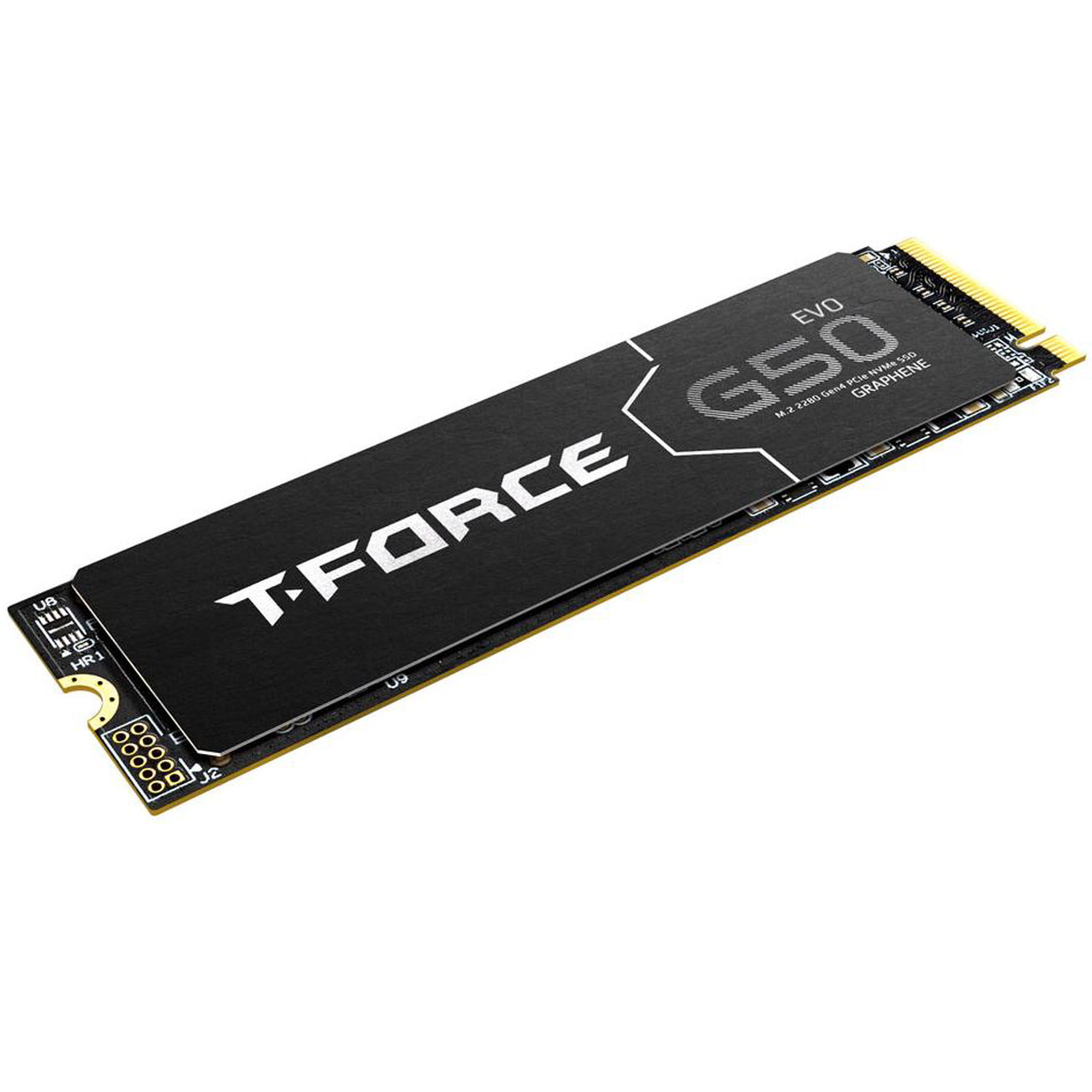
AI may be taking our jobs, our RAM, and our storage... but there's always a light at the end of the tunnel. Amazon's Prime Day invariably triggers a rash of discounts at other retailers, and we just found the best SSD deal you'll come across until Black Friday at the earliest. The Teamgroup T-Force G50 Evo is a 4 TB solid-state drive with a PCIe 4.0 NVMe interface that can be yours for only $399.99 at Newegg with promo code FTTF9875 — or around 10 cents a gigabyte — with free shipping, to boot.

It's reasonable to wonder if 4 TB isn't too much of a drive to buy. It's likewise reasonable to rebut by stating that there's no end in sight to the AI shortages, that prices for NAND and hard drives have been climbing at insane rates, and that various modern games take up 150 GB to 200 GB of space. In other words: the wise course of action is to acquire this while the price tag only contains three digits before the dot.

All-time low price

The TeamGroup G50 EVO 4 TB at all-time low pricing. This drive can push 5000 MB/s in reads and 4,500 MB/s in writes, and its large capacity is a perfect fit for large game libraries.View Deal

This unit ought to be capable of pushing 5,000 MB/s in sequential reads and 4,500 MB/s in writes. The endurance rating is quite generous for a consumer drive, at 1,200 TB written, and the quoted MTBF is 1,500,000 hours. These figures mean the drive is likely to last longer than the rest of your computer. Teamgroup backs up the figures above with a three-year warranty, and there's a graphene heatsink resting atop the chips to keep temperatures low and NAND happy.

You can snag the $399 Teamgroup T-Force G50 Evo 4 TB NVMe PCIe 4.0 SSD at Newegg.

Wall-mountable record, CD, and cassette players combo is a full hi-fi system with no wires

The resurgence of physical media has been in full swing in the alternative music scene for a while. Nowadays, likely as an effect of streaming services' shenanigans, even mainstream audiences are catching on to the tactile experience and ownership offered by a CD or a vinyl record. We covered the Syitren RM1 CD player frame only a few weeks ago, and now the concept is back in full-system form thanks to Trettitre's Retro Ambient Sound System (RASS).

The spiffy-looking setup comprises a vinyl turntable with RGB backlighting, a compact disc player, and a cassette player — all atop a magnetic metal rack complete with a phone holder. The star of the show is the record player, a unit packing an actual Audio-Technica AT-3600L phono cartridge, a self-balancing tone arm, and even a manual speed knob for up to ±5% adjustment. There's Bluetooth support with high-end AptX, AptX HD, and AptX Adaptive codecs, as well as an auxiliary 3.5 mm output.

The physical controls appear to be both simple and reassuringly sized — no menus or touchscreens here. Hi-fi vinyl player units do spend a large portion of their mechanical design on ensuring full vertical stability, however. The vertical orientation of this TTT-LP3 unit is almost a worst-case scenario for this task, so the self-balancing tonearm has its work cut out for it. It's worth noting that since all the components are magnetic, you can just pick them up and put them on a table.

The units are all fully wireless and attach to their frames magnetically, though there's no combined charging mechanism or power supply — each unit has its own battery, USB-C charging port, and Bluetooth connection. The TTT-LP3 record player does have the ability to charge wirelessly with the included T-shaped adapter.

The TTT-DP3 CD player's interface looks to be straightforward. There are physical buttons with individual shapes, and a small OLED screen for displaying track information. The dust cover atop the disc is also magnetic, which is quite a nice touch. Oddly, though, the specs do not list high-end audio codecs for this unit, a strange choice given that CDs have by far the widest sonic range of the physical media types on offer.

As for the TTT-CP3 cassette player, there's not much to say, in a good way. The buttons are decidedly chunky and inviting — one can only hope they elicit the same satisfying clunk as in old-school hi-fi units. As with the CD player, there's no mention of high-end audio codec support, but cassette tapes aren't known for low noise floors or pristine treble, anyway.

You can preorder Trettitre's Retro Ambient Sound System at Kickstarter for $399 if you're quick, with $76 shipping, under the "late pledge" or "early bird" headers. After that, the unit will set you back $429. The individual components are also available if you don't want to grab the entire setup.

❌
❌