阅读视图

发现新文章,点击刷新页面。
✇Tomshardware

New US export controls reportedly target Chinese access to remote AI servers — Trump admin's cut-down AI diffusion rule could be shared with industry as soon as September

The Trump administration is considering a new AI export control that would close a loophole in current U.S. trade policy toward China, that being the PRC's access to advanced AI compute through remote servers in nearby countries, reports The Information. The rule, should it go into effect, would target remote access through Thailand and Singapore, which aren't subject to the same export controls as China. The Department of Commerce could share the rule with trade groups to gather feedback as early as September, according to the report.

The U.S. government has struggled to reckon with AI export controls since overturning the Biden-era AI Diffusion Rule in early 2025. The AI Diffusion Rule is still in effect, though the Commerce Department has said it won't enforce the rule in the interim. In March, the Commerce Department issued a statement about a tiered licensing structure for advanced AI chip exports. The rule was revoked a little over a week later due to pushback from the U.S. AI industry.

This mismatch of Biden-era rules and Trump-era proposals has created uncertainty about the administration's plans to curb exports to China. Meanwhile, Taiwan has taken action against alleged smugglers of Nvidia's most advanced AI chips to China. In July, one Nvidia employee was detained in Taiwan on suspicion of falsifying documents, and just days ago, the Taiwanese government indicted nine people in relation to Supermicro servers being smuggled to China.

Export controls are mainly governed by 2022-era rules, which restrict Chinese access not just to advanced AI chips, but also advanced semiconductor manufacturing tools, such as EUV lithography machines. Current U.S. House members have called on the Trump administration to enforce the export controls that Joe Biden introduced as the end of his term in early 2025.

According to The Information, one of the driving forces behind the proposed rule is Moonshot's Kimi K3 model. Director of the White House Office of Science and Technology Policy Michael Kratsios posted on X in July, alleging that Moonshot used distilled U.S. models to train Kimi K3 through Nvidia-equipped servers in Thailand.

We have information that Moonshot AI distilled Anthropic’s Fable for the development of its K3 model. To do this they developed a sophisticated internal platform to conduct large scale distillation against U.S. models, allowing them to quickly switch between multiple methods of…July 22, 2026

If the Commerce Department moves forward with the rule, it's sure to face legal challenges. An attorney at the firm Baker McKenzie told The Information that it's "widely acknowledged" that the Commerce Department can't enforce a regulation on remote access. The department instead has, traditionally, regulated the transportation of physical goods.

Still, the Commerce Department could crack down on remote access through other avenues. Namely, through know-your-customer checks. The Biden administration put these checks into effect with the Foundry Due Diligence Rule in early 2025, shortly before Joe Biden left office, but the Trump administration has said it won't enforce the rule.

✇Tomshardware

X busts 200,000-strong Chinese bot farm, including accounts making claims about AI data centers and electricity — suspect accounts posted claims about pricing and grid strain to 'manipulate' debate

X’s Global Government Affairs team posted on its account that it identified a 200,000-strong bot farm operating on the platform, with 200 of them posting information designed to influence public perception. According to the team, the accounts are suspected to have been created by Chinese operators, and that they’re using the accounts to amplify the negative impacts of AI data centers, especially on electricity prices.

“We identified a bot farm of approximately 200,000 accounts. Within this farm, we found 200 accounts posting in a manner that could manipulate a legitimate debate about American AI and energy policy,” the team said in its post on the platform. “These posts contained claims that AI data centers are driving up household electricity prices and straining the grid. Others included AI-generated cartoons that depicted data-center operators enriching themselves at the public's expense.”

The X Safety team conducted an investigation into suspected Chinese inauthentic accounts involved in influence operations:We identified a bot farm of approximately 200,000 accounts. Within this farm, we found 200 accounts posting in a manner that could manipulate a legitimate… pic.twitter.com/Mj0SqerdlHAugust 28, 2026

Some of the accounts shared by the team show names like Thomas Jackson, Patricia Robinson, Sandra Thompson, and Kenneth Flores, making it seem like they’re owned by Americans, and they’re sharing news stories from legitimate sources like The Southern Maryland Chronicle.

For example, some of their posts share the story of how PJM Interconnection hiked its prices by 76% due to AI data center demand. However, they add commentary, and sometimes even include AI-generated images designed to inflame the emotions of someone just scrolling through their feed. One narrative they’re pushing is that the costs of putting up data centers are being borne by ordinary people as big tech companies enrich themselves.

It’s unclear who sponsored or sanctioned the China-linked accounts on X, but there have been reports of China-linked operations designed to divide U.S. opinion on AI. However, the resistance against data centers isn’t all driven by Chinese propaganda, as billionaire investor Kevin O’Leary once claimed. In fact, a recent poll suggested that the biggest driver of data center protests is based on “object-level” local environmental and economic harms, especially as many other projects have shown the negative impacts they had on the community.

The concerns that many residents have about data center developments in their area are indeed valid and true, but so is the threat of foreign intervention in domestic American politics. This is no surprise, though, as nation-states have always used propaganda and information to advance their own interests. The internet, social media, and artificial intelligence have made this easier in recent years, though, so both platforms and people need to be more vigilant than ever.

✇Tomshardware

Trump administration weighs expanding chip tariffs to laptops, consoles, and servers, report claims — January's data center exemptions may be scrapped

The Trump administration is weighing a second round of semiconductor tariffs that would extend duties beyond chips to products built with them, including laptops, gaming consoles, and data center servers, eight unnamed sources familiar with the talks told POLITICO in a report published today. Commerce Secretary Howard Lutnick favors a structure that would cap duty-free chip imports at a volume pegged to each company's committed U.S. production, four of the sources said, and Commerce officials have indicated in private talks that the exemptions attached to January's 25% tariff, which cover data centers, R&D, startups, and consumer devices, may not carry over. A phase-in period is under discussion, and the framework could still change substantially in the coming weeks.

Proclamation 11002, signed on January 14, imposed a 25% duty on a narrow set of advanced accelerators, with Nvidia's H200 and AMD's MI325X named in the accompanying White House fact sheet, and explicitly labeled the action Phase 1.

The same document directed Commerce to report to the president by July 1 on the market for semiconductors used in U.S. data centers, and a separate April 14 report from the USTR and Commerce covered tariff negotiations with Taiwan, South Korea, and Japan. The exemption categories now in question match those written into the January action and include U.S. data centers, research and development, startups, repairs, non-data-center consumer and industrial applications, and public sector uses.

Taiwan's January trade agreement applies zero tariffs on Taiwanese chips within 2.5 times a company's current U.S. manufacturing capacity while new plants are under construction, tightening to 1.5 times once they're built. TSMC has committed $265 billion to its Arizona site, the largest foreign direct investment in U.S. history, yet projects only around 30% of its most advanced capacity there at full build-out, according to POLITICO. Taiwan produces more than 90% of the world's leading-edge chips, and industry representatives argued in the talks that a quota keyed to current domestic capacity can't cover the volumes hyperscalers are buying during a record AI spending run.

Jonathan McHale, digital policy chief at the Computer and Communications Industry Association, whose members include Amazon, Google, and Meta, compared the data center buildout to "building the transcontinental railroad" and said added cost and unpredictability put that investment at risk.

Tech lobbyists have met with Lutnick and Bureau of Industry and Security undersecretary Jeffrey Kessler with growing frequency since the start of summer, per the report, but three of the sources said recent talks moved against the industry. One person involved put the domestic manufacturing build-out at more than five years, longer than any phase-in the administration has allowed on previous tariff rounds.

White House spokesperson Kush Desai defended the approach, saying reshoring chip manufacturing is a top priority for the president; the Commerce Department didn't respond to POLITICO's requests for comment.

✇Tomshardware

H200 AI GPUs finally reach China under case-by-case import licenses, but it's already too late for Nvidia — homemade chips corner the China market as country seeks semiconductor independence

ByteDance and Tencent each took delivery of roughly 10,000 Nvidia H200 accelerators in recent weeks, and a handful of other Chinese tech groups may soon receive approvals of similar size. The deliveries are the first meaningful movement of the chips into mainland China since President Trump cleared their export in December, but they arrive under strict oversight from China’s National Development and Reform Commission, which approves each purchase individually.

Most of each company's U.S.-licensed allowance, understood to be up to 100,000 units apiece, must stay outside the mainland, largely in Hong Kong. Measured against the 400,000-plus units that ByteDance, Alibaba, and Tencent were collectively approved to buy in January, the chips now on the mainland amount to roughly 2.5% of the order book.

Two licensing regimes

Trump approved H200 exports in December last year, in exchange for a 25% cut of every sale to the U.S. Treasury, and terms formalized in January require each chip to pass through US territory for third-party inspection before re-export. The Commerce Department moved license applications to case-by-case review on January 16 and had cleared roughly 10 firms by mid-May, including Alibaba, ByteDance, Tencent, and JD.com, with Lenovo and Foxconn approved as distributors.

In response, China built the NDRC’s per-purchase approval process from scratch to mirror the Commerce Department’s case-by-case license review. The 10,000-unit mainland allocations function as quantity caps, the very instrument that U.S. export rules have used since the first Hopper restrictions in 2022. The requirement to route imports via Hong Kong operates as an end-location condition, identical to Washington's demand that every chip transit U.S. soil for inspection.

The Cyberspace Administration of China summoned Nvidia last July over alleged backdoors in the H20. State media outlets subsequently ran a campaign calling the chip unsafe and outdated, and state-funded data centers were barred from foreign accelerators. Eight months of NDRC silence on H200 orders left Jensen Huang telling investors Nvidia's China market share had gone from 95% to zero.

DeepSeek’s training bottleneck

A transcript of DeepSeek founder Liang Wenfeng's May 20 closed-door investor meeting, leaked online in July, arguably explains why Beijing is letting any Nvidia silicon in at all. According to the document, whose authenticity DeepSeek hasn't confirmed, Liang told investors he wanted 200,000 Huawei accelerators to train a frontier model and received an allocation of 16,000, against total Huawei capacity of roughly 750,000 chips this year split across every Chinese AI company, a constraint he reportedly expected to persist for around three years. The remarks circulated widely enough that DeepSeek paused a fundraising round targeting a roughly $71 billion valuation days after they appeared.

If we look at DeepSeek’s production history, it appears to match the numbers Liang cited during the meeting. lab's attempts to train its R2 model on Huawei Ascend hardware failed repeatedly, and training moved back to Nvidia chips while Ascend accelerators handle inference. Per the Financial Times’ unnamed source, which broke the story of resuming H200 imports, domestic silicon increasingly serves inference, while Nvidia hardware still carries training.

The H200 obviously fills that gap nicely, with each unit carrying 141GB of HBM3e at 4.8 TB/s, delivering roughly six times the performance of the H20, and approaching the banned H100. A 10,000-GPU cluster is genuine frontier-training capacity, comparable to the builds behind the GPT-4 generation, though it represents a fraction of the 100,000-GPU-plus systems U.S. labs now run. That ratio seems to have been precisely calibrated by Beijing officials, large enough to keep flagship labs training their models, but small enough that inference stays a captive market for domestic chipmakers.

Domestic supply gaps

TrendForce's August 10 supply chain survey projects that domestic chips will take nearly 90% of China's high-end AI chip market this year, with domestic high-end shipments growing 83% year over year, a projection that TrendForce itself revised up from roughly 50% in its December outlook. Bernstein has recorded the same displacement from the other direction, with Nvidia's China share falling from 66% in 2024 to 40% in 2025 and a projected 8% this year.

Huawei planned to roughly double output of its 910C Ascend chip to about 600,000 units in 2026, against a total Chinese accelerator market that ran to roughly 4 million units in 2025, 2.36 million of them supplied by Nvidia and AMD. So, while domestic chips can cover the volume, they can't yet cover frontier training, making the 90% projection and H200 easing two halves of the same policy.

Washington's case for export controls rests on exactly the dependence these deliveries demonstrate: Four years into the restrictions, China's leading labs still can't train frontier models without American silicon, and Beijing has now conceded as much through its licensing decision.

The leaked transcript has Liang arguing that open access to Nvidia would make domestic substitution a much harder commercial proposition, meaning the controls themselves built the market Huawei and Cambricon now hold, and TrendForce's numbers show that market approaching 90% share three years after the first Hopper bans. This month's deliveries disprove neither side's theory, but Nvidia does bear the cost of both, with 500,000 chips reportedly in inventory, a 25% fee on anything that sells, and a Chinese market rationed to 10,000 units per buyer — admittedly, that’s better than zero.

✇Tomshardware

White House cuts data centers, batteries, and AR from the US critical technology list — post-quantum cryptography, integrated photonics, high entropy alloys among new additions

The White House Office of Science and Technology Policy has published its renewed National Security Science & Technology Strategy, and Appendix A of the 24-page document rewrites the federal Critical and Emerging Technologies (CET) list for the first time since February 2024, shrinking it from 18 categories to 14. Advanced cloud services, high-performance data storage and data centers, batteries, grid integration, gas turbine engines, and augmented and virtual reality have all gotten the chop, while post-quantum cryptography, integrated photonics, high entropy alloys, and "hardened operating systems for consumer use" have been added.

Federal agencies use the CET list when they write export control rules, screen foreign investment through CFIUS, vet federally funded research proposals, and set R&D budget priorities, so additions and deletions carry serious weight.

Advanced gas turbine engine technologies, which in 2024 covered aerospace and industrial engine production plus full-authority digital engine control, have no successor anywhere in the new list. Human-machine interfaces are also gone, taking augmented reality, virtual reality, and human-machine teaming with it; neurotechnologies moved into biotechnology, and brain-computer interfaces reappeared under future computing. Clean energy generation and storage were replaced by a nuclear-only category covering advanced fission, fusion, space nuclear power and propulsion, and high-temperature radiation-resistant materials.

The advanced computing category of 2024 was renamed future computing technologies and lost advanced cloud services, high-performance data storage and data centers, advanced modeling and simulation, and data processing techniques. In their place sit edge computing for tactical environments, photonic and neuromorphic modalities, and advanced spatial computing. Data centers dropped off the federal critical technology list in the middle of the largest datacenter buildout in the industry's history, which fits the strategy's funding guidance telling agencies to spend "where they can best complement rather than compete with private sector investment." With hyperscalers building the capacity, Washington no longer counts it as a research priority.

"Technologies for improving AI safety, trust, security, and responsible use" and "AI assurance and assessment techniques" were both deleted from the AI category and replaced by "interpretability and control" and "adversarial robustness and AI security." Meanwhile, AI and autonomy absorbed the old robotics and uncrewed systems category and gained multi-agent systems and swarm intelligence, autonomous agent identification and authentication, continual learning, distributed and privacy-preserving machine learning, and world systems as a named class of foundation model.

Post-quantum cryptography appears for the first time, alongside operational technology and industrial control system security, and AI-enabled autonomous cyber capabilities. Integrated photonics is a new semiconductor subfield, and where the 2024 list said only "novel materials for advanced microelectronics," the 2026 version names 2D materials as an example. Advanced manufacturing picked up high-entropy alloys, advanced composites and lightweight metals, digital threads and digital twins, and substitution of rare-earth and critical-minerals alloys with earth-abundant minerals.

Integrated photonics and 2D materials are the only additions to the semiconductor category, and non-Von Neumann architectures moved across to future computing. Design automation, process technology and equipment, beyond-CMOS, heterogeneous integration and advanced packaging, MEMS and NEMS all carry over unchanged from 2024.

Appendix B maps each technology area against seven national security needs, and the semiconductor row ticks six of them, representing broader coverage than nearly anything else on the list. The one column it's blank in is "lead in transformative emerging technology," which only AI and autonomy, biotechnology, and quantum satisfy. The funding section points the same way, telling agencies to rely on the private sector for later-stage work in advanced manufacturing, advanced communications, future computing, and PNT, categories that between them cover much of the chip supply chain. Chips are treated throughout the document as infrastructure to secure rather than a frontier to push.

✇Tomshardware

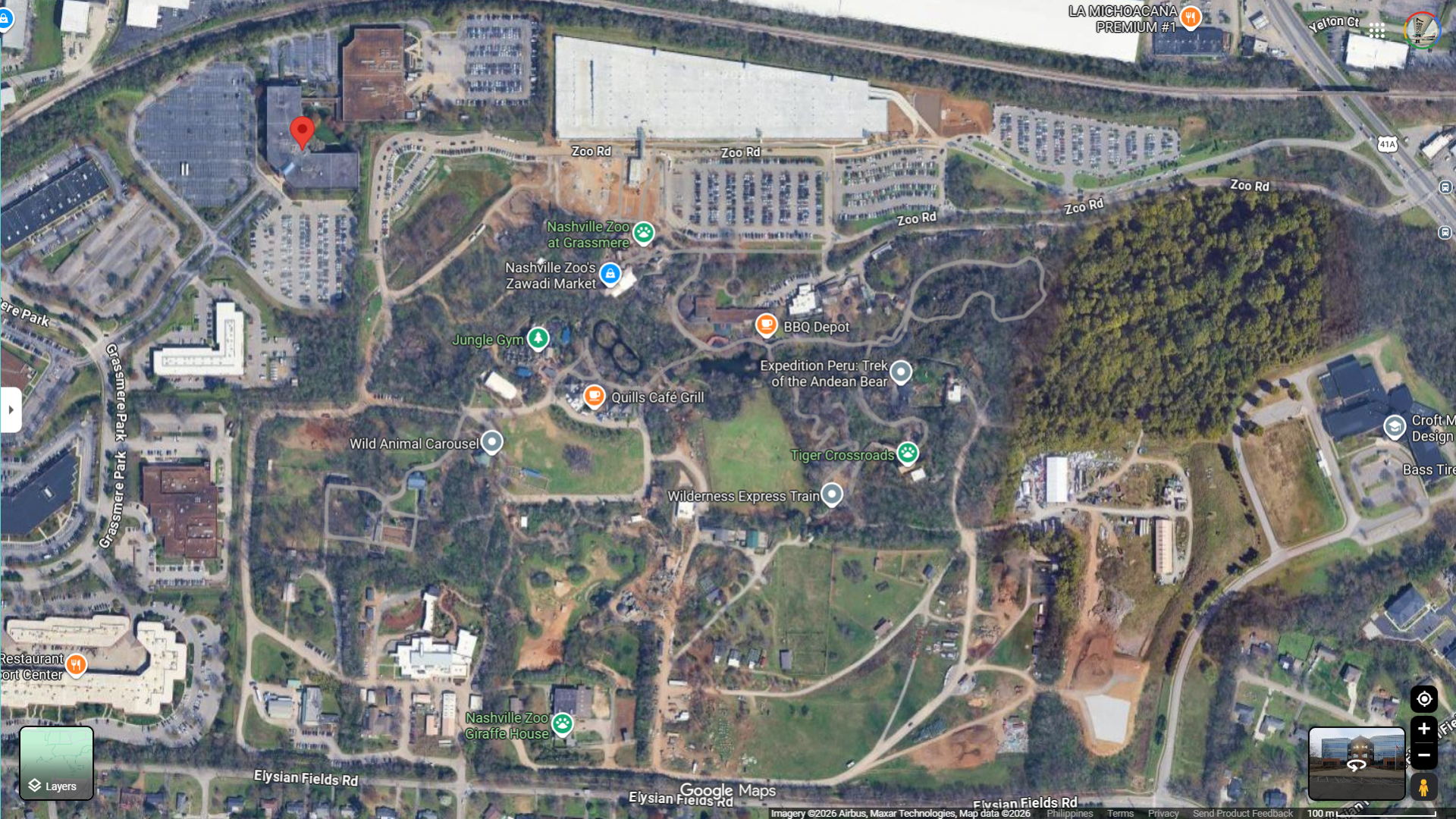
Nashville attempts to block controversial data center near zoo with eminent domain — city could force developer to sell the land for public use, rather than $700 million installation

The Nashville Metro Council just gave the go-signal to Mayor Freddie O’Connell's plan to use eminent domain to block a planned 23-acre data center campus sitting right beside the Nashville Zoo at Grassmere. According to real estate news platform CoStar, the city council approved the measure by a 27-5 vote last Wednesday, meaning the city government can now take the next steps to proceed with the legal process that will force the purchase of the property.

“I’m glad Metro Council passed our legislation that gives us the option to acquire property next to the zoo for a number of public needs,” Mayor O’Connell said in a statement. “We’re working closely with our Finance and General Services departments to plan for the site.”

The developer of the property, DC Blox, wanted to put up a 69,220-square-foot single-story data center on the site that was expected to cost more than $700 million to build. It would sit right beside the 188-acre Nashville Zoo at Grassmere, which opened in 1990 as the Grassmere Wildlife Park. This zoo is one of the biggest attractions in Tennessee, expecting to receive two million visitors annually by 2027. Aside from that, it also participates in more than 50 conservation programs with institutions across the world.

Nashville Zoo and the proposed data center at the upper right corner of the map

(Image credit: Google Maps)

Zoo officials objected to the development, raising concerns about disruptions like noise and light pollution, among others. They even started an online petition that garnered more than 500,000 signatures by the end of July, even getting support from celebrities like Brad Paisley, Sheryl Crow, and Jack White.

DC Blox argues that 648 Grassmere Park used to provide data center functions, so putting up a newer one on the site would not necessarily disrupt the community, including its neighboring zoo. However, there have already been several widely reported incidents from across the U.S. that highlighted the noise and light pollution that zoo officials have been concerned about.

Residents in a town in Michigan have been complaining for about two years now after their neighboring data centers started emitting noise 24/7, comparing it to the sound that a vacuum makes in your living room. Aside from that, some people complain about infrasound, high- and low-frequency vibrations that do not register on decibel meters but could sometimes be felt coming from data centers and potentially cause adverse health effects. A Microsoft data center in Wisconsin is also facing a lawsuit due to noise and extreme light pollution.

While this does not mean that the proposed Nashville data center will cause a similar issue, it seems that city officials do not want to take this risk. Light and noise pollution could have adverse effects on the animals housed by the zoo, potentially disrupting their habitats and behavior.

The city council vote would allow the local government to negotiate with DC Blox for the acquisition of the property. However, this does not automatically mean that Nashville would automatically have the right to own the property. It will first have to negotiate with the owner to determine that property’s fair market value, and if the two parties cannot agree, then a judge or jury will have to determine the final amount. The company could also challenge the eminent domain claim.

There have been fears that the government will use eminent domain to advance data center projects, which was further spurred by Georgia Power’s use of the power to acquire 30 residential properties to expand the power grid. Although the utility company said that it wasn’t in the data center business, the move was made to connect a substation to a power plant, with 70% to 80% of the electricity traveling through it expected to serve data centers. But, as Nashville showed, this authority can also be used to block data center projects.

✇Tomshardware

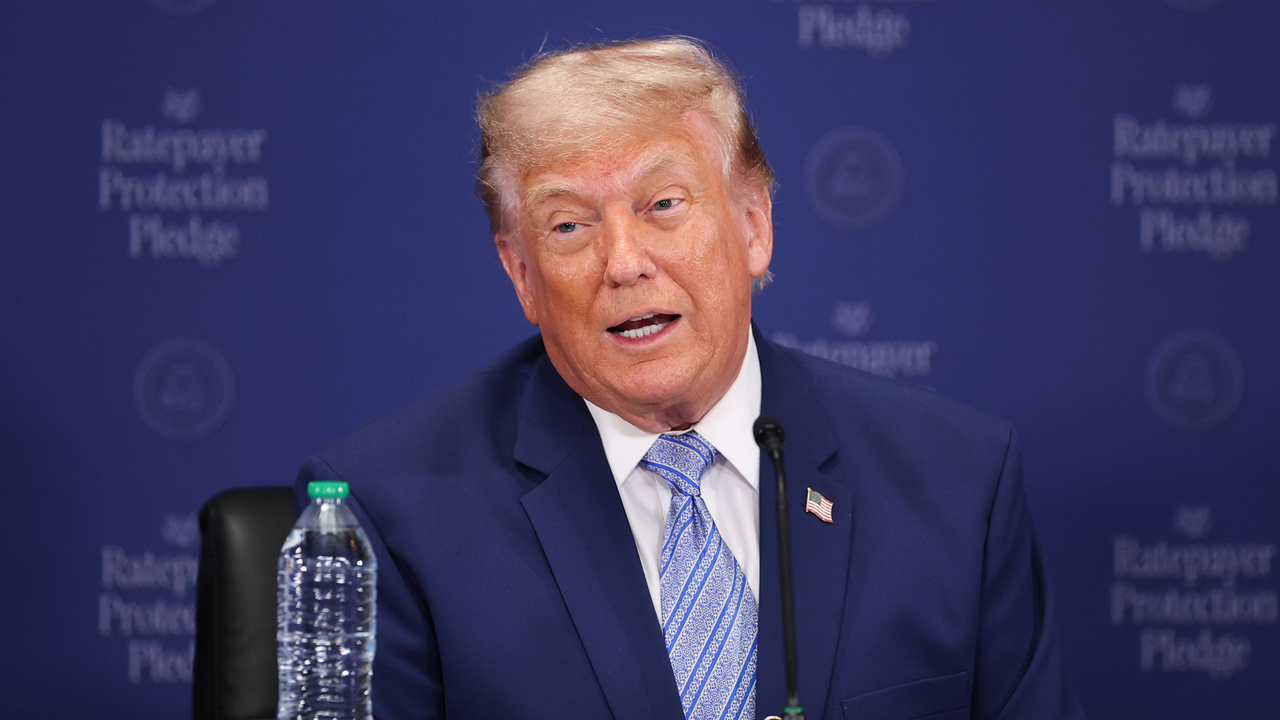
President Trump expands AI data center ‘ratepayer protection pledge’ to include state governors and utility companies — White House claims this will make electricity more affordable

23 state governors and 187 utility companies and data center developers have signed President Donald Trump’s “ratepayer protection pledge,” which is Washington’s way of trying to control spiraling electricity costs driven by the massive power demand of AI data centers. According to The Associated Press, some of the signers include utility companies NextEra Energy, Duke Energy, American Electric Power, Southern Co., and Pacific Gas & Electric, and data center developers Equinix, Digital Realty, and Prologis.

Trump first revealed this promise in late February during the State of the Union address and then hosted some of the biggest AI hyperscalers — including Meta, Amazon, and OpenAI — in the White House a week later to force them to spend on their own power requirements. This was supposed to help bring electricity costs down, with Energy Secretary Christ Wright saying back in March that it “will deliver more affordable, reliable, and secure energy for the American people.” The president repeated this promise during the event, saying, “Electricity bills for American families will actually come down. They’re going to have a lot of electricity left over, and they’ll put that into the grid.”

Unfortunately, the March promise had little to no effect on electricity rates across the country at the moment. Despite the White House’s promises that the pledge would lower utility bills, PJM Interconnection, the nation’s largest power grid operator, slapped Maryland with a $2-billion bill for upgrading its grid to accommodate out-of-state AI data centers. Monitoring Analytics, an independent watchdog monitoring PJM Interconnection, also said that the 75.5% increase in power costs in the U.S.’s largest power region has been directly caused by data centers.

It’s unclear if these cost increases are the long-term effects of the AI build out even before the White House pledge, but it seems the administration is doubling down on it by asking states, utility companies, and data center developers to commit to it, too. Trump has been pushing for the acceleration of the adoption of AI tools and the infrastructure needed to support them, believing that it needs to win in the “AI race” to maintain its global supremacy, especially as China is neck-and-neck with the U.S. when it comes to the technology.

However, the American public is pushing back against these developments, especially as issues impacting electricity costs, water quality, noise pollution, and more that were caused by data centers are widely reported. It has gotten to the point that several jurisdictions have applied temporary bans on data center developments, including Seattle (which plays host to Amazon and Microsoft) and the state of New York. These developments threaten to derail the current administration’s AI policy, which has ordered grid operators to expedite AI data center applications.

The ratepayer protection pledge will supposedly allow the U.S. to have its data centers without punishing the common American with excessive electricity cost increases, but its critics say that it’s just a promise and cannot be legally enforced. The Associated Press says that California is trying to pass legislation that will codify these promises into law.

Oregon is the only state at the moment to have passed a law that forces developments that use more than 20 megawatts of power to pay their fair share. The POWER Act, which was passed in April 2025 — almost a full year before Trump announced the ratepayer protection pledge — forces the power bills of large electricity consumers to “reflect the true costs of their electric service.” Because of this, Portland General Electric (PGE), the state’s largest power supplier, has increased the data center power bills by 30% while also cutting residential costs by 1.3%.

It’s unclear if any of the states that have signed the pledge have similar legislation underway, or what steps the data center developers will take to follow through on their promises. Still, the U.S. president is adamant that states should support data center development within their borders. “You have to convince your community. You can’t fight it. You have to go with it,” Trump said. “If you don’t take all that money, somebody else is going to take it. You might as well do it yourselves.”

✇Tomshardware

142 AI data center protests staged in 42 states as public opposition increases — organizers brand 'unaccountable' buildouts as an 'unacceptable infringement on our liberty'

More than 70% of Americans now oppose data centers, which has resulted in bipartisan moves to block these projects. This pushback isn’t limited to just a few people or towns, either. In fact, a coordinated protest was organized just this weekend, happening in 142 different venues across 42 states, and is the first one to happen simultaneously across the U.S. Forbes reports that this makes community consent scarcer than the chips and other equipment and resources needed to build and run these sites. As Reuters notes, the organisers behind the protests have branded the "unaccountable" data center buildout as an "unacceptable infringement on our liberty."

Data centers have faced shortages of various kinds in the past few years — it began with GPU supply, then evolved into a memory chip bottleneck. Alongside that, there’s also the limited supply of electricity from the grid, as well as the related power infrastructure. But the one thing that many data center developers did not count on was the lack of public support.

This resistance isn’t limited to the streets, as bipartisan political moves have resulted in everything from delays in various projects to statewide bans. More than 69 jurisdictions have already imposed data center bans, with Seattle (home to the headquarters of AI tech giants Microsoft and Amazon) and the state of New York passing one-year moratoriums. Because of this, more than $130 billion worth of data centers have already been delayed in just the first quarter of 2026.

Developers have employed various techniques to get around these bans and opposition. This includes picking sites in rural areas with fewer people (thus less resistance), bringing their own electricity, or claiming that their data centers use less water than lawn care and gardening. But despite all their promises of jobs, investment, and tax revenue, the American public has grown wary of suffering from the consequences of having a data center as a neighbor. This is especially true after reports of increased utility rates, water quality issues, noise pollution problems, and more have widely circulated around the country.

Because of this, any data center project must take the community into account. It can no longer just rely on a friendly town council for approval, especially as the voting public has proven that they are willing to take steps to oust officials that they feel do not represent them. While many know that the U.S. needs data centers to compete in the AI race, they don’t want this to happen at the expense of their quality of life. And while investors can just keep on pouring money into purchasing chips and upgrading infrastructure, they cannot just buy off the community — instead, they need a solid plan that stands up to scrutiny and opposition and accounts for the months or even years it will take for permits to go through and get approved.

✇Tomshardware

Intel layoffs to hit Data Center group — division focused on server CPUs, AI chips, and data center architecture to be hit by an unknown number of cuts

Intel just announced another round of layoffs more than a year after CEO Lip-Bu Tan warned of “tough decisions” required to get the company back on track. This decision has resulted in the reduction of its headcount by more than 35,000 since 2024, when ex-CEO Pat Gelsinger revealed that its data center and foundry divisions have lost $1.6 billion. The latest announcement came months after the last job cuts and is still happening despite the company posting a strong first quarter this year. According to Oregon Live, its share price has more than tripled from a low of $23 per share to more than $96 today, with the data center group reporting sales of $5.1 billion for the first quarter. However, this good performance seems not to have affected the firm’s plan to streamline its operations.

“As part of our broader strategy to become a more focused and efficient company, (the data center group) is aligning its organization to ensure it has the right roles and skills in place to position the business for long-term success,” Intel told the publication in a statement. It also added, “We are committed to treating all impacted employees with respect and providing resources to support them through this transition.” Unfortunately, the company did not say how many positions will be cut and when it is happening — it only assured that the reduction-in-force won’t affect its business commitments and plans to launch new products.

While the AI infrastructure build-out was initially powered by GPUs and memory chips, advancements in agentic AI have greatly increased the demand for CPUs, putting Intel in a good position with its Xeon chips. Aside from that, the company is reporting customer interest, possibly including Apple, for its 18A and 14A nodes. It’s also planning to launch an AI GPU in the latter half of 2026 that will compete against Nvidia’s RTX Pro 5000 GPU.

This is a slow reversal of its misfortunes in the first half of the decade, but it seems that it’s not happening fast enough for its data center group employees who will be affected by the job cuts. It’s quite surprising that Intel plans to gut its Data Center group, which is one of its strongest performers and is in a good position to take advantage of the ongoing AI data center boom. But despite the high demand for AI data centers, it seems that the company still needs to cut its personnel count to streamline its operation.

✇Tomshardware

Memory chip boss admits RAM prices are 'abnormally high' — SK Group chairman considering building a semiconductor plant in the US to expand supply, calm ‘chipflation’

The head of the SK Group, which owns SK hynix, said in a press briefing that memory semiconductor prices are “abnormally high,” and that the industry must take steps to increase supply and help lower prices. The Chosun Daily writes that SK Group Chairman Chey Tae-won delivered this statement during a press briefing at an industry forum, where he also noted that the group is looking at building a memory chip plant in the U.S. to increase production.

“Memory prices are currently at an abnormally high level. While AI companies can absorb increased costs through investments, PC and smartphone manufacturers have no choice but to pass rising semiconductor costs onto product prices,” Chey told the media. “Since most customers for these products are individuals, there are limits to how much prices can be raised. To prevent 'chipflation'—where rising chip prices drive up finished product costs—supply must be expanded.”

Aside from expanding supply and easing memory prices for consumer products, extremely high memory prices brought about by limited supply could negatively impact the big three companies. That’s because the high margins could lead to the entry of new players or give smaller manufacturers the opportunity to grow their presence and challenge the established firms. We’re already seeing this, as some Chinese brands have ditched them for domestically produced CXMT and YMTC chips. While this could be driven by Beijing, even major multinational brands like Corsair and Lenovo have started sourcing from these companies just to get chips. Even Apple is asking permission from Washington to buy memory chips from CXMT. Aside from that, he also cited Elon Musk’s interest in building his own fab as a potential threat to existing memory semiconductor companies.

This isn’t a problem at the moment as there is more than enough demand to go around for incumbent memory and storage chip manufacturers and new entrants. In fact, memory companies can use this as a defense against price-fixing lawsuits, with the massive AI demand and the higher margins it offers standing as a plausible reason why memory chip companies focused on HBM production and reduced DRAM output. But before the AI boom, the memory industry was actually suffering from one of the worst memory downturns to hit the industry for over a decade. So, if and when the memory shortage is over and the memory industry resumes its boom-and-bust cycle, more manufacturers jockeying to find customers in a tight market would make it that much harder for these companies to survive and thrive.

✇Tomshardware

AI data centers must produce as much power as they use, Australia PM says — new national AI framework will also ensure water efficiency and protect intellectual property rights

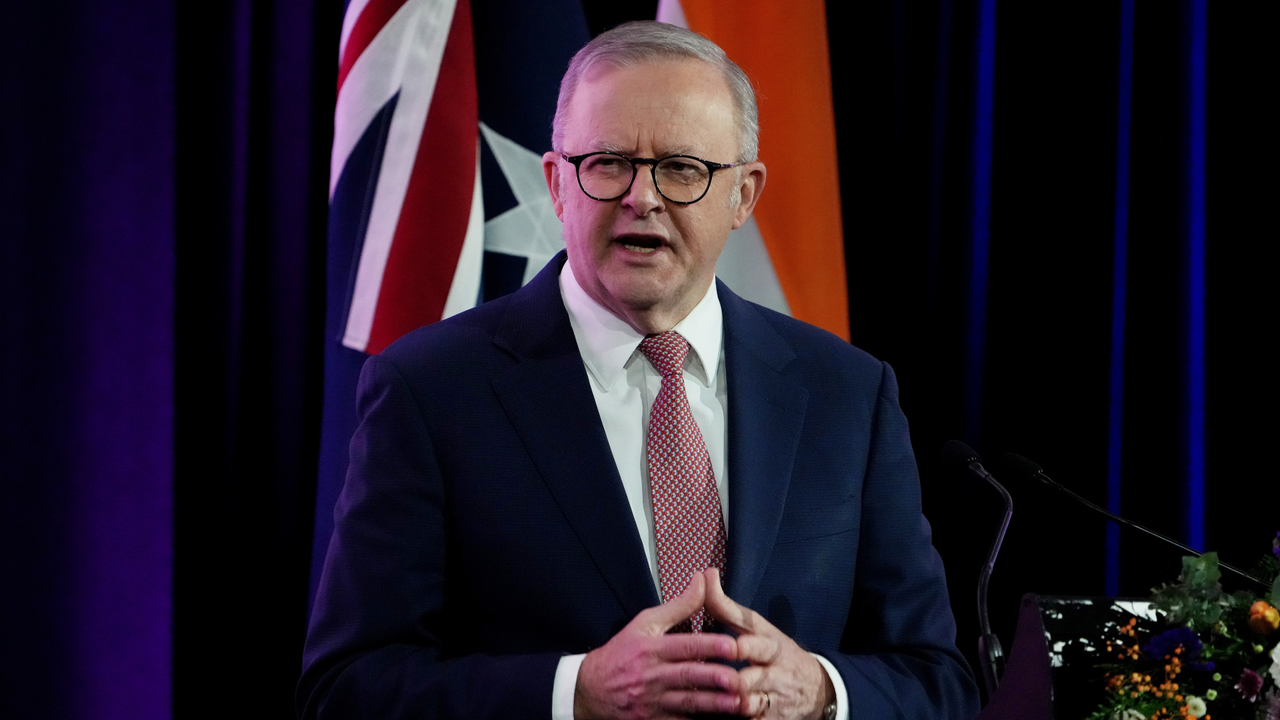
Australian Prime Minister Anthony Albanese said that the government is working to establish the “Australian Standards for A.I.,” which would stand as a national framework that AI companies must follow if they want to operate in the country. As backlash against the negative effects of data centers is making it harder for AI hyperscalers to build and expand infrastructure in the U.S. and Europe, the New York Times reports that many of these firms are now eyeing the Land Down Under for its vast lands and abundant renewable energy sources. But even before they start setting up shop in the country, Canberra wants to get ahead and ensure that these developments do not cause any problems for the general public.

“Every country on earth is grappling with these challenges right now. Australia will be the first country in the world to bring these issues into a single, national framework,” the prime minister said in his speech. One part of this policy will enforce a “legal obligation” for data centers to produce the same amount of power that they consume, ensuring that their presence does not put an unnecessary burden on the power grid that would result in increased utility prices for the average citizen. It also wants to ensure that these projects be as water efficient as possible, especially given that Australia is the driest populated continent on Earth, according to the International Groundwater Resources Assessment Center (IGRAC).

Aside from concern for data centers’ use of natural resources, the Australian government also wants to ensure that the intellectual property rights of its people are protected. Albanese said that Australian creators, including writers, musicians, artists, and news reporters, should “retain control of the price and value of their work” when used for AI training. “Anything less is theft. No country has got this right yet,” says the prime minister.

While some business industry groups expressed their support for the government’s goal, they were also a bit cautious, saying that overregulation could mean that Australia will miss out on the opportunities the AI data centers will bring for the company. University of New South Wales in Sydney professor Toby Walsh, who specializes in Artificial Intelligence, also told The Times that the PM is on the right track, as it addresses the concerns that most Australians have regarding AI and the infrastructure behind it. However, these are just planned policies, and the regulation behind them must still be worked out. “The devil will be in the details exactly what they do,” says Prof. Walsh.

❌