❌

普通视图

发现新文章,点击刷新页面。
昨天以前Tomshardware

One easy change makes Microsoft's Surface Laptop Ultra with RTX Spark a better gaming system

2026年10月22日 21:30

Nvidia's RTX Spark platform puts local AI inference and content creation first, but Microsoft's Surface Laptop Ultra really wants to game, too. The vented keyboard keeps the critical WASD keys cool under load by design, the smooth 120Hz screen can get as bright as 2000 nits with HDR games, and the built-in speakers may be the best I've ever heard on a laptop, period.

There's just one problem: that 3270x2180 screen asks a lot of DLSS upscaling. The computation that DLSS performs doesn't come for free, and the load increases with higher output resolutions. This is especially relevant with the Surface Laptop Ultra's high-density panel, which has just 14% fewer pixels than a 16:9 4K display.

The Surface's unusual 3:2 aspect ratio (at least compared to the average gaming laptop) also means that scaling content up to fill the screen isn't straightforward in many games. 16:9 and 16:10 content gets stretched vertically, causing obvious distortion of character models and objects like tires. And if you use windowed mode instead, playing in a 16:9 or 16:10 window on a relatively small screen like this quickly tires the eyes.

The thing is, all this is easy to solve—easy enough, in fact, that I'm surprised I had to do it myself at all.

Microsoft seems aware that lower 3:2 resolutions are useful for this system, as it put a 1600x1024 custom resolution in the list of display modes that's slightly less than half of native on both axes. But at roughly 1.6 megapixels in total, that image offers less resolution than even a 1920x1080 display does. Scaling up from such a low-res baseline on the Surface screen results in a noticeably soft image even before we dial in DLSS.

What we really want, for reasons of both performance and adequate sharpness, is a 3:2 resolution that comes close to the 2.07 megapixels that 1920x1080 yields. Some quick math and rounding to whole numbers gives us 1764x1176 as an optimal target.

With those ideal dimensions in hand, the next step was to create a custom resolution to match. The Nvidia Control Panel doesn't work on Windows on Arm, but we can still use the Nvidia App to set custom resolutions.
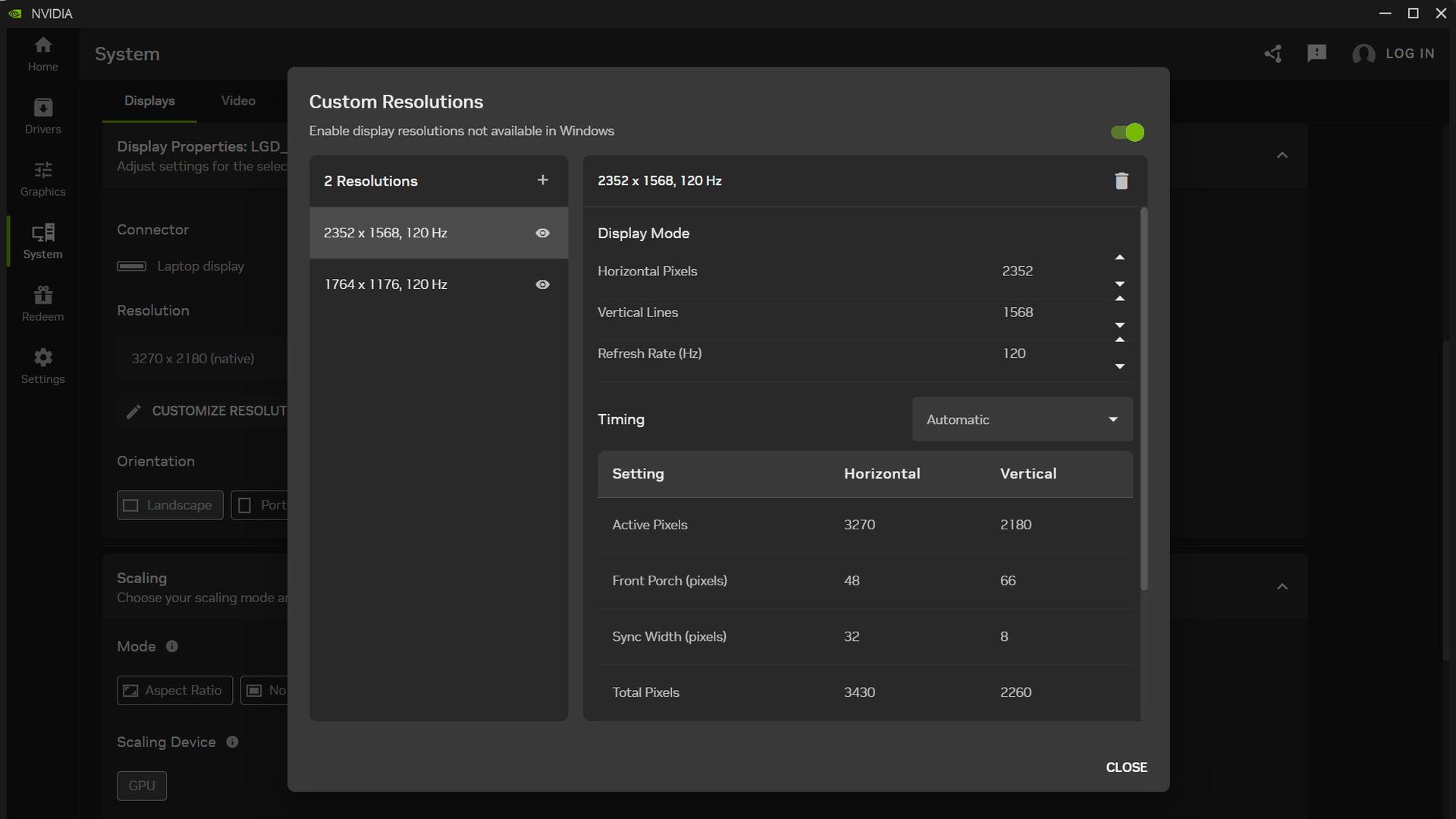
Custom resolution selection in the Nvidia App

(Image credit: Future)

After diving into the System tab and expanding the Display Properties pane, I found the "Customize Resolution" button to open an editor to that end and added 1764x1176 at 120Hz. I then tested it and confirmed that it worked as a supported display mode. (If you want to match the 3.7 MP of 2560x1440, set up a 2352x1568 resolution while you’re at it.)

If for some reason you don't want non-3:2 content to fit the entire Surface Laptop Ultra screen, there is a Scaling pane in the Nvidia App that lets you control that behavior. The "Aspect Ratio" scaling mode will letterbox 16:9 and 16:10 material if you set the display resolution accordingly. But if you're paying $5899 for this system, I presume you want to use every one of its pricey pixels rather than leaving some of them dark.

So what does that bit of tweaking buy us compared to our initial gaming results with Control Resonant?

As someone who primarily games on our Ryzen 7 9800X3D GPU testing system and not a laptop, I wanted to make sure I wasn't setting unreasonable expectations for the Surface Laptop for input latency or CPU performance. So I hauled out an older 17" gaming laptop with a Core i9-11980HK and an RTX 3080 Mobile 16GB inside to get some perspective.

To level the playing field with the Surface Laptop Ultra and its native support for frame generation, I modded Optiscaler into Control Resonant on that system to enable Intel's Xe Frame Generation and Xe Low Latency features.

I conducted my testing with Control Resonant's High raster preset and medium RT preset, which gets you a noticeable boost in image quality thanks in part to DLSS Ray Reconstruction.

Control Resonant performance - High raster, Medium RT, DLSS Ultra Performance, FG 2X

Average FPS

1% Low FPS

Average input latency (ms)

Surface Laptop Ultra - 3270x2180

63.5

38.1

87. 9

You can see that with these settings, trying to upscale Control Resonant to the Surface Laptop Ultra's native resolution is too much to ask for a smooth or responsive gaming experience. Even with DLSS Ultra Performance (an input resolution of 1090x727) and 2X frame generation, we only just break 60 FPS, and latency is at an unacceptable 87 ms average. There's no latency budget left to turn up MFG without turning down other image quality settings.

Control Resonant performance - High raster, Medium RT, DLSS Quality, FG 2X

Average FPS

1% Low FPS

Average input latency (ms)

Surface Laptop Ultra - 1764x1176

83.4

42.9

67.8

RTX 3080 Mobile + 11900HK - 1920x1080

87.1

53

69

With our 1764x1176 custom resolution, however, we're off to a great start with DLSS Quality upscaling (an input resolution of 1176x874). The resulting 83.4 FPS average, 42.9 1% low FPS, and an average input latency of 67.8 ms is a fine experience. We still have room to dial in MFG 3X, leading to a 123 FPS average and 55 FPS 1% lows while keeping latency a reasonable 71 ms.

The RTX 3080 Mobile system with XeFG and XeLL, meanwhile, turns in an 87.1 FPS average, 53 FPS 1% lows, and a 69 ms average input latency at 1920x1080 with the same image quality settings. Its key advantage is in 1% lows, but that win comes with significant trade-offs.

Plugged into our Watts Up meter, the RTX 3080 system draws 250 W from the wall to deliver the experience it does, but according to a USB-C power meter, the Surface Laptop Ultra pulls between 110 W and 120 W under load. Silicon has come a long way since Tiger Lake and Ampere.

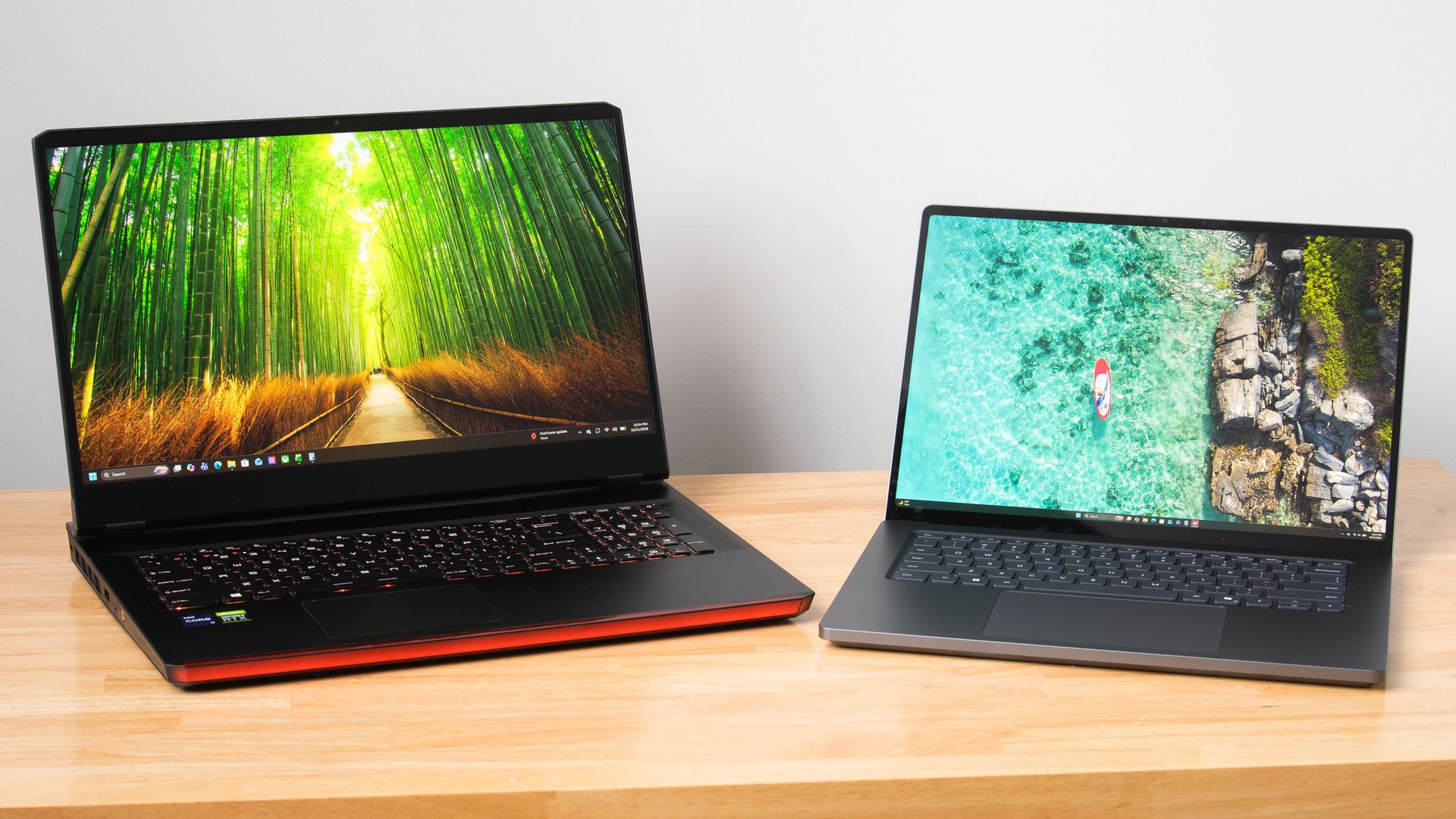
The RTX 3080 system and its enormous power adapter together also weigh over nine pounds (4.1 kg). It's technically portable but practically a pain to haul around. The Surface Laptop Ultra and its 140W adapter weigh just 5.3 lb (2.39 kg), which isn't featherweight but won't break your back.

And the Surface will actually fit on a tray table or your lap, with enough battery life that you can use it through a transcontinental U.S. flight, say, and still have plenty of juice left for either side of the trip.

So at least in Control Resonant, the Surface Laptop Ultra is delivering largely the same gaming experience as that high-end RTX 3080 Mobile system, but in a much smaller and lighter total package that draws less than half the wall power. And if you want to stretch frame rates further with MFG 3X, the Surface has MFG support that the older system doesn't. Just add in the 1764x1176 intermediate resolution that Microsoft forgot, and you’ll be well on your way to a better gaming experience.

EA is closing BioWare, the studio behind Mass Effect and Dragon Age, after more than 30 years

作者 Shane Downing
2026年10月22日 19:30

Electronic Arts (EA) is closing BioWare and its Edmonton studio, according to a recent letter to employees, which confirms that early development on the next Mass Effect game has also been canceled. The studio was behind Mass Effect and other popular franchises such as Dragon Age, Star Wars: Knights of the Old Republic, Neverwinter Nights, and Baldur’s Gate during its 31-year history. EA is focusing on Battlefield, Iron Man, and a Fight Night revival instead.

https://t.co/TicSujMWpsOctober 21, 2026

BioWare, a “legendary studio,” in EA’s words, had a small team working on early development of the next Mass Effect game, but the company “made the decision not to move forward with this development.” BioWare was acquired by EA in 2008, and EA itself went private in August. The next game in the series was first announced in November 2020 and teased that December with an official trailer on EA’s Mass Effect YouTube channel. In 2021, the Mass Effect Legendary Edition remaster of the original trilogy was released. Since then, the studio has been relatively quiet except for Dragon Age: The Veilguard in 2024.

EA spared only a few lines for BioWare, instead focusing on three priorities: Deepen Our Core, Expand Our Reach, and Transform Our Business. Battlefield 6 is touted as “a great success” as the company is focusing on Apex Legends modes, Marvel’s Iron Man, and the next Star Wars Jedi game. “Project Gridiron” falls under the EA Sports heading as a social-first, open-world experience from EA’s American football team, with a Fight Night revival currently in pre-production. The company hasn’t forgotten about The Sims, either, and intends to “prioritize [its] efforts on ‘Project Evergreen.’”

Those impacted will be supported “in exploring other opportunities within EA.” EA did not give a job count, and neither the Mass Effect nor the Dragon Age series was declared dead. BioWare’s released games were also not mentioned.

Veilguard, as EA described it early last year, engaged only about “1.5 million players during the quarter,” which was “down nearly 50% from the company’s expectations.” That reception may have played a partial role in the decision, though EA did not say so. Around the same time, BioWare general manager Gary McKay said that only “a core team” was working on the next Mass Effect game and didn’t “require support from the full studio,” as colleagues were matched “with other teams at EA.”

The move is not entirely unexpected, with job cuts being common in the industry, for example, with Microsoft announcing 3,200 Xbox job cuts in July, citing low margins.

EA did not reveal any dates for major titles, but it plans to discuss its direction and the work ahead with staff at its Global Town Hall in November. For now, it looks like EA is doubling down on its core franchises and dropping the studio to refocus on what’s been working.

Oblivion gamer uses Claude AI to boost average FPS gains up to 48%, stutters slashed by 90%

作者 Zak Killian
2026年10月20日 20:30

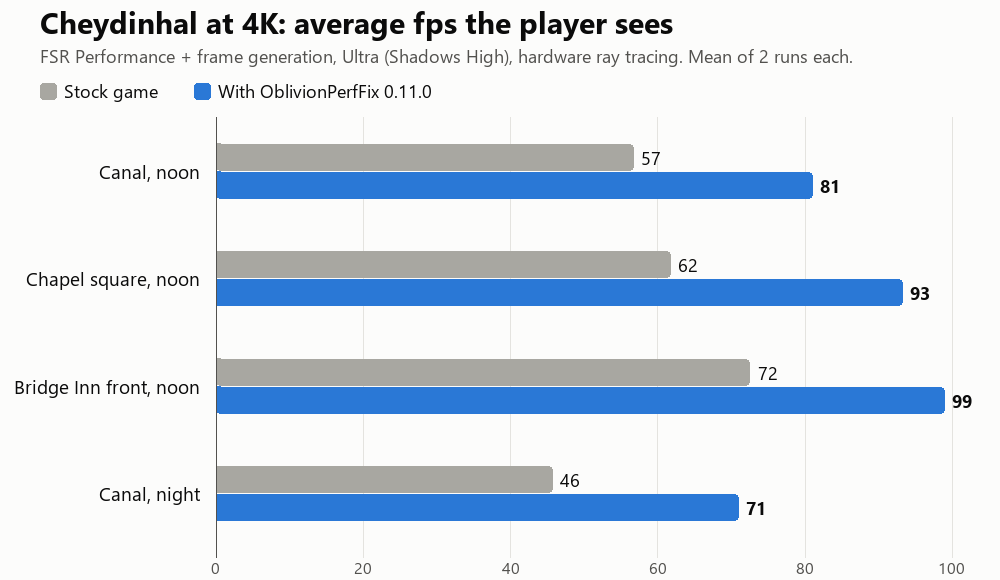
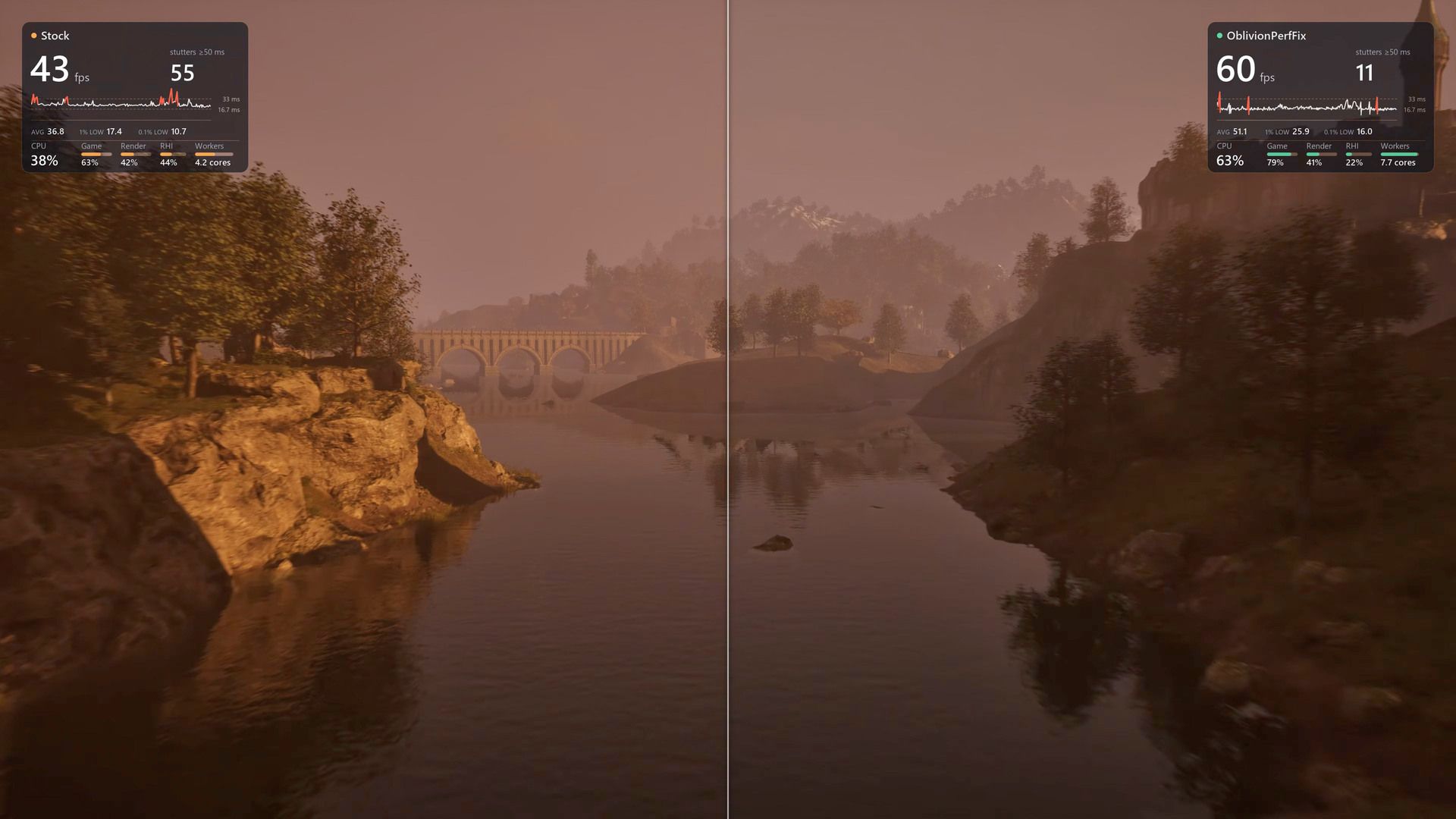
The revelation that there was a ton of performance lying on the table in the remastered The Elder Scrolls Part IV: Oblivion won't be a surprise to people who have played the game, which is notorious for its hitching and stuttering. The reason primarily lies in its poor utilization of hardware, and that's a big part of what LTSharpe and Claude have addressed in the new Oblivion Remastered Performance Fix that changes nothing about the game's visuals yet increases performance by as much as 68% in the worst case. (h/t to ComputerBase)

Yes, this mod is just about 100% vibe-coded, and yet, rather than hacking Minecraft into GTA V on iPhone, or hacking CoD Black Ops 2 maps into Minecraft, this mod is a binary code modification for Oblivion Remastered that seeks to improve performance and stability considerably, and according to numerous jubilant and thankful posts on NexusMods, it seems to do exactly that, with one user proclaiming that the performance increase was "dramatic" and that the overworld stuttering that plagues the game is "completely gone."

An image with benchmark graphs showing the original Oblivion game's performance versus the performance-modded game.

(Image credit: LTSharpe on GitHub)

The story goes like this: gamer and mod creator LTSharpe has a slightly older system with a Ryzen 7 5800X CPU. Not the newest chip on the block to be sure, but Zen 3 isn't so old that it should be crumpling under the weight of games just yet. Frustrated with the verifiably awful performance of the remaster of The Elder Scrolls Part IV: Oblivion, he paid for a subscription to Anthropic's Claude AI agent and started working with the assistant to diagnose and fix the performance problems.

"Diagnose" is a critical keyword here, because it isn't like Claude was hallucinating an engine.ini tweak somebody else published for the original game 20 years ago. The partners, with Claude doing the hard work and LTSharpe directing, reverse-engineered the game to the point that they were able to build a repeatable benchmarking framework. That allowed them to systematically diagnose the causes of the performance problems and then test fixes against the real behavior of the game with modified machine code.

That's the thing; this was done without source code. Neither TES4 Oblivion nor the remaster's Unreal Engine is open-source software. The sheer magnitude of the task would be incredibly daunting to a team of human engineers, much less a single person. According to LTSharpe, over the course of two weeks Claude successfully diagnosed and fixed bugs in not only the Remaster's Unreal Engine code, but also in the underlying Gamebryo original engine, in AMD's frame generation code, and even in the Unreal Engine itself, improving performance and avoiding crashes.

The developer—or perhaps we should say, coordinator?—is careful to acknowledge that the performance tweaks were created with his system specifically in mind and that they may not work well for others. Indeed, he has a Radeon graphics card, which puts him within a surprisingly small minority of PC gamers, and some portion of his fixes were aimed at making sure AMD's FSR upscaling and frame generation remain in effect despite a long-standing game bug that disables them when you task-switch (Alt+Tab) out of the game. The good lieutenant invites other gamers to try out the fix and report back, and he's even helping out with support requests on NexusMods, too. Head over there if you're keen to grab the fix and try it for yourself.

French rioters ransack eSports team premises and are seen looting RAM sticks from PCs

作者 Mark Tyson
2026年10月19日 21:32

Leading French eSports club Team Vitality has confirmed that its Paris HQ has been smashed up, with trophies, computer equipment, and more looted over the weekend. Thankfully, no team members or staff have been hurt. The team’s V.Hive premises were attacked by criminal opportunistic looters under cover of the widespread protests in France over issues related to school funding, living costs, and government spending cuts. Other shops, public buildings, and property have been smashed, looted, and sometimes burned.

Aujourd'hui, les locaux de notre club ont été pillés en marge de la mobilisation du 17 octobre.Heureusement, aucun membre de notre staff ni aucun fan n’a été blessé. En revanche, nos vitrines ont été détruites, nos trophées et notre matériel informatique volés.En attendant d’évaluer la totalité des dégâts, V.Hive restera fermé.Plus d’informations seront communiquées par la suite.Prenez soin de vousOctober 17, 2026

Above, you can see the confirmation of the serious, unfortunate events seen over the weekend. “Our display windows were destroyed, and our trophies and computer equipment were stolen,” lamented the post [machine translation], while being thankful that no members, staff, or fans of Team Vitality were hurt. The bulletin ends with the news that the V.Hive will remain closed for now, until after damage has been assessed. More information is promised in due course.

There are a multitude of social media posts sharing images, videos, and pointing fingers at what they see as the cause of the protests, riots, and looting. Of course, fingers point in all directions, and unfortunately there are also reports of AI-generated rage-farming media, so keep a critical eye open should you dare to doom scroll.

Of course we’ve focused on the damage and looting of Team Vitality’s HQ due to the tech angle. The compendium of video clips shared by the news organization NEXTA provides evidence of the extent of the V.Hive attack. This 30-second clip appears to show rioters hammering at and kicking in the eSports HQ’s windows, taking items from the premises, and throwing gaming chairs onto bonfires in the street.

Los "estudiantes" franceses saquearon la arena de Esports de paris y se robaron el trofeo que team vitality gano en el torneo de counter strike Tambien se robaron las PC gamer y las destriparon ahi nomas en plena calle https://t.co/FjEkVPDuV6October 17, 2026

We also see accounts like ElBuni share clips of looters brandishing what appear to be eSports trophies from Team Vitality’s HQ (embedded above). The second clip shows looters with their hands inside gaming PCs opened up on the sidewalk. It looks like the hooded and gloved looter in the video is removing RAM sticks, an easily pocketable yet highly valuable PC component, as you will all know.

This morning, the French Prime Minister has called for local and partial curfews to contain the post-demonstration rioting. Meanwhile, there are concerns that there could be copycat behavior across Europe.

Web-based chip fab engineering game goes viral in Taiwan

作者 Mark Tyson
2026年10月18日 20:50

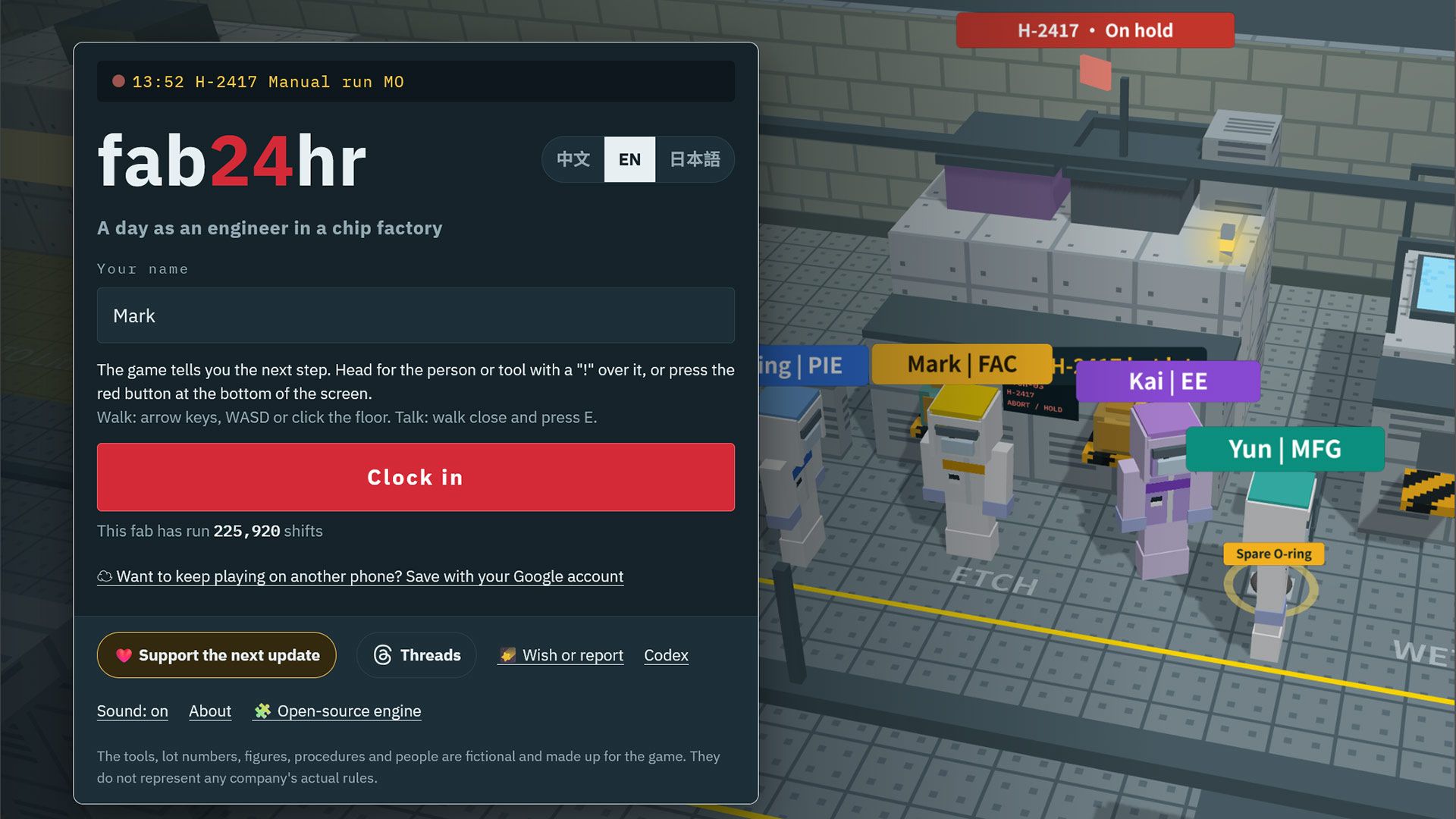
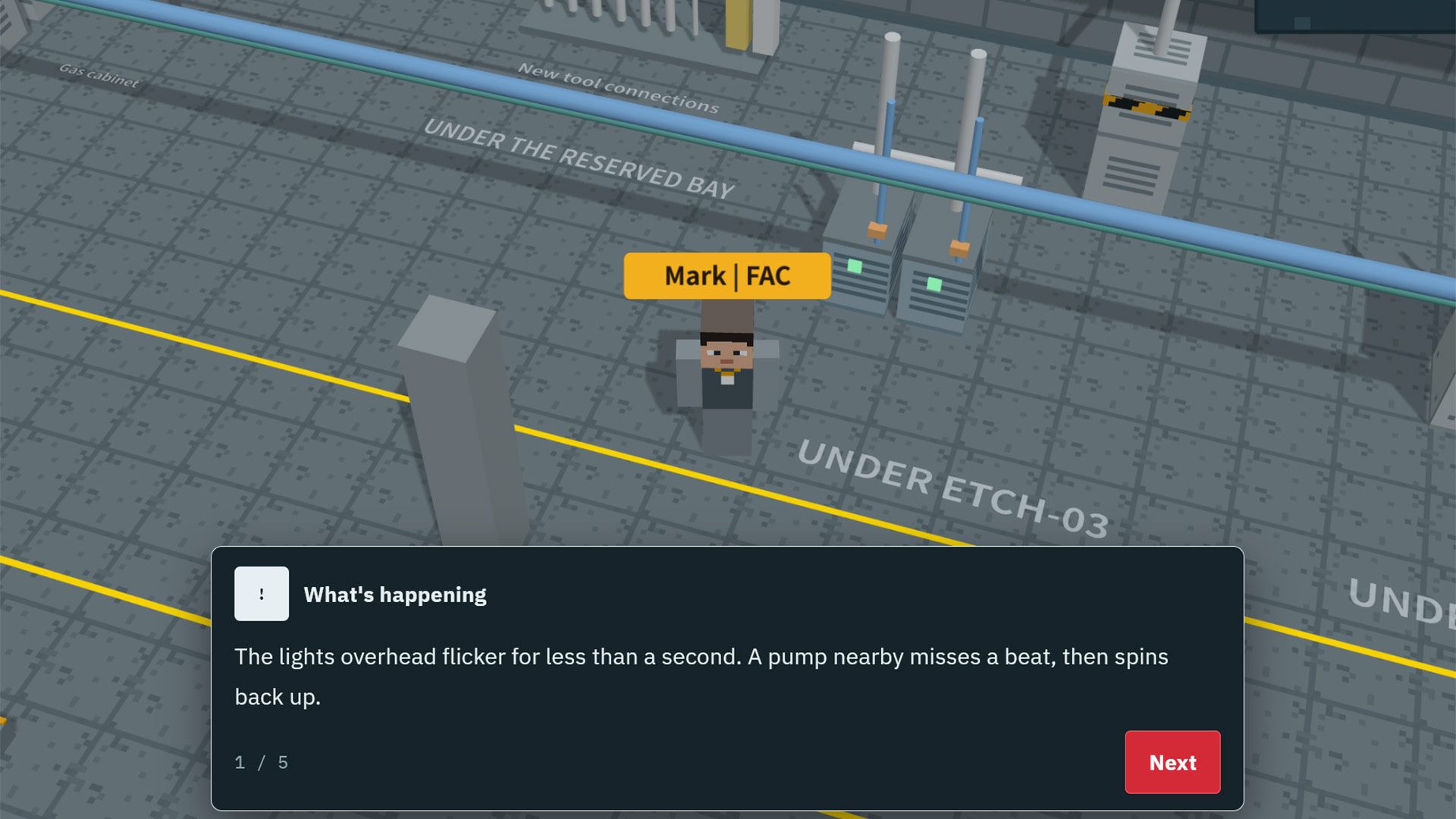
A new 3D web game where you live "A Day in the Life of a Semiconductor Wafer Factory Worker" has gone viral in Taiwan, where it was developed. Available in Chinese, English, and Japanese, Fab24hr is a work simulator where you play one of several semiconductor engineer roles in a blocky isometric 3D factory. Though the graphics might look basic, Taiwan’s TVBS news says that the game is so realistic that it resonates with fab workers but not always in a good way – some have likened it to "a horror game" or "prison" [machine translation].

Fab24hr wafer fab engineering game
Fab24hr
Fab24hr wafer fab engineering game
Fab24hr
Fab24hr wafer fab engineering game
Fab24hr
Fab24hr wafer fab engineering game
Fab24hr
Fab24hr wafer fab engineering game
Fab24hr

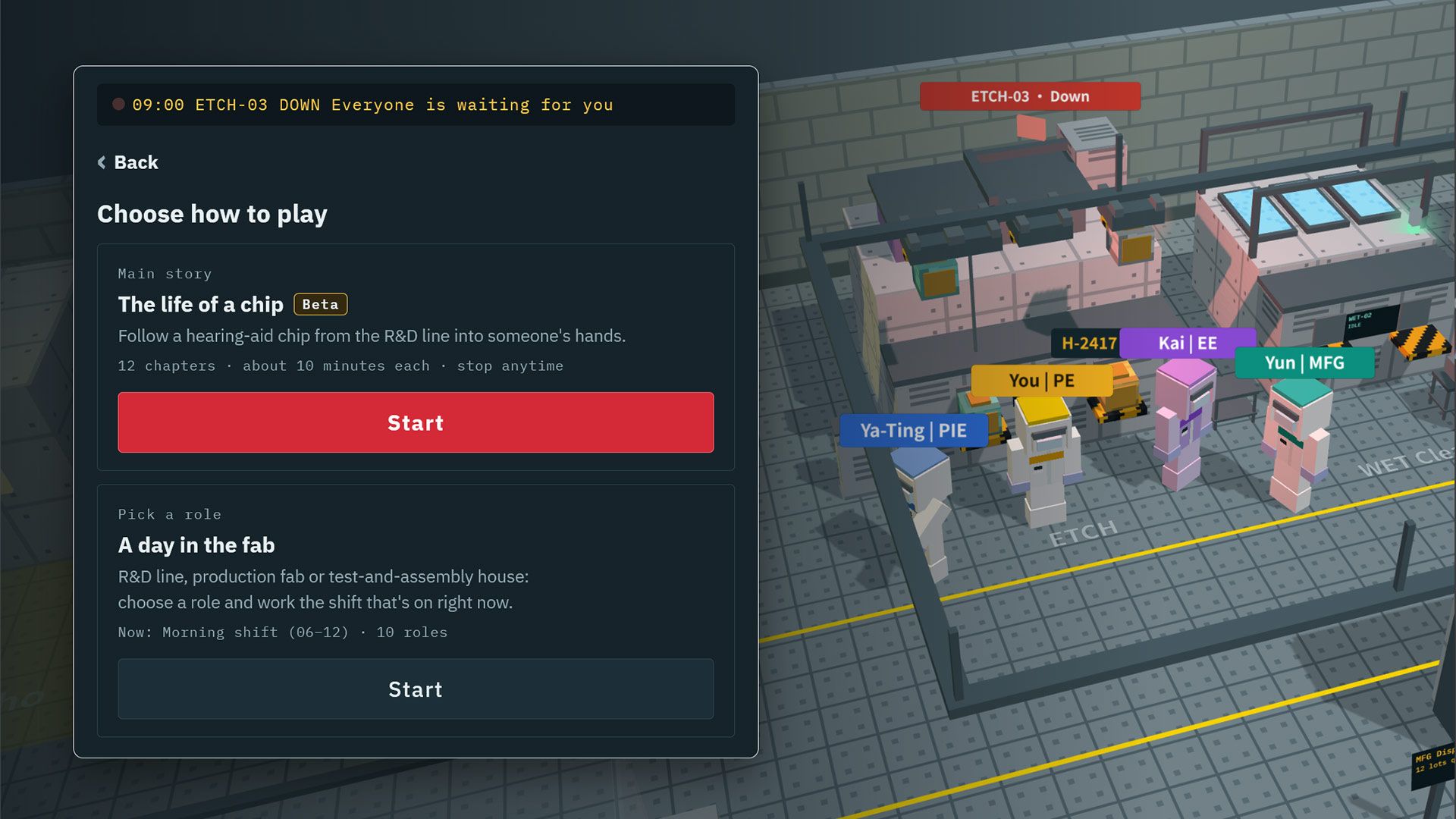
If you head over to the Fab24hr site, the game UI loads pretty quickly and you are asked to input a character name and ‘Clock in.’ Then two game modes are presented. You can play the main story, dubbed ‘The life of a chip’ where you character works through 12 chapters shepherding a hearing-aid chip from the R&D line into the hands of an end user. In this mode your blocky fab worker character will simulate dealing with equipment failures, process anomalies, and production progress emergencies. You might also have to file reports about operational errors. Apparently there are three endings to this 12-chapter game, depending on your progress and decisions.

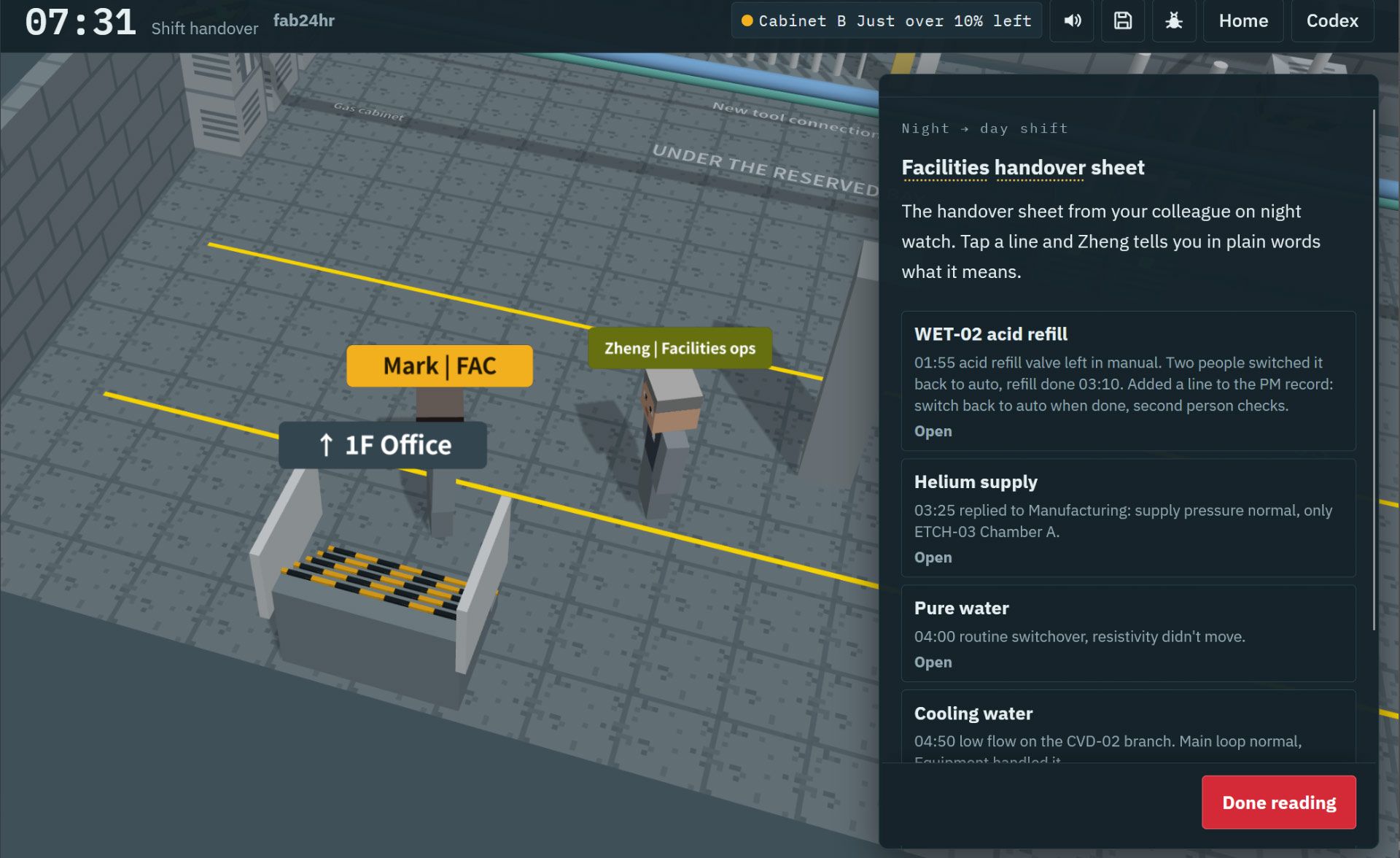
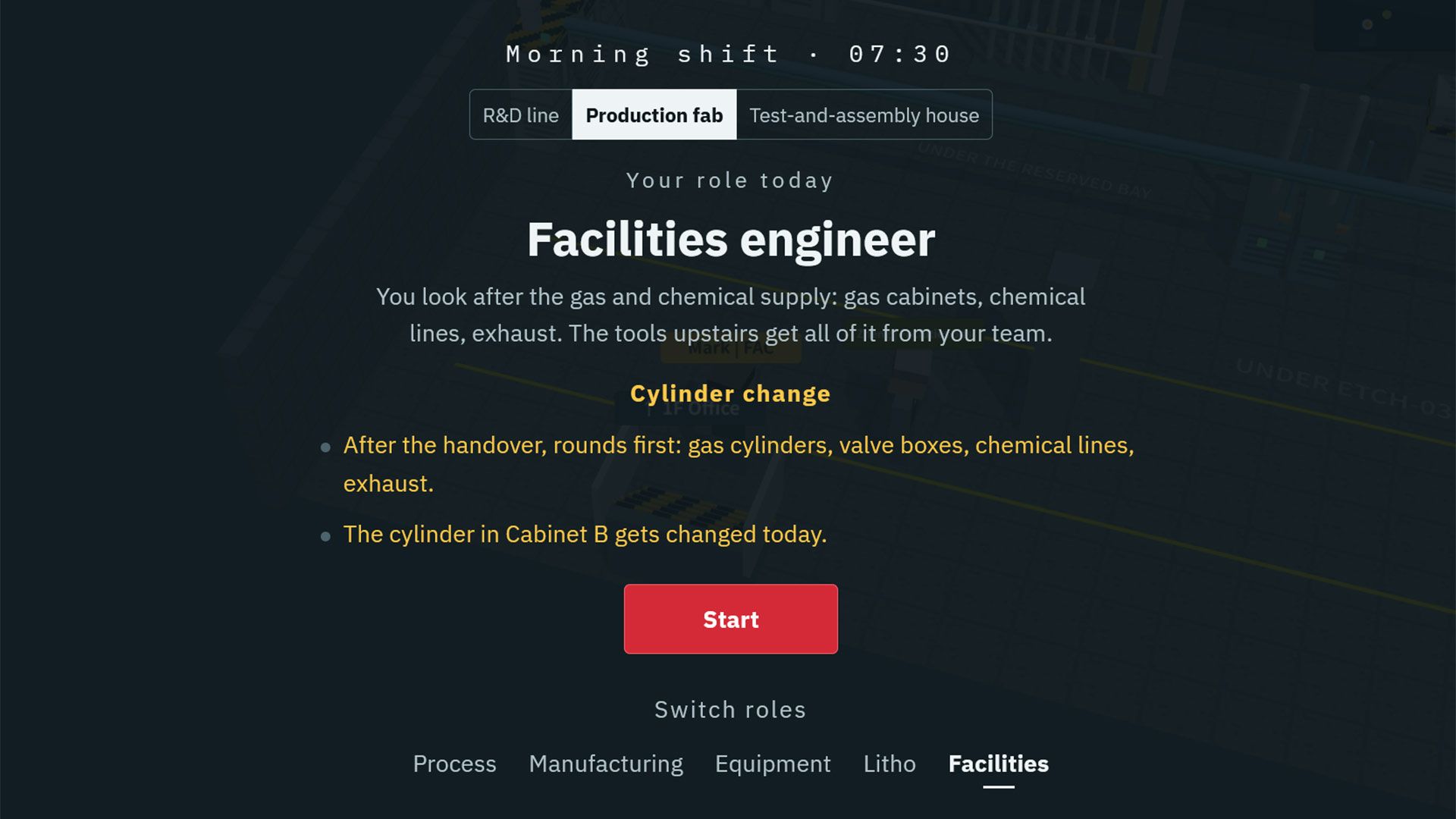
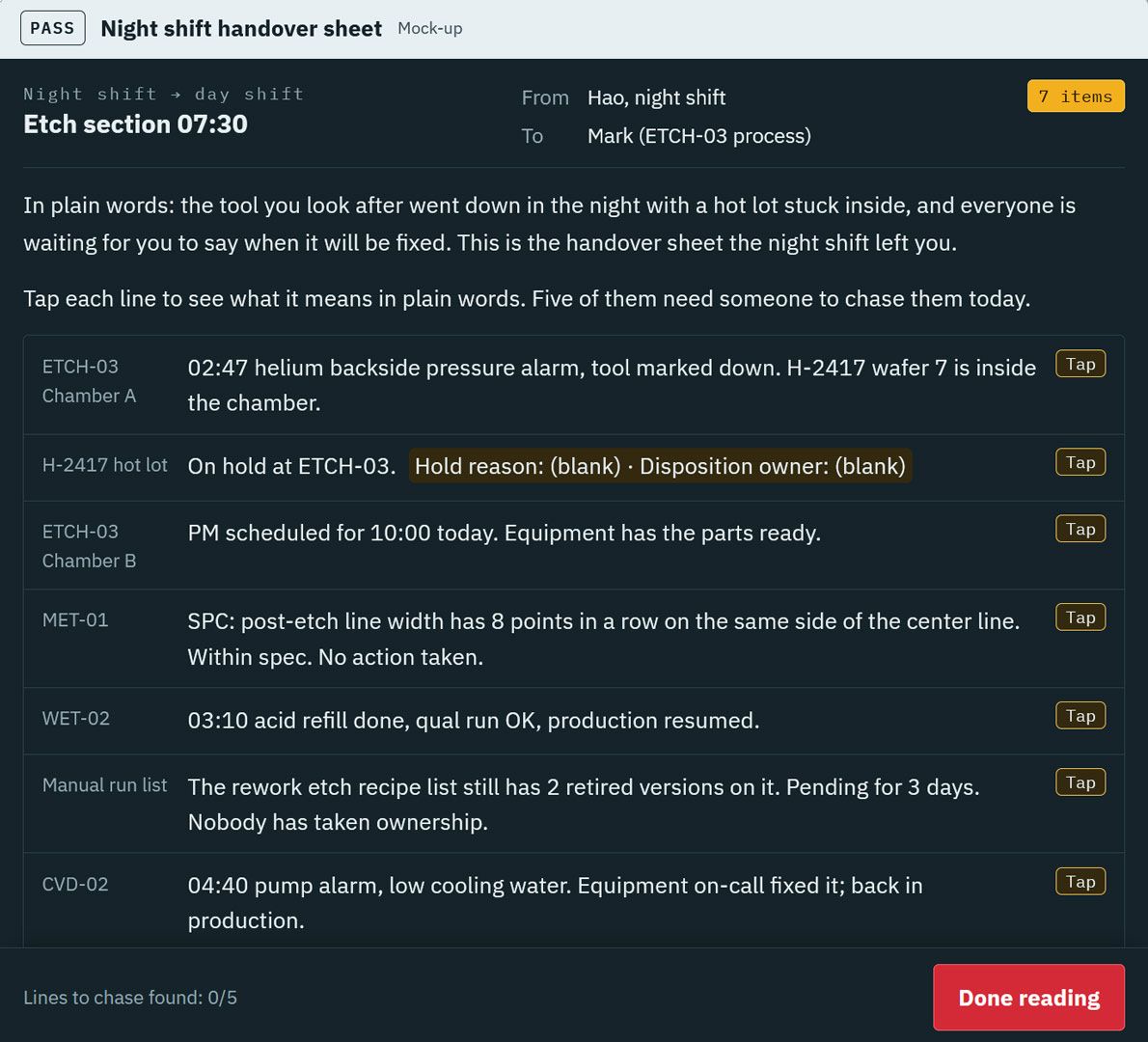
Another game mode is called ‘A day in the fab.’ Here you pick a factory location and role. For example, you can choose to be a Process Engineer. Your day started with the ETCH-03 semiconductor tool breaking, and “everyone is waiting for you to say what time it will be fixed.” Though this might sound like you’ve been thrown in at the deep end, if you pay attention to the handover from the previous shift, there should be clues to get you by. Technical terms are explained in the game so even those with no semiconductor industry experience should be able to ‘enjoy’ this escapade.

I briefly tested the game in my browser, where it ran without issues. It didn’t take long to understand why some Taiwanese fab veterans felt this simulator was kind of stressful, or even “super scary.” It isn’t the kind of free-time escapism I’m looking for.

Epic introduces an improved version of anti-cheat for Linux

2026年10月16日 19:30

Epic Games says that it’s working on an update for its anti-cheat solution for Linux that would close the gap in capabilities with the Windows version of Easy Anti-Cheat. The company said that EAC Linux V2 will use existing Linux features to make it easier for distribution maintainers to meet these requirements by default, which should allow more Linux gamers to play competitive titles without needing to make changes to their current setup, but with the trade-off of forced adherence to certain security measures that the Linux community often avoids.

EAC Linux V2 currently has the following requirements: Signed Kernel and Kernel Modules, TPM 2.0, Secure Boot, Measured Boot, Input-Output Memory Management Unit (IOMMU), Kernel Lockdown Integrity Mode, Kexec Disabled, and Linux Security Module BPF. The company says that it expects to iterate on these requirements over time, and that it’s looking to work with developers and distribution maintainers to refine these requirements. Using these features means that EAC Linux V2 will not need a kernel driver like the Windows implementation of anti-cheat, although it may require some distro maintainers to effect a configuration change to work with EAC Linux V2.

As for Linux players using an EAC-Linux-V2-compatible game and distro, they need to install an anti-cheat systemd service that only runs alongside a protected game. Once they quit the protected title, the anti-cheat service would also end its process. Some of the distros the EAC Linux V2 recognizes signing keys from include Ubuntu, Linux Mint, Fedora, Bazzite, and Debian, among others, meaning gamers already using these would be able to play protected games provided that their machine also meets all other requirements.

Even though Epic is trying to reach as many Linux gamers as possible, these features will likely not be well received by the community. Some Linux users don’t trust big tech, and it is often one of the reasons why they switched over to the open-source platform in the first place. Enforcing these requirements just to play a single game would go against the ethos of having full control of one’s hardware and software, which is one challenge the anti-cheat systems working on Linux must deal with. Epic does offer some compromises, like allowing multiple boot options so that Linux gamers can still maintain their preferred configuration when they do not intend to play a protected title. But the fact that something with this many stringent requirements is installed on their system may not sit well with many users.

Epic Games vibe codes new launcher because 'programming is hard,' claims it starts 46% faster than Steam

作者 Jake Roach
2026年10月14日 23:44

Epic Games has a new launcher available to download now, which was redesigned with AI. The company says it "vibe coded" the new launcher, and claims it's "way faster" than the current version, as well as 46% faster to start up compared to Steam. Epic Games has set up a landing page where you can download the new launcher, as well as browse its new enhancements.

"Programming is hard. So, instead of doing that, we vibe coded a new Epic Games Launcher that’s way faster and more responsive than the current one, and has a new look," wrote Epic Games in a blog post discussing the new launcher. The launcher is currently in "preview" phase, which is somewhat of an open beta. Epic is gathering feedback, and anyone is free to download the launcher. In the future, it plans a stable release after it gathers and addresses feedback.

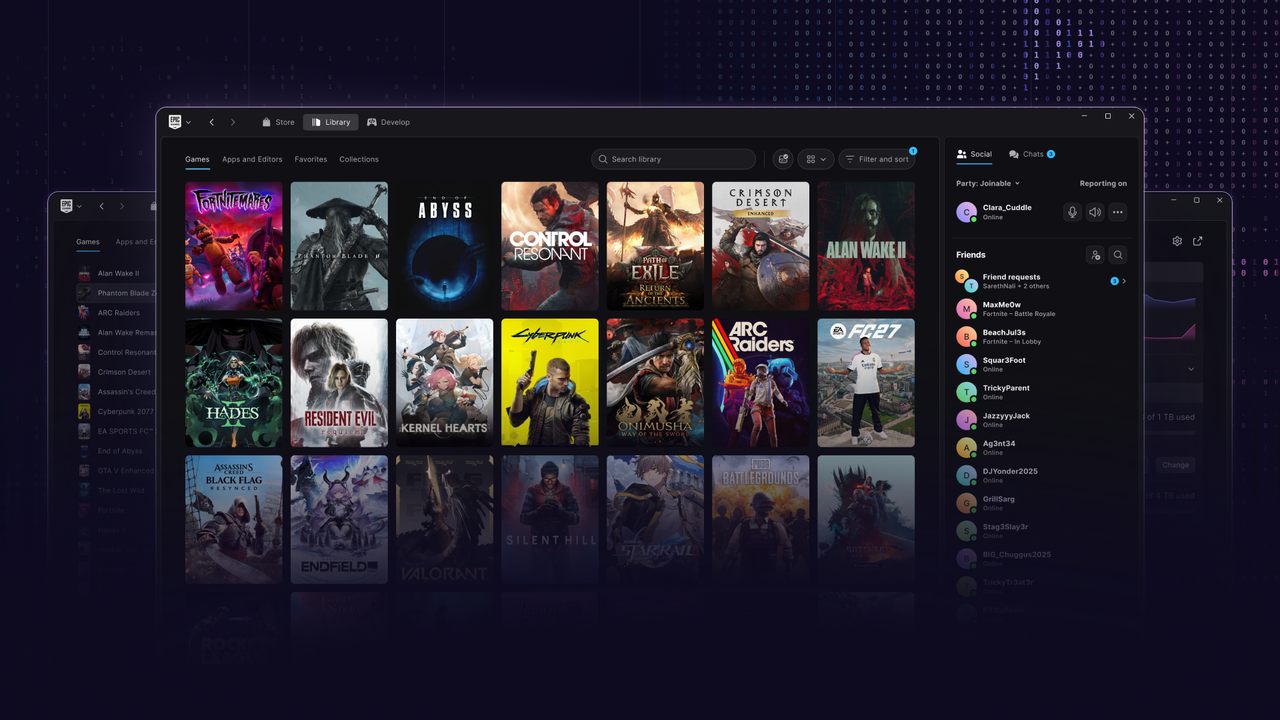
Although the headline startup figure is what Epic focused on its blog post, the updated launcher comes with several additional features, many of which are preset on Steam but weren't previously available with Epic. There are dedicated pages for games in your library now, for instance, as well as a unified downloads page. The app also includes collections, a big feature of Steam, allowing you to organize your library into different categories. On the landing page, Epic claims the new library is "30x faster," though doesn't provide any details beyond that point.

Although the launcher has new features, it's still rough around the edges. For instance, the new social menu now follows you around from the store to your library, with no option to close or resize. Epic also highlights that "certain social features and account management options" are missing from the new launcher. The company says it's working toward "feature parity."

Additionally, Epic Games suggests developers working on Unreal projects, as well as competitive players in Fortnite and Rocket League continue to use the old launcher. It's not clear why Epic is pointing these groups toward the older launcher, but it raises some red flags about what gaps might be present in the new, vibe coded launcher.

Epic Games Launcher vs Steam.

(Image credit: Epic Games)

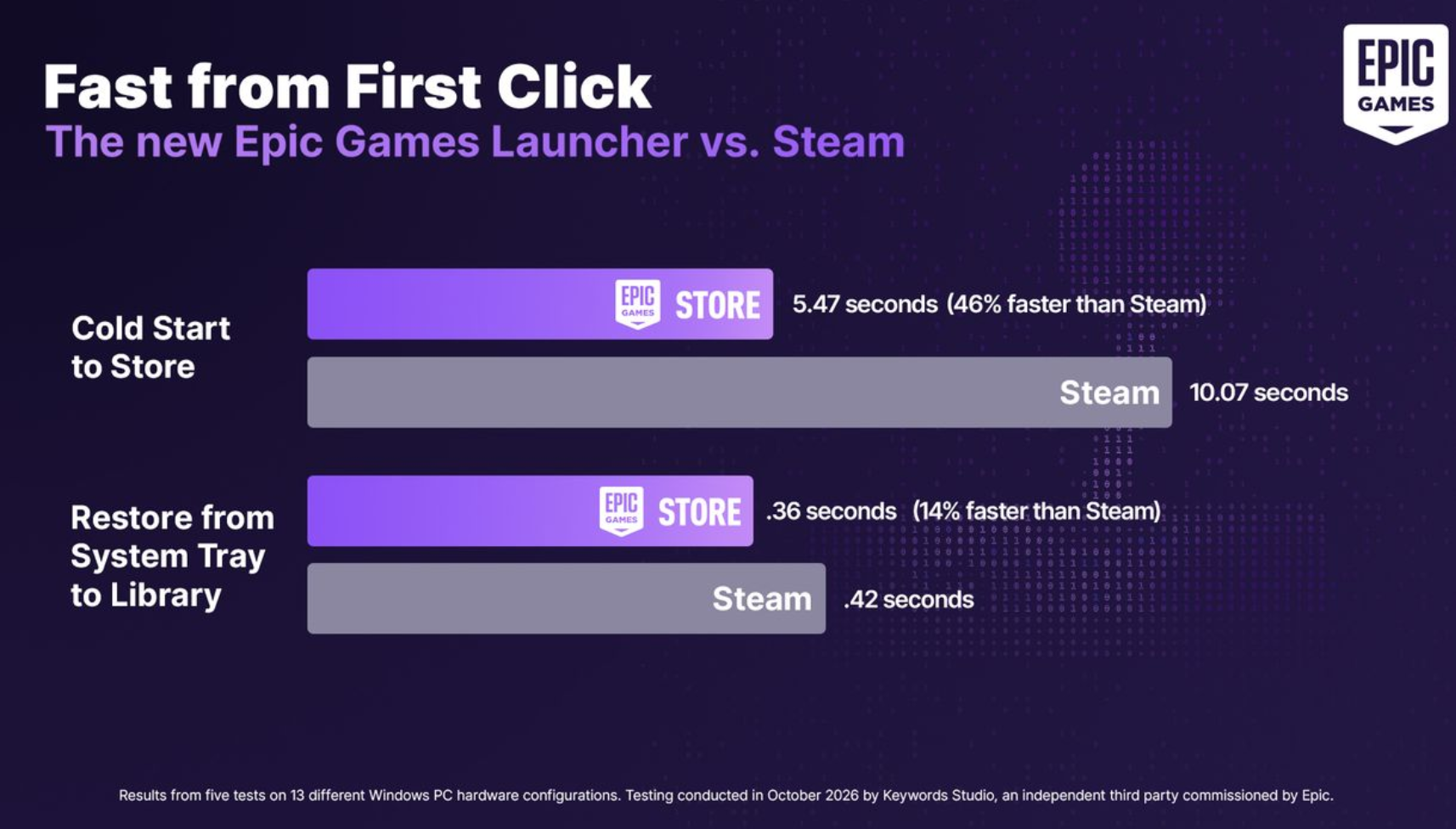
Epic says its new launcher is 46% faster than Steam from a cold start, as well as 14% faster when restoring from the system tray; though, the latter metric only accounts for a whopping 0.06 seconds. Epic commissioned the testing from Keywords Studios, somewhat of a matchmaker in the video games and entertainment industry for a variety of services (including benchmarking, apparently). Epic says its results were gathered from five tests across 13 Windows platforms.

Interestingly, Epic didn't provide any performance details about the new launcher compared to the old one, outside of saying the new launcher is "way faster and more responsive."

The Epic Games Launcher preview is available to download now, with native versions for Windows, macOS, and Linux. Windows 10 and 11 are supported, as is macOS 12 or newer. On Linux, you'll need at least Ubuntu 22.04 LTS, Fedora 43, or Debian 12.

Epic has recently pivoted to an AI-first company, at least according to Epic boss Tim Sweeney. The company has reportedly delayed a Disney-based shooter, with another director telling staff that there should be "no more handwritten code" and that art will be "generated with full AI workflows."

Modder injects leaked DLSS 5 4x Multipass on 1996 Quake

2026年10月14日 18:00

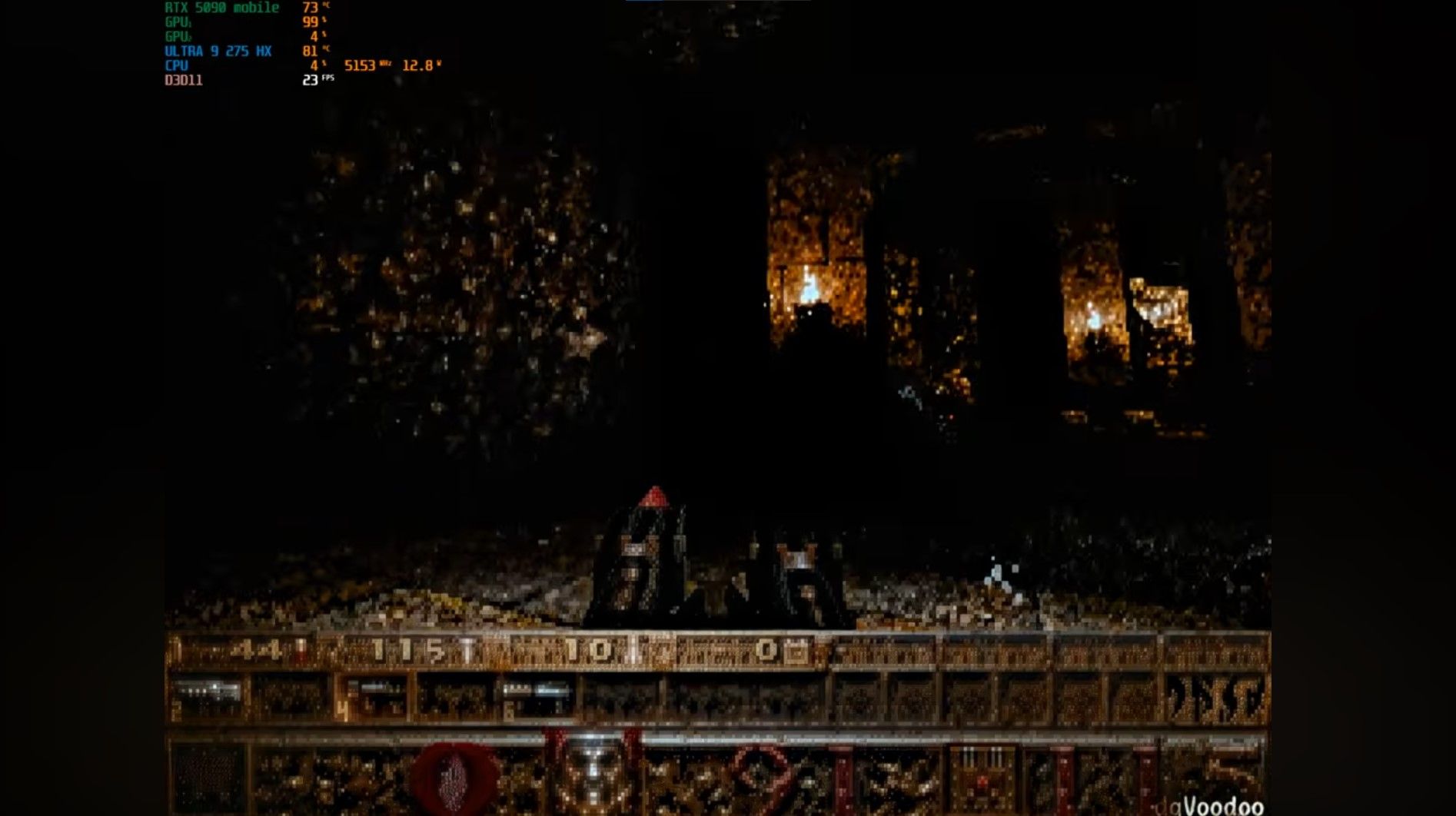
A Ukrainian DLSS 5 experimenter is back at it again, this time testing the original Quake game. It’s running as a post-process, not natively integrated into the game engine, using 4x Multipass to enhance the effect, but it doesn’t look so good.

Valery Kryzhanovsky has posted multiple videos running DLSS 5 on games it was never meant to be used for, nor were the games built with AI upscaling and image enhancements in mind. We previously covered a few of Valery’s projects, running DLSS 5 on 2D games like Duke Nukem and Pac-Man, resulting in weird and cursed images.

However, this time Valery uploaded a video of it on the 1996 Quake, considered to be the very first true 3D FPS in history. Valery explains in the description that the game is not running the leaked DLSS 5 build natively, but as a post-process using ReShade through RenoDX to play with the parameters and settings and inject the effect on DOSBox’s rendered frame. So it’s an emulated version of Quake with basically an AI filter with the DLSS 5 algorithm over it four times, except it’s running in real time on a game. This is similar to how others have experimented with DLSS 5 on videos, applying the effect on top, like JackSpace’s video to “fix” bad CGI in old movies with DLSS 5.

Before DLSS’ popularity, Nvidia released an RTX demo running Quake II with ray tracing in the game engine to improve the lighting. That demo looked stunning, with realistic lighting and reflections, but DLSS is not ray tracing/RTX; it’s an upscaling technology that runs well on RTX cores. And on top of that, DLSS 5 is not even integrated into Quake’s engine, explaining the terrible results. However, this is a very early build of DLSS 5, and Valery says in his blog that the leaked build is undertrained. I honestly thought it would do better, considering there are more obvious 3D elements for the upscaler to work with compared to the 2D games Valery has experimented with. It seems that it darkens everything so much, possibly because of the sparse distribution of torches and highlights.

This might fare better if DLSS 5 were integrated into the engine, like how Sultim Tsyrendashiev modded ray tracing into Quake's engine, similar to Nvidia's Quake II demo.

Earlier this week, Nvidia announced that it had improved the performance of its DLSS 5 model by 2x, while shrinking its footprint by 24%. The result should be higher FPS while using less VRAM, drastically increasing performance.

GTA 6 could come to PC as early as Q1 2027, leak claims

作者 Oliver Haslam
2026年10月14日 00:22

Grand Theft Auto VI, or as its friends call it, GTA 6, will be a console-only game when it goes on sale on November 19. But while Rockstar Games has yet to confirm when PC gamers will be able to get in on the action, a new GamesBeat report claims that it will be within the first three months of 2027.

With GTA 6 launching on Xbox Series X|S and PS5 in around a month, PC gamers have been left wondering if they should consider picking up the console version — and even buying a whole new console to play it. But GamesBeat reports that might not be necessary, with a Q1 2027 release potentially sooner than a lot of gamers had worried may be the case.

Those gamers had plenty of reasons to be worried that a longer wait could be in the cards, too. GTA V was released on consoles around a year and a half before the PC version. Console gamers were able to put the game through its paces in September 2013, with PC owners waiting until April of 2015.

While far from official, the news comes from industry sources "familiar with the studio's plans," although they were given anonymity for obvious reasons.

It's perhaps no surprise that Rockstar Games is keen to open GTA 6 up to as many potential buyers as possible. It's thought to have cost upwards of $2 billion to create, and making that money back is a lot easier when you add PC gamers to your list of customers.

Rockstar Games will also likely want to get its money-making online version of GTA 6 into the hands of players as soon as possible, too. It won't be ready at launch, but is expected to debut in 2027.

While GTA games have historically been popular among console gamers, there are reasons to choose the PC version if it's available to you. The console version of GTA 6 is expected to run at just 30 FPS at launch, for example.

GTA 6's development hasn't been an easy one. The game itself is thought to be in the hands of "Cyberleek," someone who has already shared clips of the game and has threatened to leak the entire game if their demands are not met. Those demands include their memecoin reaching a $30 million valuation, perhaps hinting at their true motivation.

Google Preferred Source

Epic Games reportedly delays Disney shooter title so it can pivot to AI coding

2026年10月13日 19:22

Epic Games has reportedly delayed a shooter based on Disney’s Marvel and Star Wars franchises, with its developers told to use more AI. According to Bloomberg, the yet-to-be-named game was supposed to be released in March of 2027, but its launch date has been pushed back to an unspecified date. Aside from that, the company also told the people working on the project to switch to an “AI first” production model. One of the game directors was quoted telling staff that there will be “no more handwritten code” and that the game’s art would now be “generated with full AI workflows.”

Around the same time this news came out, Epic boss Tim Sweeney posted an update on X that seemingly confirms the change. “We have a huge pivot underway here at Epic, moving developers around to retool for maximum AI acceleration,” the Epic founder said on the platform. “The aim isn’t to do the same stuff with fewer people, but to enable everyone here to build MORE and BETTER stuff, and to bring the benefits to all teams using Unreal.” Sweeney has previously criticized Steam for putting AI tags on games, calling it “irresponsible of Valve.” He says that AI is just a tool and that it’s useful for handling boring, menial, and repetitive tasks like finding errors in code or rigging 3D models. “We’re embracing AI-accelerated development, led by Epic developers who are the visionaries and creative drivers for everything we do,” Epic Games communications director Jake Jones told the publication.

We have a huge pivot underway here at Epic, moving developers around to retool for maximum AI acceleration.The aim isn't to do the same stuff with fewer people, but to enable everyone here to build MORE and BETTER stuff, and to bring the benefits to all teams using Unreal.October 12, 2026

The announcement still reportedly left some of the developers working on the project in a state of astonishment. They were hoping that the directive wasn’t serious or that Epic Games would change its mind about the decision, while others jokingly asked if they should ask Claude to fix its own errors. The delayed title was supposed to be the first in a series of games involving Disney intellectual property, which had invested $1.5 billion in the game developer and publisher in 2024. However, Bloomberg reports that progress on the game has suffered because it lacked the number of people required to keep the schedule on track. It seems that the company is trying to make up for lost time by pushing its people to use AI in the hopes that they’ll be able to work much more quickly.

AI is indeed quite a useful tool, with some developers using it to build surprisingly complicated vibe-coded games, like this GTA clone set in Taipei or this decompiled version of Call of Duty: Modern Warfare 2. One group even used Gemini for their free game demo, leading to a cost of $1,000 a day in AI usage bills. Despite that, many creators and developers have been against the use of AI in the industry, with one major gaming convention in the UK outright banning games that were built mostly using AI.

Two Steam games generated $560,000 across 135,000 sales, but the co-creator only took home $15,000 annually

When it comes to the gaming industry, the billions bandied about regarding AAA titles often lead many to think that if your game scores a hit, you're essentially set for life. Unfortunately, the sad reality is that indie developers often have to end up pinching pennies or outright in a deficit despite strong sales. Omer Develioğlu, the co-founder of Northend Games, offered a candid breakdown of how $560,000 in income over five years for sales of his games ended up as just $134,000 split two ways, with $73,000 in his and the co-founder's pockets. In the end, the co-creator got only $15,000 per year and continues to drive his 2012 Mazda, hardly the riches one would expect.

The $560,000 gross figure refers to sales for two titles: Northend Tower Defense and Deepstone Rift (Early Access), both sold on Steam, for a grand total of 135,000 units. In an accompanying video, Develioğlu mentions that an impressive 53.3% of sales come directly from China.

Unfortunately, he also says that the country's customers are very demanding, and that the refund rate there is disproportionately large. Thus, $134,000 goes right away towards said refunds, with a rate of 22%, "way above" the purported standard of 10-15%. For what it's worth, the Chinese refund rate is corroborated by both older and recent third-party figures. Current tally: $426,000.

Then there's Steam itself. The platform is widely beloved by gamers everywhere for its value-add features like the Workshop, but also for the basic notion of not making the other platforms' questionable business decisions. Having said that, Gabe Newell's enterprise has also been on the receiving end of criticism thanks to fees starting at 30%, which only go down for amounts over $10 million and beyond. As Develioğlu's games are nowhere near those figures, 30% it is: $127,000 for Steam, and $297,000 for the devs... or so you'd think.

Next up, there's the U.S. withholding taxes. The developer lived in Iraq and moved to Thailand, a country that has a tax agreement with the U.S. to prevent double taxation. Even still, Uncle Sam's slice is 5%, bringing the total down to $287,300.

Now, it's time for one of the more controversial aspects: the publisher's cut. According to Develioğlu, his Asian publisher took care of PR, distribution, and marketing in the China, Japan, and South Korea regions. The fact that the majority of the game's sales came from China could mean the publisher did a good job, but the cut was hefty: $115,000, seemingly in a sliding scale, leaving take-home at $172,000.... before local taxes.

Develioğlu doesn't clear up what the publisher's cut, perhaps due to an NDA. The most logical option is that the $115,000 fee refers to the sales in Asian countries. Given that 53.3% of sales are in China, and that the publisher also handled Japan and Korea, this would mean a percentage cut of around 35-40% of net income.

As an exercise, we ran the figures assuming no publisher, only 15% of sales in Asia, and a lower refund rate. Interestingly, the net amount was nearly the same.

Thailand's offices also want in on the action, and take 15% away from Northend Studios, a mercifully low rate as it's a digital product. Even still, it's $26,000 off the cash pile, now reduced to $146,000.

Finally, Develioğlu split this 50/50 with his co-founder at Northend Games, for a grand personal total of $73,000 for five years' work, or roughly $15,000 per year of work. As the developer notes, he lives in Thailand, and this comparatively small amount is still more than the country's average wage, letting him make games as a full-time occupation. (For reference, the average wage in Thailand is around $5,280 a year).

But as he says, despite making half a million dollars in sales, instead of buying a Lamborghini, he still drives a 2012 Mazda.

Free Steam demo runs up $1,000 daily AI bill and forces devs to take out bank loan

2026年10月10日 20:52

Easy Fox, the developers behind a free, AI-powered game demo on Steam, has been forced to take out a bank loan as more players tried out its title. The game, called Teach My Little Sister How To Drive, uses Google Gemini to listen to your voice commands and generate responses, with ChatGPT serving as a fallback system. In its latest update, Easy Fox said that the number of players trying out the game has grown over 20 times, which is more than what it expected. This led its costs to skyrocket to more than a thousand dollars daily, and cheaper fallback AI models have led to slop injected into gameplay, impacting the user experience.

SteamDB showed an average player count of under 10 people until late August, when it started gaining steam. By late September, this had ballooned to around 50 players, before finally hitting a peak of 431 on Oct. 1. “We are currently spending over $1,000 per day on AI services for the demo,” the team wrote on its Steam update. Easy Fox also added, “This isn’t because each player is particularly expensive to support. The total cost has increased because so many people are playing, and we have taken out a bank loan to help keep the demo running.”

Since the game’s sole control method is your voice, AI is a critical part of its programming to recognize your commands and translate them into instructions for the virtual little sister. Since the game is still a free demo, Easy Fox needs to pay for the ongoing usage costs of the game. However, the developers said that the cost of using AI will be included in the price of the game once it gets final release. “For the paid release, we plan to account for expected AI usage in the game’s price,” the team said in its update. “Players will not be charged separately for their individual AI token usage after purchasing the game.”

The developers also said that they plan on introducing local AI models for gamers with capable hardware, so they don’t have to rely on external services, which could run into limits. This is one of the issues that the game has been grappling with, especially as the increased number of users has caused it to hit usage limits on Google Gemini. This has forced the game to fall back on the less capable ChatGPT Realtime Mini 2.1 model, which has led to some player issues, like delayed responses and wrong inputs. It also said that it’s testing alternative AI models for smoother gameplay in Russia, which does not have easy access to Western models because of sanctions. They might find it hard to find suitable replacement AI models, though, because Ukraine has struck Russia’s largest data center.

Increasing AI costs is one of the reasons why some companies have abandoned tokenmaxxing. Even though the price of AI has been falling quite rapidly compared to other technologies, the fact that AI agents use so many more tokens than AI chatbots has made the use of the technology more expensive than anticipated, especially as AI subscriptions have hit a pricing wall.

Ukranian modder slaps DLSS 5 onto Pac-Man with 4x Multipass

2026年10月10日 20:00

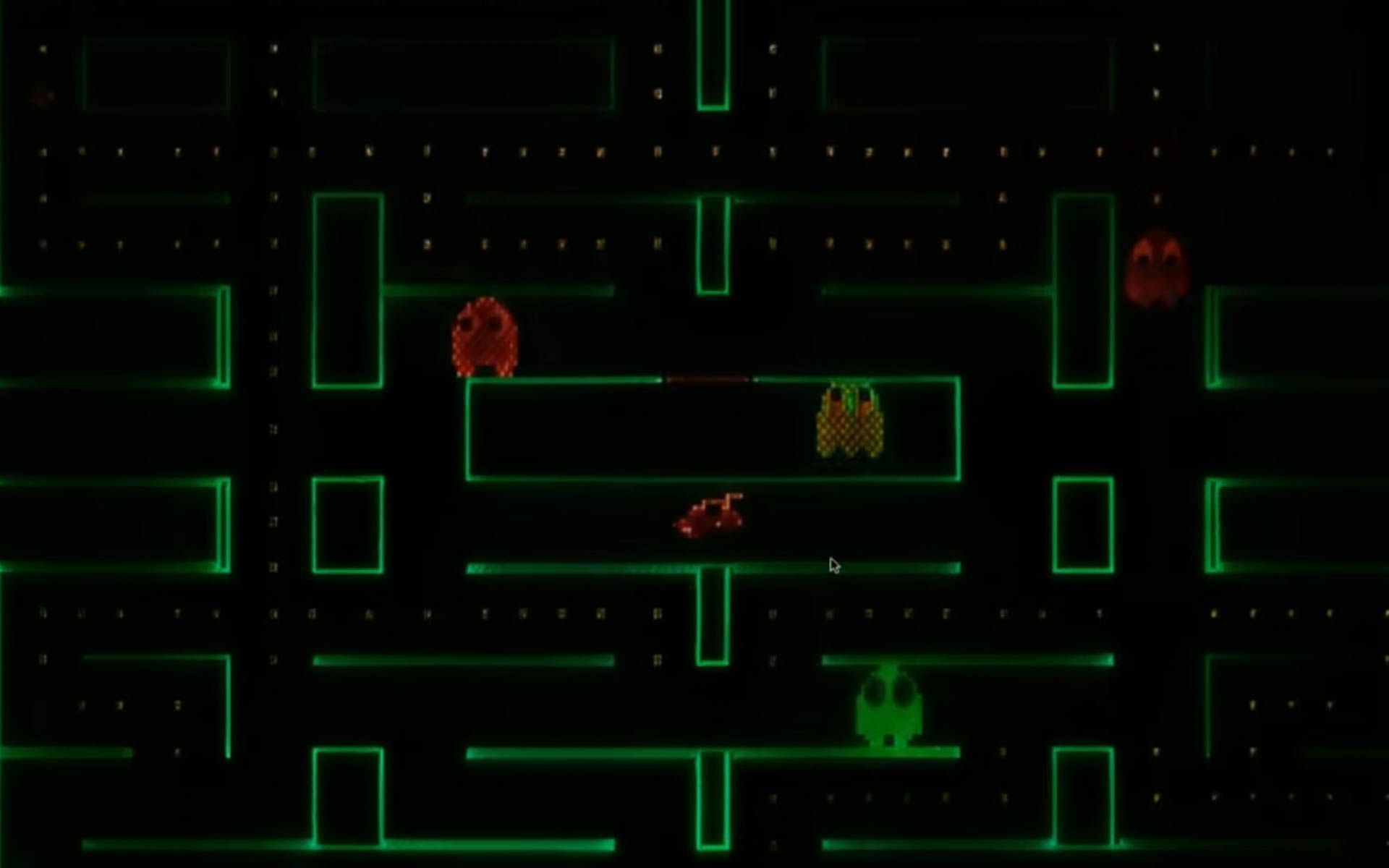
Ukranian DLSS 5 experimenting YouTube channel Valery Kryzhanovsky showcases the MS-DOS version of Pac-Man with 4x Multipass in four different rendering modes. The video shows weird and glitchy effects, with some rendering modes completely removing green Inky’s eyes and the dots.

This cursed experiment is another attempt at putting DLSS 5 in games it wasn’t designed for, nor are the games designed to use such upscaling technology. While Nvidia’s leaked upscaler has been used for modern 3D games it’s designed for, it has become a meme to run it in games that aren’t even 3D at all, and some attempts aren’t even games at all.

Valery was able to do this by running Pac-Man through the MAME arcade emulator and using ReShade to inject DLSS 5 into the graphics pipeline, and RenoDX to allow the DLSS 5 parameters to be tweaked. Valery emphasizes that this is not native, and of course it isn’t; the game was never designed to accommodate anything like it — that’s why it needed to be injected externally.

Valery elaborates why 4x Multipass is needed in his blog post, saying that 1x basically does nothing for some older games. Multiple passes are needed in order for the changes to stack up, stating that this usually makes it look bad, but in some cases, photorealism could be achieved. However, for Pac-Man, there is basically no 3D information DLSS 5 could gather. The game is flat, and it has barely any human-like features for DLSS to enhance, except eyes, which is probably why it gave it sunken eye bags or cheekbones, as Valery described in the description of the video. Duke Nukem, however, fared a lot better with the metal environment and occlusion along the walls and ceiling.

In the video, Valery tries out 4 different rendering modes: Natural, Default, Cinematic, and Denoise. Valery describes each mode: “Natural keeps the maze readable. Default decides the ghosts need cheekbones. Cinematic puts Blinky in a film nobody greenlit. Denoise clears the board of everything, dots included. One yellow circle, four ghosts, and four different opinions about what any of them are supposed to look like.”

The video doesn’t state which modes are enabled, but one of the modes definitely removed the eyes from the green ghost, making it look genuinely terrifying, as if it were one of those cursed game Creepypastas. All it needs is some red dots in that hollow chasm, and you’d have a stereotypical 2013 scary meme.

Valery further explains in his blog post that DLSS 5 is still undertrained, lacking temporal context, and is similar to earlier DLSS models. The 150MB DLSS 5 build is only a small peek into what it could be come release date — which will come with a more mature model and likely a larger file size.

Arc Raiders publisher developing AI anti-cheat stack in escalating war with cheaters

The publisher behind Arc Raiders is now training in-house AI models to detect cheating as the arms race escalates with persistent cheaters. Cheating on online games is a perennial problem, and it only gets worse the more a title becomes popular, which is why the Arc Raiders developer released an update on its anti-cheat measures. According to Arc Raiders executive producer Aleks, Embark Studios has been working on the issue, and it has deliberately been scant on details to make it harder for cheat engine makers to adapt. However, this stance has been frustrating some players, which is why the company finally gave some details of what it has been working on behind the scenes.

Embark Studios said that it’s already using kernel-level anti-cheat from Denuvo, and that it also detects cheaters using Anybrain’s AI service. But aside from those third-party providers, the company said that it’s also using artificial intelligence to build in-house models to help detect cheating. “In addition to kernel-level protection from Denuvo and detections from Anybrain, we’re using a growing set of in-house models built around machine-learning and other data,” Aleks wrote. “These systems work together to identify suspicious behavior and build confidence before action is taken, while allowing us to continue improving detection as new cheats emerge.”

Aside from building and using anti-cheat tools, the developer is also tightening its enforcement of anti-cheating rules. A permanent ban is now the standard sanction for anyone caught cheating, and it will not give any warnings or second chances to offenders. It has also started associating copies of the game to accounts accused of cheating, so cheaters can’t simply make a new account using the same game license to get back into the game. Other accounts linked to a banned copy of the game will receive the same permaban, as well.

Aleks also said that Embark Studios is working on a hardware ban to cut the number of repeat offenders, and that it hopes to implement this solution later this year. This may be the biggest move that Embark Studios will make, but it also risks other players who buy used hardware that’s been previously flagged and get their account banned, too. One unfortunate Valorant player experienced this recently, but since Riot’s bans are temporary, they could get back into the game after a few months. This might be a different case for Arc Raiders, though, since the game enforces permabans, so this is something that it must consider so it doesn’t prosecute innocent gamers.

All these changes might seem harsh, but it seems that the crackdown is driven by complaints from the game’s burgeoning community. Aleks even noted some players’ frustrations, especially when they see streamers boasting their cheats, but said that the company is careful so that it doesn’t incorrectly ban legitimate players.

Anti-cheat technology is a game of cat and mouse between developers and cheaters, and Aleks said, “it will never fully go away.” Embark Studios is trying to make it as difficult as possible, though, and has employed these strict measures as a deterrent to prevent players from even thinking about cheating. It’s also not the only developer trying to clamp down on cheating, with an individual researcher even building a technique to fingerprint players using their mouse and keyboard inputs and track cheaters across accounts and hardware.

Researcher develops method for fingerprinting cheaters using Counter-Strike mouse and keyboard input patterns

A master’s student from the Norwegian University of Science and Technology developed a fingerprinting technique that identified gamers from their mouse and keyboard input patterns as part of their thesis. u/Magga_ shared the results of their study on the r/GlobalOffensive subreddit, where they tracked the mouse and keyboard signals from more than a thousand players and then correlated them to each other. Using this technique, they were able to fingerprint unique users and match them to specific accounts, even those that used multiple smurf accounts.

I found a way to make Bans follow Players instead of Accounts in CS2. The result of my Master Thesis at the Norwegian University of Science and Technology
 from r/GlobalOffensive

u/Magga_ said that his technique was able to determine unique players 100% of the time from the mouse dataset, while keyboard fingerprinting was able to pick the right player 98% of the time. Since both metrics measure entirely different movements, combining them makes for highly accurate detection. There are concerns that unrelated people could potentially have the same play style, especially as Counter-Strike 2 still has over 1.2 million players at peak, resulting in false positives. However, u/Magga_ said that even though complete strangers can have similar signals for either mouse or keyboard, there’s very low statistical probability that two people would have similar mouse and keyboard habits.

“Across pairs of strangers, the correlation between how alike their mouse habits are and how alike their keyboard habits are is just 0.11, where 0 means unrelated and 1 means they always go together,” the researcher wrote. Interestingly, they faced an obstacle during the testing of their method for a time after it kept on returning a number of “false positives.” But once they investigated deeper, u/Magga_ found out that these accounts were actually related to each other, revealing unknown account pairs and even connecting four different accounts to one person.

They even claimed that this method of fingerprinting accounts and matching them to specific players isn’t a proof of concept but a working system. It’s designed to take in demos and link accounts continuously, allowing it to build a reference system with every uploaded match. Despite the massive number of matches and players that it must handle, it’s designed to work on a single 20GB slide of an Nvidia A100 GPU. Still, the author said that the amount of data they tested on it is pretty thin, and they want to see it in action on the real population size of CS2 players. Another limitation they noted is that shared accounts would break the system.

While this system might be a good idea to help game developers find cheaters and prevent them from ruining the online gaming experience, it also raises issues regarding privacy and ethical use. Some players have been criticizing invasive anti-cheat measures, which led to Riot dropping its controversial always-on anti-cheat requirement. There were also complaints when Valorant soft-bricked $6,000 cheating hardware, with some saying that this was a step too far for the developer. The researcher understood the implications of their anti-cheat technology but said that it’s up to the game developer how it would implement this anti-cheat measure.

“Cheating once as a kid should not bar you from a game for life, so I think a ban passed on through a link should expire after a set period,” u/Magga_ said. “Where to draw that line is a real question, but it is a policy choice, not a limit of the method.”

GTA V playable in browser immediately nuked

An unofficial GTA V port on a web browser went live and was taken down within hours. Alex St. Louis, the founder of Wonder Interactive, shared a clip of the in-browser gameplay on X, which he said was ported to WebAssembly using AI. It’s unclear what made the website become inaccessible in such short notice — people who tried to access the page received Cloudflare Error 1014 for some time, before the PlayGTA5.com page was replaced by a food ad from the ‘70s — but Take-Two would likely have raised copyright concerns if it saw the project. The game can still be accessed via online archives.

GTA 5 has been ported ported to WebAssembly using AI. We live in the wildest timeline. https://t.co/7dPeLX3CSC https://t.co/gOuqVPPAHqOctober 6, 2026

While Take-Two does not have the same reputation as Nintendo when it comes to litigation, it’s still quite protective of its intellectual property. It has previously shut down a similar browser port of GTA: Vice City and has even sent the creator of the GTA V Homebrew port on the Nintendo Switch a cease-and-desist letter. While Rockstar allows anyone to create mods for its games, it has strict guidelines on what they could and couldn’t do with these mods, with the guiding principle of “Respect Our Games.” While these ports show how far modern browsers and computing hardware have come, IP like GTA V and Red Dead Redemption 2 generally can’t be used to showcase these capabilities, even if the creators of the port don’t charge users, add a caveat, or even require players to own a copy of the game.

What’s quite interesting, though, is how AI may have helped accelerate its development, with St. Louis suggesting that the developer/s used the technology to build the GTA V port. It took Rockstar about five years to make the original GTA V, with development beginning in 2008. And even after it launched in 2013, Rockstar still took over a year and a half to launch the title on PCs. Although it’s unclear who made this short-lived GTA V port or how many were involved in the project, it seems that it was backed by a significantly smaller team compared to other AAA game studios.

Some gamers also asked this question: what’s the difference between game streaming and porting a game to a browser, and why don’t game developers and publishers use the latter instead? Game streaming services like GeForce Now run games server-side and then stream the video and audio output to users, while browser ports download or load the game assets into your browser while processing almost everything on the host device. While this removes most of the drawbacks of streaming, like latency or input lag and video compression artifacts, it also introduces a new host of challenges like performance issues, memory limitations, and compatibility constraints. So, for major commercial releases with huge budgets, it makes more sense to run games natively instead of relying on browsers that could break the game with just one bad update.

32GB dethrones 16GB as top RAM capacity in gaming rigs despite memory shortage

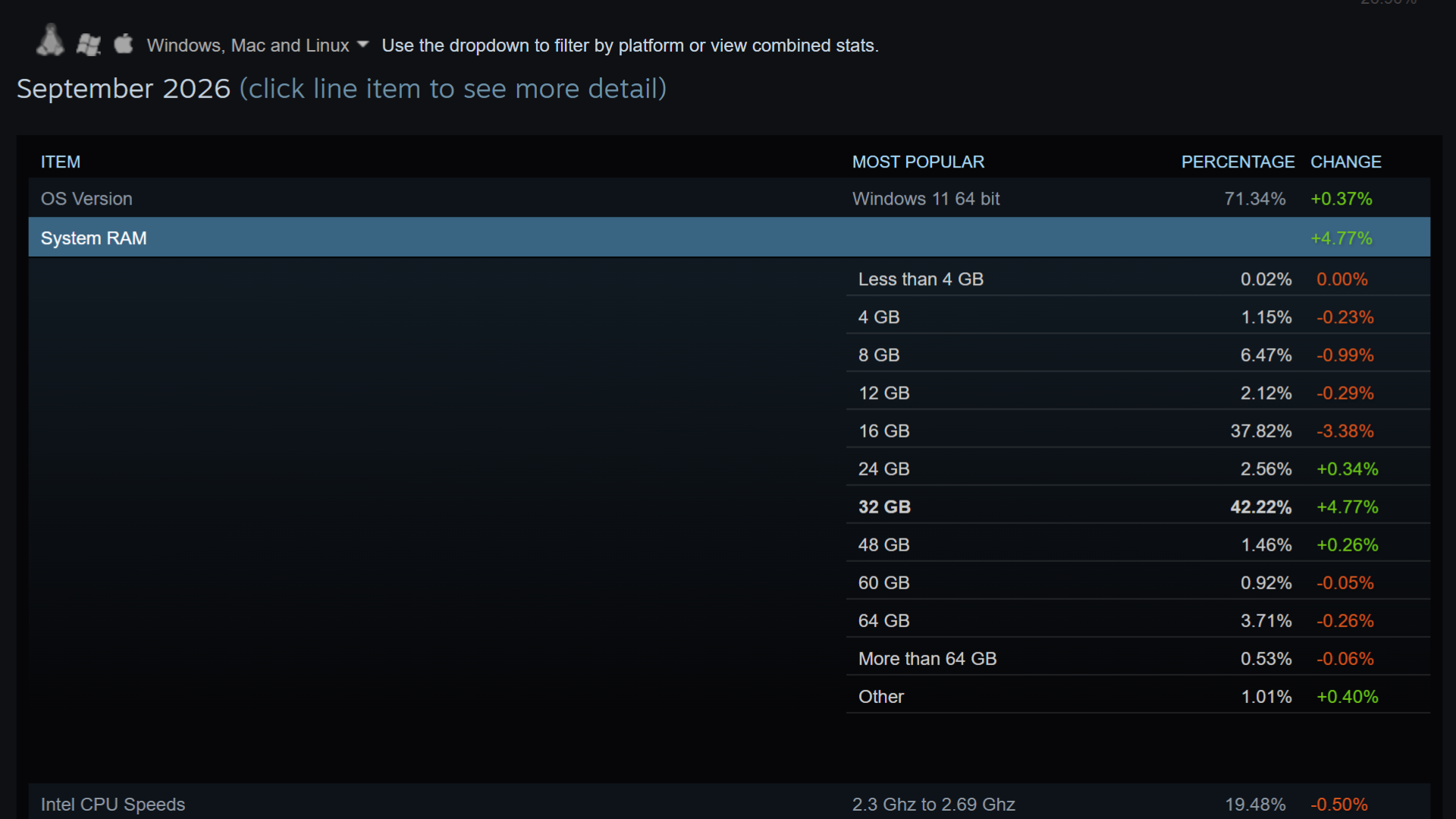
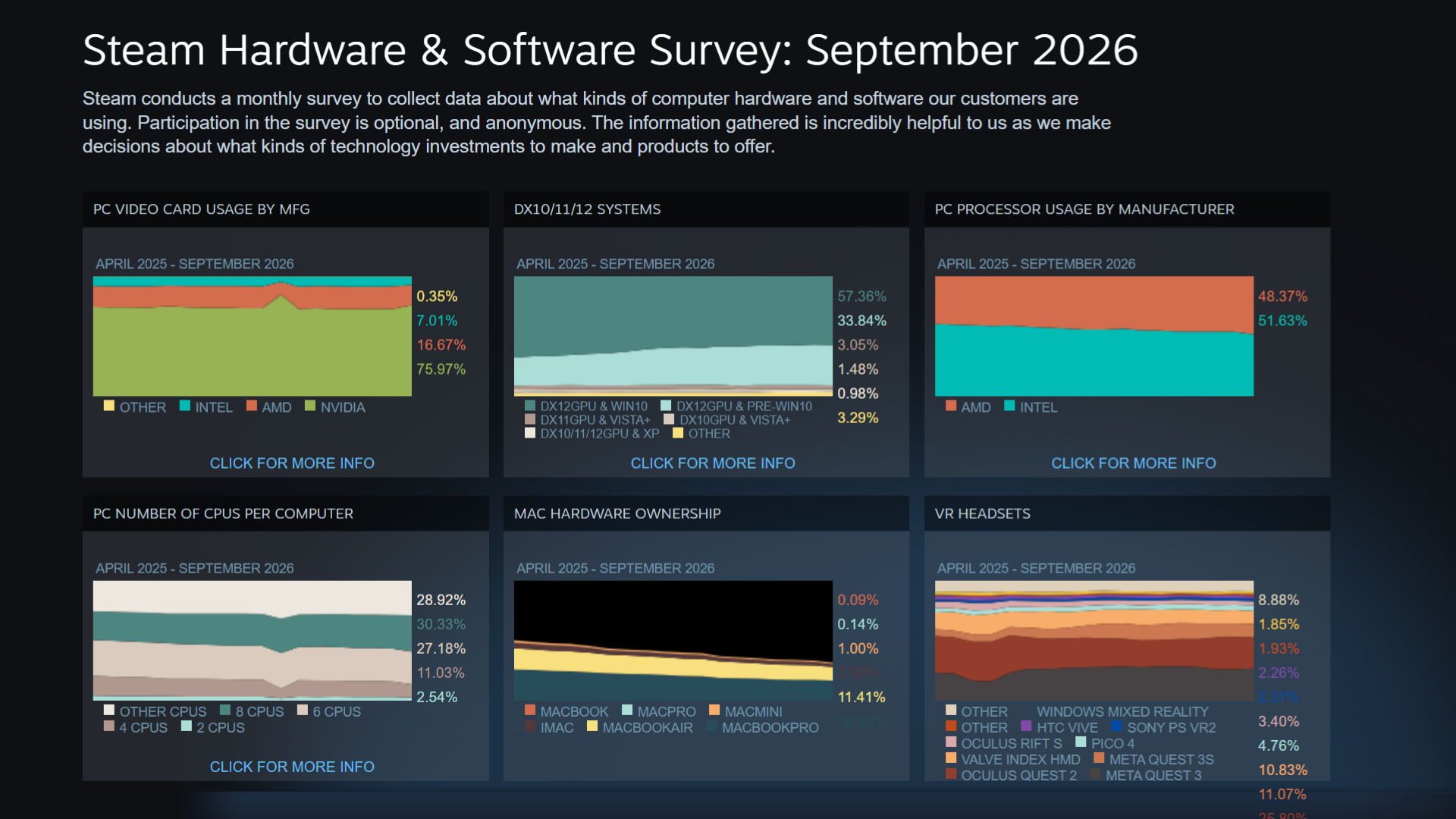
Despite being in the midst of an unprecedented memory chip shortage, it seems that gamers are still willing to invest in their gaming PCs to extract the best performance out of their favorite titles. The September 2026 Steam Survey results show that 42.22% of the surveyed units now have 32GB of system RAM — a 4.77% increase compared to the previous month — while 16GB configurations have shrunk by 3.38%, falling to just 37.82%.

We’ve also seen increases in “weird” memory configurations — 24GB has grown to 2.56%, increasing by 0.34%, while 48GB inched up to 1.46% after a 0.26% increase.

Steam Hardware & Software Survey: September 2026

(Image credit: Steam)

This comes as a surprise, as some manufacturers have reintroduced laptops with 8GB of RAM even as Microsoft called 16GB the new “practical starting point,” and recommended 32GB as the future-proof “no worries” configuration for gaming. It should be noted, though, that the company quietly erased this suggestion after it released 8GB base models for its Surface laptops a few months later.

It’s quite possible that memory capacities were always destined to increase for gamers, especially as titles become more demanding. Minecraft, which hasn’t updated its system requirements for 17 years and is known for being potato-PC-friendly, even increased its recommended memory to 16GB earlier this year, forcing players on older systems to switch to the Java Edition or play retro games instead. Because of that, the memory shortage may have merely postponed the inevitable reign of 32GB RAM on gaming PCs.

Steam Hardware & Software Survey: September 2026
Steam
Steam Hardware & Software Survey: September 2026
Steam

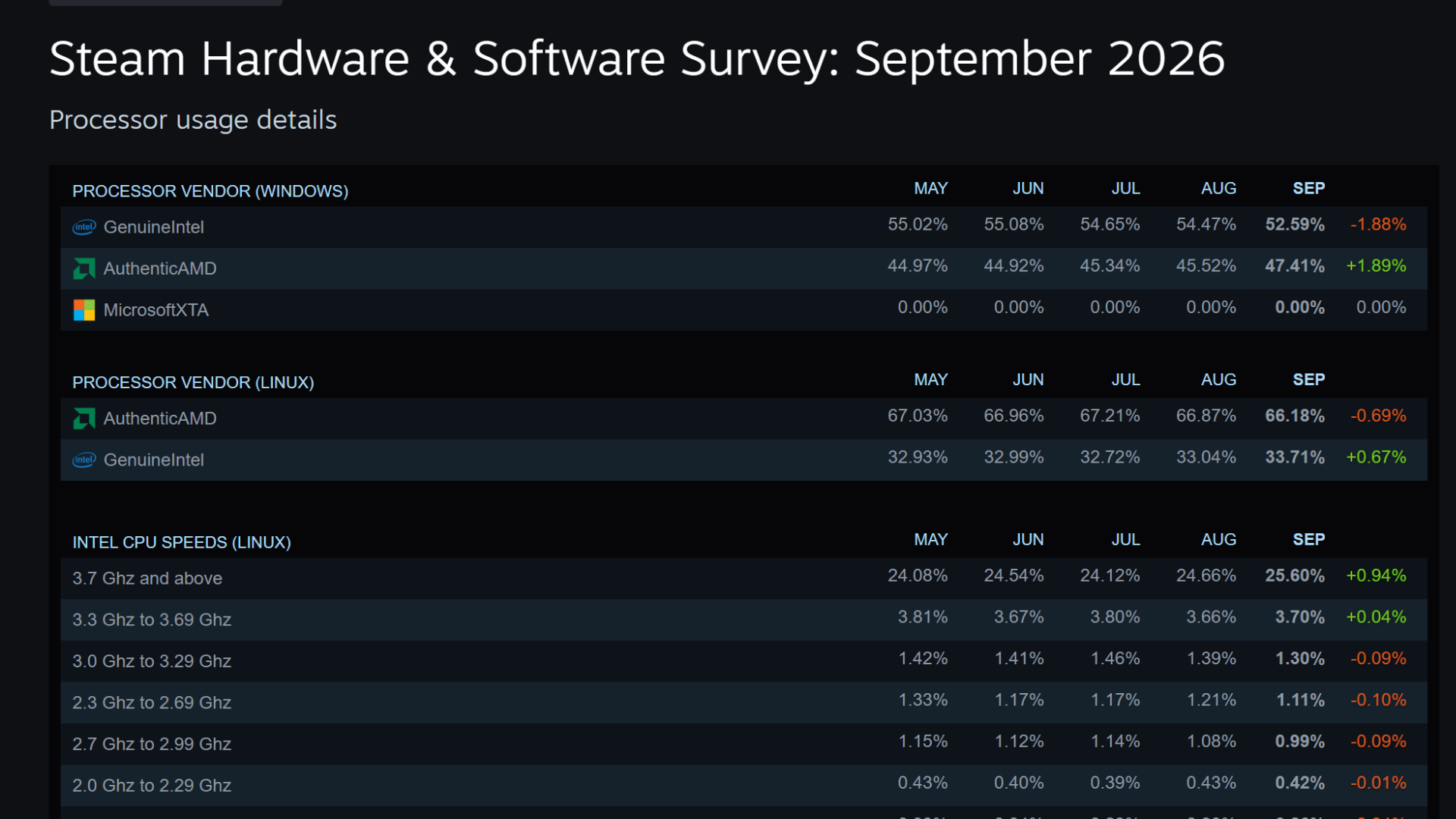
Another metric we’ve been following in the survey results is AMD’s slow but relentless march toward taking away Steam Survey market share from Intel. Team Red’s 48.37% market share across all platforms is the highest we’ve seen so far this year, with Team Blue now at just 51.63%. The May 2026 Steam Survey showed AMD at a little under 45% — at this pace, it’s possible that it will overtake Intel in just a matter of months.

If we break it down by operating system, 52.59% of Windows users are on Intel, while 47.41% use AMD. Intel may have an advantage here compared to the overall result, but it’s just a tiny margin, and the trend shows that AMD is gaining ground month after month. The difference between Intel and AMD is more glaring when it comes to Linux users, with an overwhelming 66.18% preferring Team Red over Team Blue’s 33.71%.

The Steam Survey is far from scientific and may not even reflect the broader movement of the overall PC market. But with Steam reporting a peak of more than 38 million concurrent players at the time of writing, the survey still offers a useful snapshot of what’s happening in the gaming PC market.

Wolverine PS5 exclusive ported to PC in buggy solo project using AI

2026年10月5日 19:46

Thanks to a Rhysida ransomware attack in December 2023 aimed at Sony and Insomniac, the 1.7 TB of data stolen contained an early version of Wolverine. The source code of the leaked PS5 exclusive paved the way for u/Clean-Market5761 to create their own PC port.

pcmasterrace
 from r/pcmasterrace/comments/1wy0gwr/marvels_wolverine_pc_native_port_experiment

It is currently a buggy mess; textures are missing, and Wolverine’s whole head is missing from multiple screenshots. Ironically, there is another screenshot where only Wolverine’s head is present, with no body in sight. The developer claims that neither KytyPS5 nor AnyPS5 were used, like in a recent story of Wolverine on KytyPS5. The developer says that the 2023 leak was key to understanding how they could generate a PC executable program.

Skeptics are claiming the developer’s screenshots are fake and from the old 2023 build; one claims they were able to port Wolverine to PC before u/Clean-Market5761, but the developer argues the screenshots are from a Jailbroken PS5 in dev mode. The developer further defends himself by comparing screenshots of Wolverine’s appearance in the 2023 leak versus their assets.

The developer has admitted to using AI for assistance in creating scripts and automated asset conversion, but trial and error were done manually. u/Clean-Market5761 further elaborates that the playable character doesn’t have a head because they haven’t ported over the PS5 shader library to render the hair, and it freezes the game. They have disabled the whole head asset, focusing on getting the game to run and become “playable.”

As excited commenters are about the port and the work of the developer, they are not thrilled about Wolverine itself. One commenter applauds the dev, but says, “You can keep it, though.”

Comment
 from r/pcmasterrace

The PS5 exclusive has not been received well, being regarded as an “interactive movie.” A viral video shows a motorcycle chase scene completing itself without any player input, with Wolverine riding along walls, seemingly with no way to crash or fail the segment. Other instances show Quick-Time Events completing themselves if the player chooses not to press any buttons. Players feel the game is making it too easy and holding their hand too much.

Even if there were an official port of Wolverine, it seems likely that the game itself isn’t attractive to players.

Database expert runs Doom in SQL with just 5,900 lines of code

It's the year of two thousand and twenty-six, and "Running Doom on X" is still probably the most popular software hacking hobby. From pregnancy tests to space satellites, the 1993 game has been ported to pretty much anything under the sun that has a CPU and some memory in it. Now it's time to run the game in a database, in this case CedarDB, courtesy of the SQLDoom project by Lukas Vogel, who previously authored DoomQL.

If you're wondering how the heck one runs a game in SQL, it's actually much easier than you imagine, so long as you think like a database architect. The actual frontend displaying the graphics, playing sound, and taking inputs is in Python, but that part acts only like a PC's peripherals — all the math is done inside the database.

The backend is written for the performance-focused, Postgres-compatible RDBMS CedarDB. Much like modern Doom ports, SQLDoom uses two paths: one running at the game's original 35 Hz for handling all the logic, and a separate thread for displaying graphics, interpolating camera position between game updates.

To start, Vogel had to convert the entities in Doom's WAD package file to databases. That was easier than expected, as the data therein "is highly relational already," with Vogel presenting the example of map levels ultimately being structured in parent-child relationships that are trivial to replicate in plain tables. 1000 lines of Python was all it took.

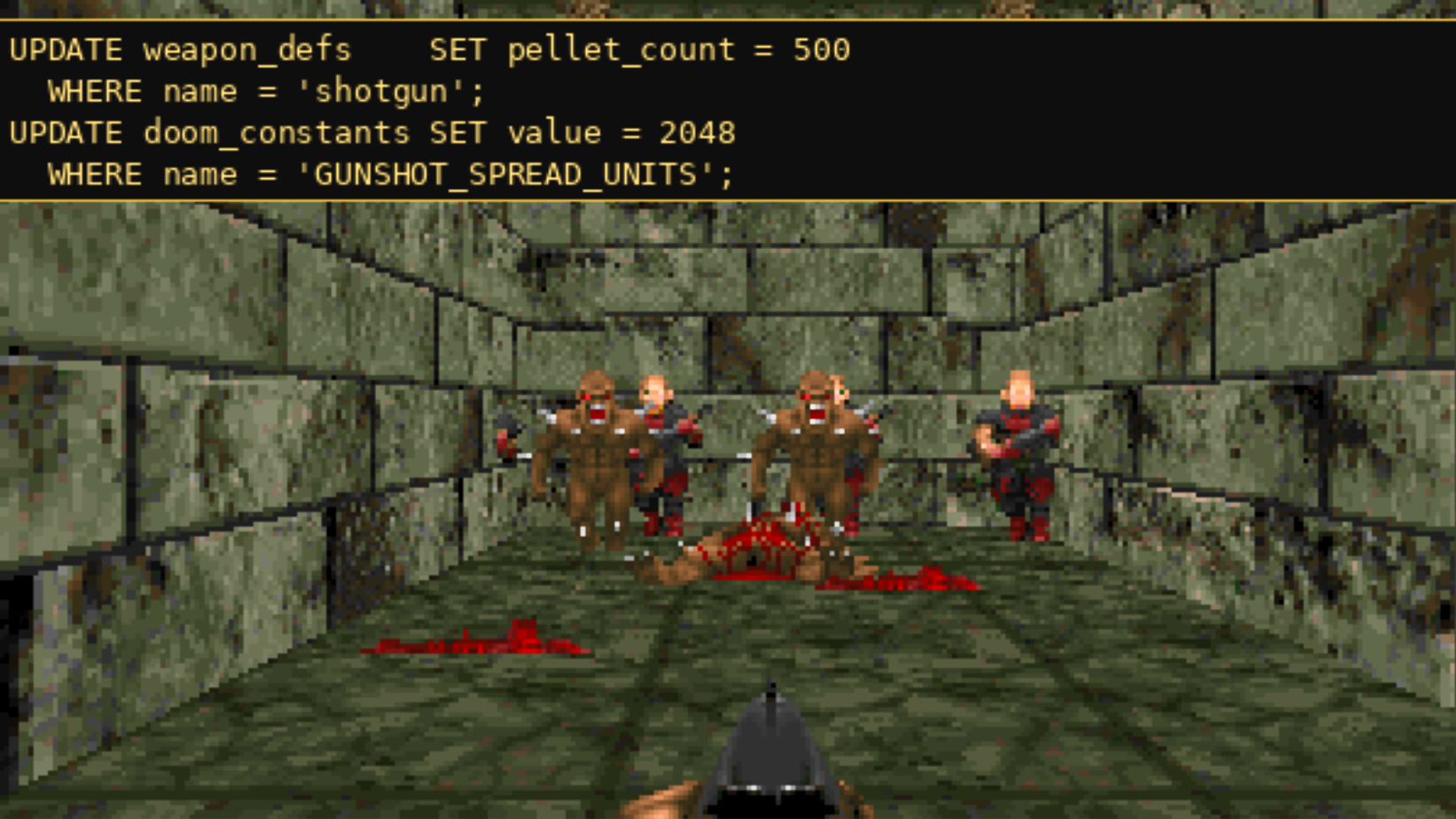
For the main gameplay loop, Vogel was once again pleasantly surprised that the game logic was easy to convert. The resulting code was 5,900 lines of SQL, compared to the original C source code's 9,000. A lot of the savings came from the fact that whereas one has to iterate over entities with "for" or "while" loops to update values, a simple "UPDATE... WHERE" is enough in SQL to do that in just one statement — and in parallel, no less. As an added bonus, the fact that everything is a row in a database table makes for some trivial instant modifications, like changing weapon characteristics or enemy behavior on-the-fly.

The graphical renderer is also small at 1,300 lines, but it's trickier as it's the one query spanning 89 tables. Vogel notes that the pipeline is ultimately very similar to that of Doom. Data for Carmack's then-revolutionary Binary Space Partitioning (BSP) traversal, an implementation of binary trees, can be easily represented as a table.

Each left/right value can be converted to a bit, and ultimately the vertex order value can be reduced to just the one number. Thus, a simple "SELECT... ORDER BY" automagically sorts the walls front-to-back for you. Amusingly, I used the very same database technique when I wrote the defunct Tech Report's threaded comments system. Despite his best efforts, Vogel says the floor and ceiling renderers didn't map very cleanly to SQL, as ultimately they're clever flood-fill algorithms.

When it came to multiplayer, that's when using a database was actually much better than the original game. The reason is simple: maintaining synced states across many tables with copious amounts of interdependencies is literally what databases are designed for, so snapshots, authentication, access control, are all effectively free and implemented for you. To run a game tick, all you need is "START TRANSACTION," run the logic, and "COMMIT," and everything magically synchronizes.

You can peruse or download SQLDoom from its GitHub repository, or read Vogel's entertaining blog post detailing the adventure.

Free browser-based AI-generated Taipei GTA clone hits 1.2 million concurrent players in three days

作者 Mark Tyson
2026年10月4日 18:00

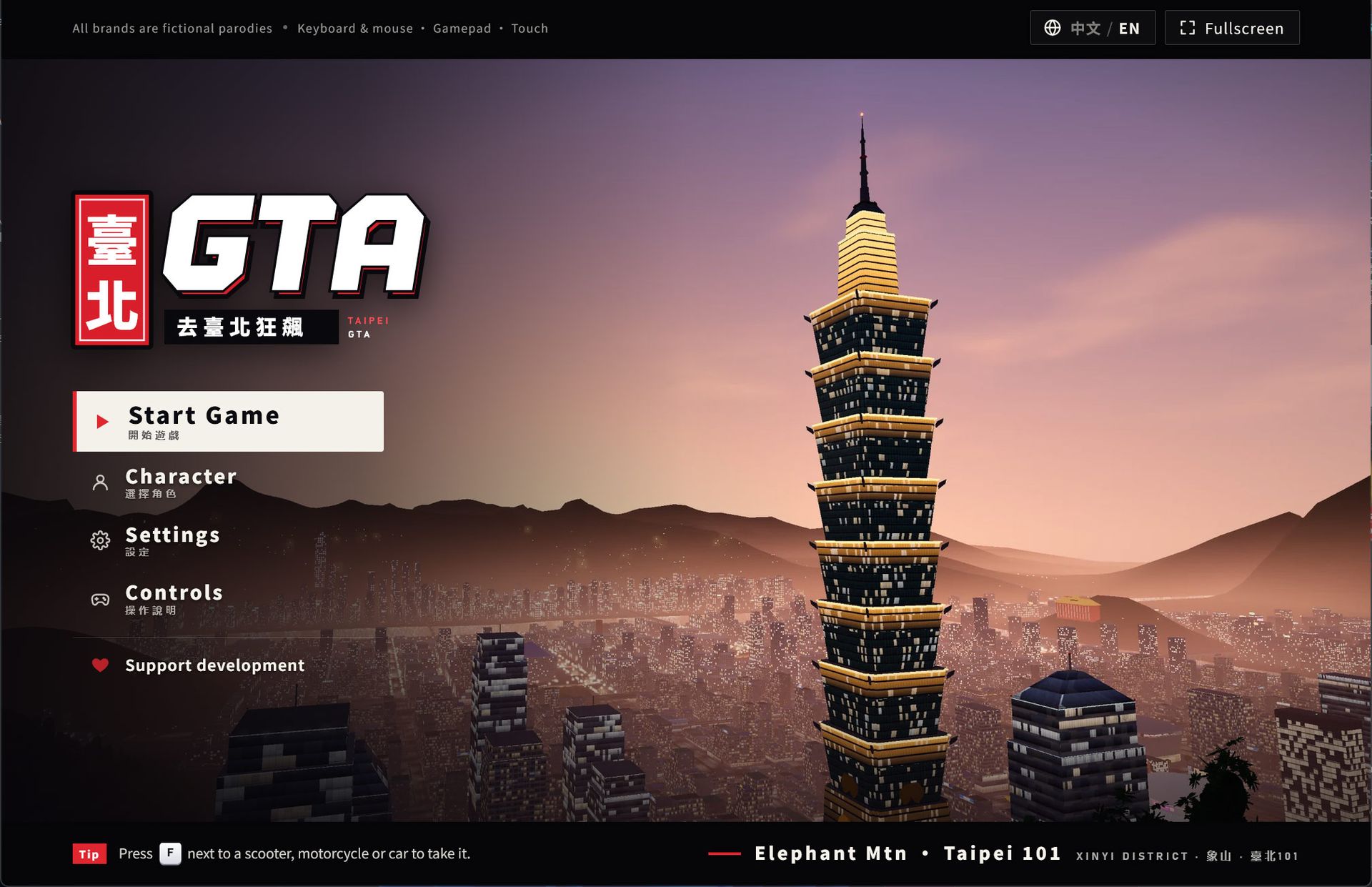
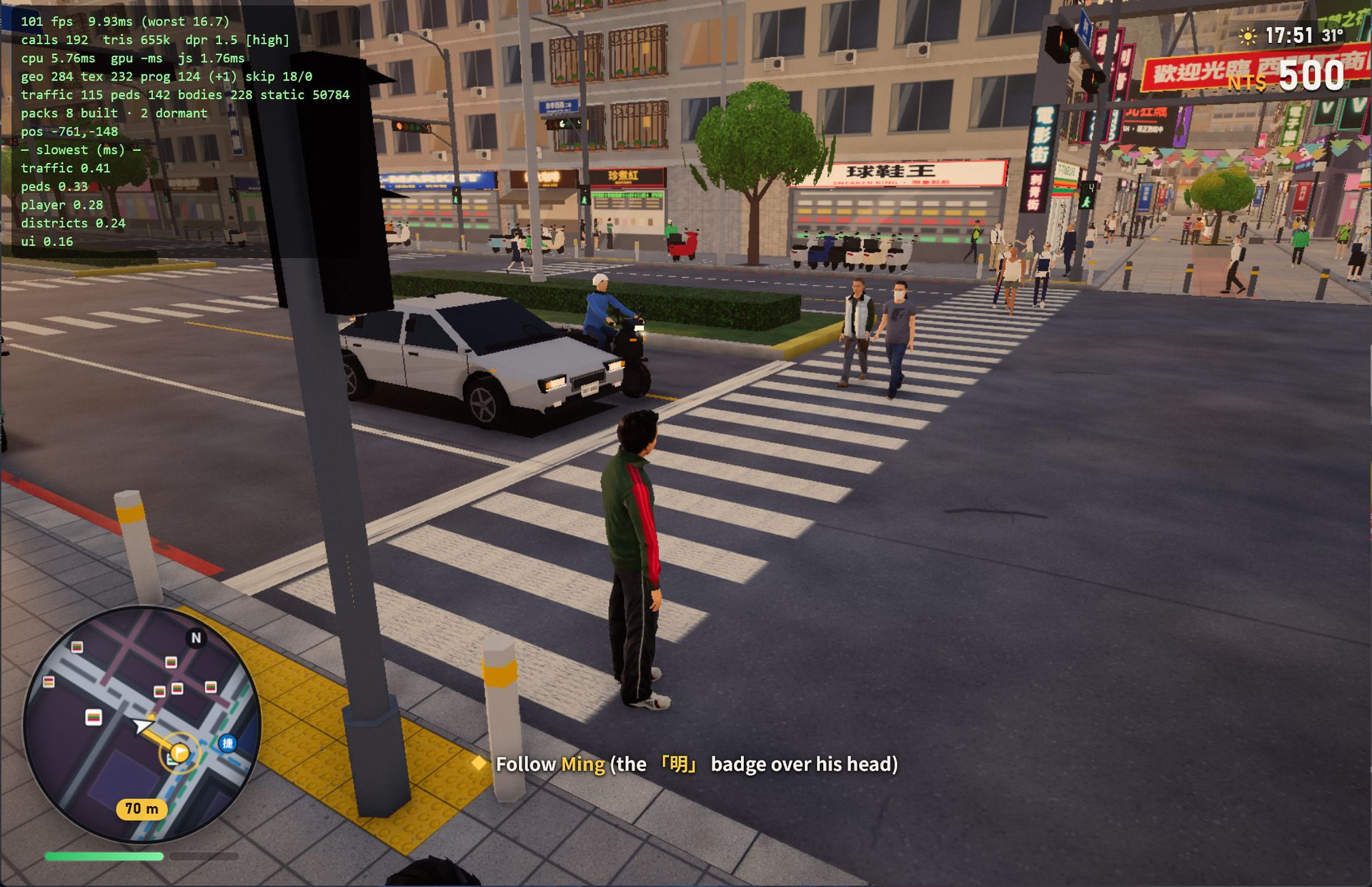
Developers AICodeWith have published a browser-based game dubbed Taipei GTA. The game’s name could put the devs in hot water with Rockstar’s legal department, but at the time of writing, it's online, free, and very playable. While it remains online, Taipei, with the not-so-secret ingredient of crime, might be the diversion you’re looking for while you wait for GTA 6. You can try this game, which took $ 10,000 in tokens to create, at https://taipei-gta.vercel.app/, where you can toggle language options in the top right of the window.

The above Taiwan TV news report says that GTA Taipei has attracted 1.2 million concurrent users in just three days since its release (machine translation).

While we've only seen reports about Taipei GTA via media based in Taiwan and Hong Kong (in Chinese), thankfully there’s an English-language wiki about the game in the absence of any official announcement(s).

Taipei GTA was vibe-coded via the AICodeWith platform, which is described as a unified platform for developers. It provides access to DeepSeek, Qwen, Kimi, GLM, and 30+ models and relies on prepaid tokens. AICodeWith also seems to be the developer of this web-based game. It might therefore be safe to assume it is a kind of demo/showcase for the platform. Certainly, not many hobbyists would spend the purported USD$10,000 on coding tokens to make a game like Taipei GTA. This looks like pretty good publicity for the development platform, though.

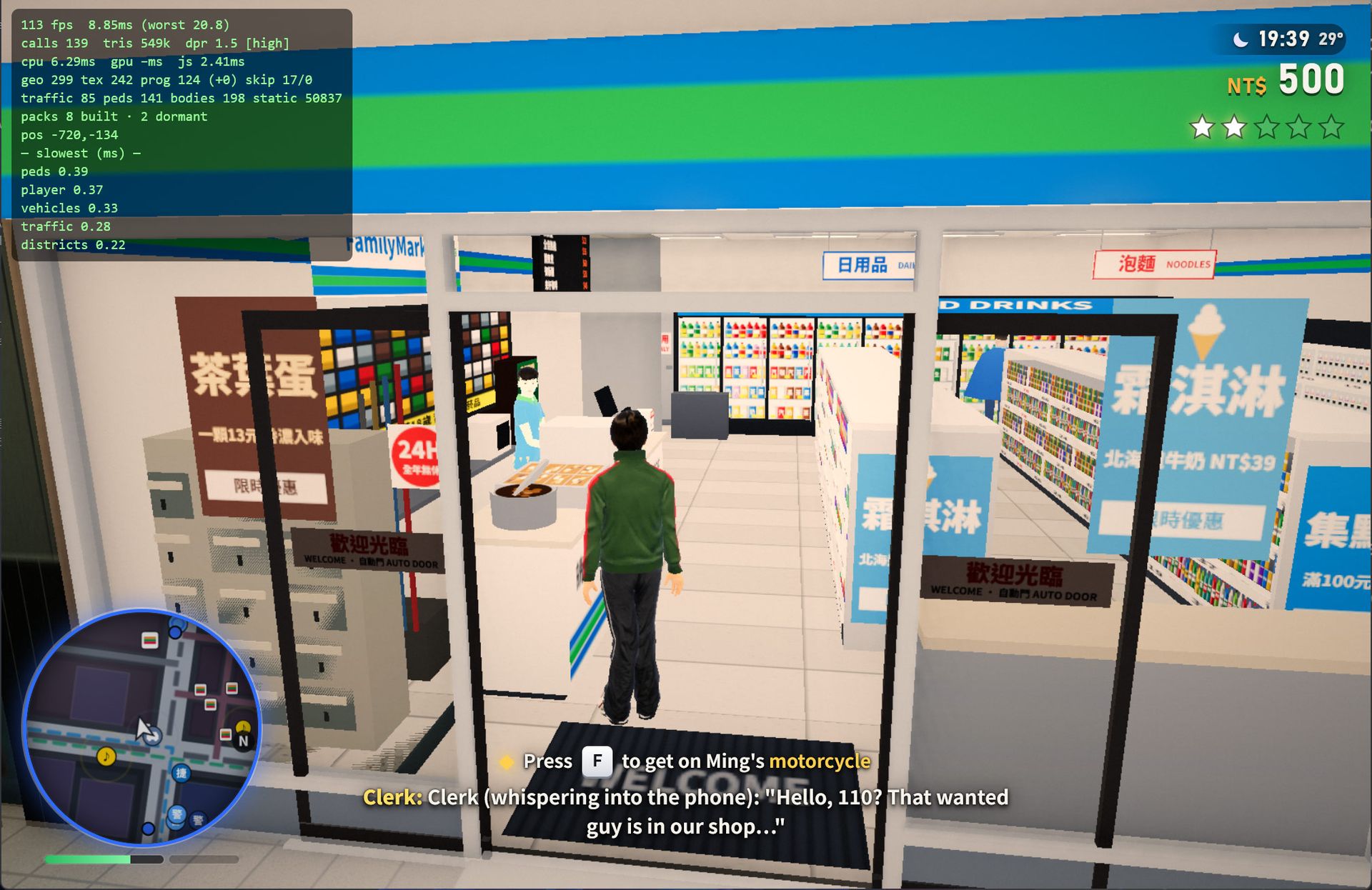
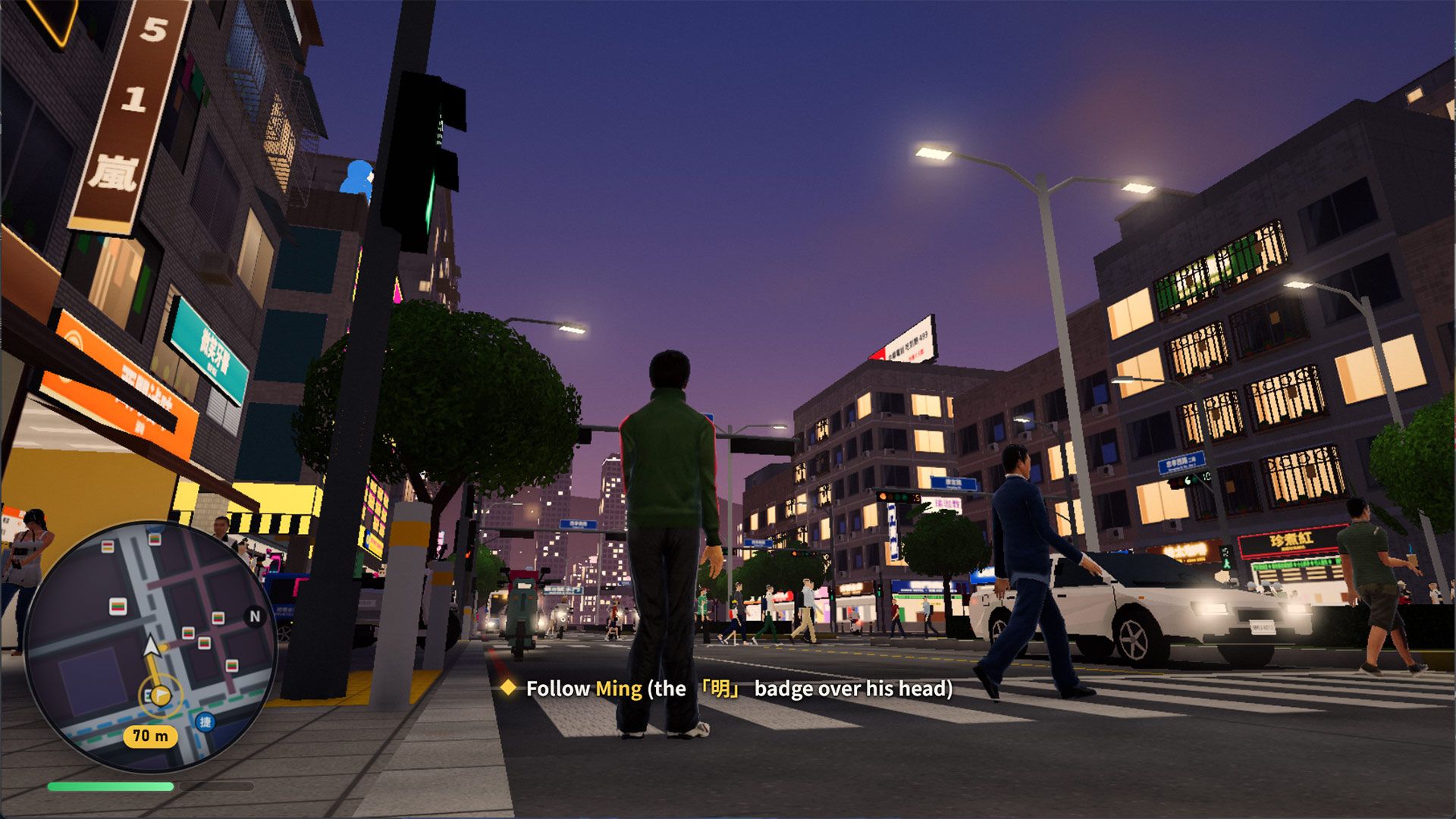
If you follow the link to play this game, you will notice it is a web app on the Vercel cloud platform. Currently, it has zones based on several famous areas of Taipei such as Ximending, Taipei Main Station, and Chiang Kai-Shek Memorial Hall. Moreover, many features of Taiwan’s capital city life are represented. My quick test run allowed me to experience the busy modern city streets filled with neon signage, motor scooters, convenience stores, cram school ads, night markets, plenty of cops, and more.

Like seminal GTA titles which inspire it, Taipei GTA is a free-roaming experience with the added spice of crime. Starting the game on foot with just the clothes on your back, your fists, and NTD$500 (about USD$16) in your pocket, you can basically do what you want in the city. For a more structured experience, there are currently 93 missions to work through in the game, once you get to grips with controlling your character and so on.

Taipei GTA is still under development/expansion. Media reports say that the devs are asking the community about any development direction they would like to see in updates.

GTA Taipei screenshots
Future
GTA Taipei screenshots
Future
GTA Taipei screenshots
Future

In my brief runaround, performance in this browser game seemed pretty swift and responsive, even on a PC using integrated graphics. I gave the game a quick spin on my laptop without switching to the discrete GPU, but the action still ran at 100FPS+ on the Radeon 890M. This web app only uses low-poly models with simple lighting, but I felt it had some early-2000s style retrogaming charm. The nearest real GTA comparison might be San Andreas, but Taipei provides a starkly different environment.

❌
❌