普通视图

发现新文章,点击刷新页面。
今天 — 2026年7月28日首页

Apple launches official program for leasing Macs as AI price crunch bites — 24- and 36-month leasing options provided by Klarna

2026年7月28日 22:23

Following price hikes on the Mac and iPad due to the ongoing memory and storage crisis, Apple has announced a new leasing program, Apple Upgrade. The new offering will be "provided" by Klarna and available in Apple Stores in the U.S., as well as the Apple Store online and the Apple Store app.

There will be 24- and 36-month leasing options for the Mac and iPad, while the iPhone and Watch will have 12- and 24-month options.

Mac leases will start at $24.99 per month, which includes the MacBook Air, MacBook Pro, iMac, and Mac Studio. Apple's announcement leaves out its cheapest systems, the MacBook Neo and Mac Mini.

iPad leases start at $11.99 per month and include the iPad Mini, iPad Air, and iPad Pro, but not the base-level vanilla iPad.

It's a similar pattern for the Apple Watch, with leases starting at $11.99 but leaving out the Apple Watch SE 3. But the iPhone lineup (leases start at $17.99) doesn't have any exceptions, including the iPhone 17, 17e, and 17 Pro and Pro Max, and iPhone Air.

These are not purchases or loans. Customers can sign up for Klarna leases in-store or online (including a soft credit inquiry that doesn't affect your credit score). At the end of a lease, you can return your device and start a new lease to upgrade, purchase the device with a "one-time payment," or return the device and exit the lease entirely.

Unlike the iPhone Upgrade Program, Apple Upgrade leases don't include AppleCare, but Apple will let you buy a subscription. AppleCare also. saw some price hikes, likely because the components that are serviced under the extended service program are more expensive.

In fact, Apple Upgrade will replace the iPhone Upgrade Program in the United States, likely upsetting some diehard fans. Apple will allow those customers to lease a device through Klarna, buy the phone outright, or finance with monthly installments on their Apple Card. As always, there's carrier financing for phones.

Framework Laptop 13 Pro review: It cleans up nice

2026年7月27日 23:00

If you want a Windows or Linux laptop that you can upgrade and repair, you should be looking at Framework. But to maintain that repairability, the company's build quality has always left something to be desired.

The Framework Laptop 13 Pro ($1,199 to start without SSD, RAM, or OS, $1,599 to start pre-built, approximately $3,272 as tested) is the company's attempt to shake that image, with a CNC aluminum chassis, a haptic touchpad, a high-resolution touchscreen, and other premium features that hadn't previously made it into Framework's repair-friendly laptops.

This design is far and away better than its existing chassis, but launching a laptop based on repairability when parts for it are extremely expensive puts the Laptop 13 Pro out of reach for many.

Design of the Framework Laptop 13 Pro

The Framework Laptop 13 Pro is a big step up in design from its predecessor, the original Framework Laptop 13. It has a new, blacked-out color scheme as opposed to Framework's go-to silver. But more importantly, it feels like a much more premium product.

The CNC-machined aluminum chassis has significantly less flex than the regular Framework laptop, which would sometimes bend with just one hand. That's not to say there's no bending, specifically around the display, but this is an improvement that made me feel far more confident having the laptop in my backpack.

Framework Laptop 13 Pro
Tom's Hardware
Framework Laptop 13 Pro
Tom's Hardware
Framework Laptop 13 Pro
Tom's Hardware

The chassis has an almost velvety feel. I can't explain it, because this is solid aluminum, but it has some sort of coating that feels unique in my hands. The black color, however, is a fingerprint magnet.
With the laptop open, you'll find one area that doesn't feel as premium — the bezel, which is still plasticky and attached with magnets. It doesn't look or feel as premium as the rest of the system, and many other laptops have just a small portion below the screen, allowing for thinner borders, especially at the top.

This keyboard deck, too, feels more solid. There's a bit of give, sure, but the magnetic attachment and five Torx screws (more on that in upgradeability, below) feel a lot more like one consistent piece when assembled.

Framework Laptop 13 Pro
Tom's Hardware
Framework Laptop 13 Pro
Tom's Hardware

Our review unit came with the "graphite gray/black" keyboard, with distinct orange accents on the Framework keys (an extra $10). It looks really cool and should be the default, but there are also all-black options and one with lavender keys in place of the gray.

At 11.68 X 9.02 x 0.62 inches and 3.17 pounds, this system easily fits into my backpack. It's similar in size and thickness to a MacBook Pro (12.31 x 8.71 x 0.61 inches, 3.4 pounds with M5).

Upgradeability of the Framework Laptop 13 Pro

Framework's modularity continues on in the new design. In fact, if you wanted, you could build a Laptop 13 Pro around your old Framework mainboard, Ship of Theseus style (though some parts would need to be swapped simultaneously to accommodate the new battery's shape and size).

We reviewed a DIY Edition of the Laptop 13 Pro, which meant installing a Framework-supplied SSD and LPCAMM2 memory before getting started. The only tool you need is the Torx T5 screwdriver that comes in the box.

Framework Laptop 13 Pro
Tom's Hardware
Framework Laptop 13 Pro
Tom's Hardware

The SSD is a pretty standard install, but the memory, which is LPCAMM2, was a first for me. You have to be extremely careful with it, aligning the memory with a sensitive interposer (which also happens to be slightly under a ribbon cable connected to the screen. This got in the way for me a few times, but it's easy enough to get around. There's a memory cover that goes on top of the LPCAMM2, with three screws labeled in the order you should tighten them to firmly seat the module.

Framework Laptop 13 Pro

(Image credit: Tom's Hardware)

On AMD Ryzen AI 300 configurations, LPCAMM2 isn't available: you use standard SO-DIMMs.

From there, you need to attach the input cover using a ribbon cable (do take a minute to admire the underside of the haptic touchpad and its four piezo sensors), which then snaps into place on the chassis. The bezel snaps onto the bottom of the screen and also attaches with magnets.

From there, you flip the laptop over and tighten five captive Torx T5 screws. Pop in your expansion cards, lock the slots, and voila, you're ready to install an operating system.

Framework Laptop 13 Pro
Framework
Framework Laptop 13 Pro
Framework

On the Intel version we tested, there's nothing limiting where you place expansion cards. On models using AMD's Ryzen AI 300 chips, however, you'll want to be sure not to put USB Type-A ports in the rear slots, as they'll use more power than other cards.

If you buy a prebuilt version, the OS will come pre-loaded. Otherwise, you can largely reverse any of these steps at any time to make upgrades, including likely eventual mainboard improvements.

My main criticism is that LPCAMM2 is hard to get right now (harder, in general, than regular SO-DIMMs, which at least some enthusiasts might have around). You can get them from Framework, but this isn't a standard that you have a lot of options to buy from. In that way, the DIY version doesn't make a ton of sense, unless you really, really want to bring your own SSD.

Framework Laptop 13 Pro Specifications

CPU

Intel Core X9 388H

Graphics

Intel Arc B390 (12 Xe cores)

Memory

64GB LPDDR5X-7467 (LPCAMM2)

Storage

2TB WD Black SN7100 PCIe SSD

Display

13.5-inch, 2880 x 1920, 30 - 120 Hz refresh, matte, touch

Networking

Intel Wi-Fi 7 BE211, Bluetooth 6

Ports

Four expansion card slots (over USB-C/Thunderbolt 4), 3.5 mm headphone jack

Camera

1080p / 30 FPS, hardware privacy switch

Battery

74.45 WHr

Power Adapter

100W GaN USB-C charger

Operating System

Bring your own (tested with Windows 11 Home)

Dimensions (WxDxH)


11.68 X 9.02 x 0.62 inches (296.63 x 228.98 x 15.85 mm)

Weight

3.17 pounds (1.44 kg)

Price (as configured)

$1,799 + RAM + SSD + OS + expansion cards (Our review unit is approximately $4,023 at time of testing)

Productivity Performance on the Framework Laptop 13 Pro

We tested the Framework Laptop 13 Pro in its most powerful configuration: with an Intel Core Ultra X9 388H and 64GB of RAM. Our system also had a roomy 2TB SSD. To best compare the system to other laptops in our benchmark database, we opted to run Windows 11.

Framework Laptop 13 Pro
Framework
Framework Laptop 13 Pro
Framework
Framework Laptop 13 Pro
Framework
Framework Laptop 13 Pro
Framework

On Geekbench 6, the Framework Laptop 13 Pro notched a single-core score of 2,952 and a multi-core score of 14,965. The single-core score was similar to the same X9 chip found in the Asus Zenbook Duo. But in multi-core, the Zenbook had a score that was 15.49% higher, likely due to cooling; Framework is cooling Intel's top mobile chip with a single fan. Apple's M5 MacBook Pro and Qualcomm's Snapdragon X2 Elite in the HP OmniBook Ultra 14 both scored higher on both tests.

The Framework Laptop and its WD Black SN7100 SSD were the fastest of the group in copying 25GB of files, with a speed of 2,800.33 MBps, followed most closely by the OmniBook at 2,620.91 MBps.

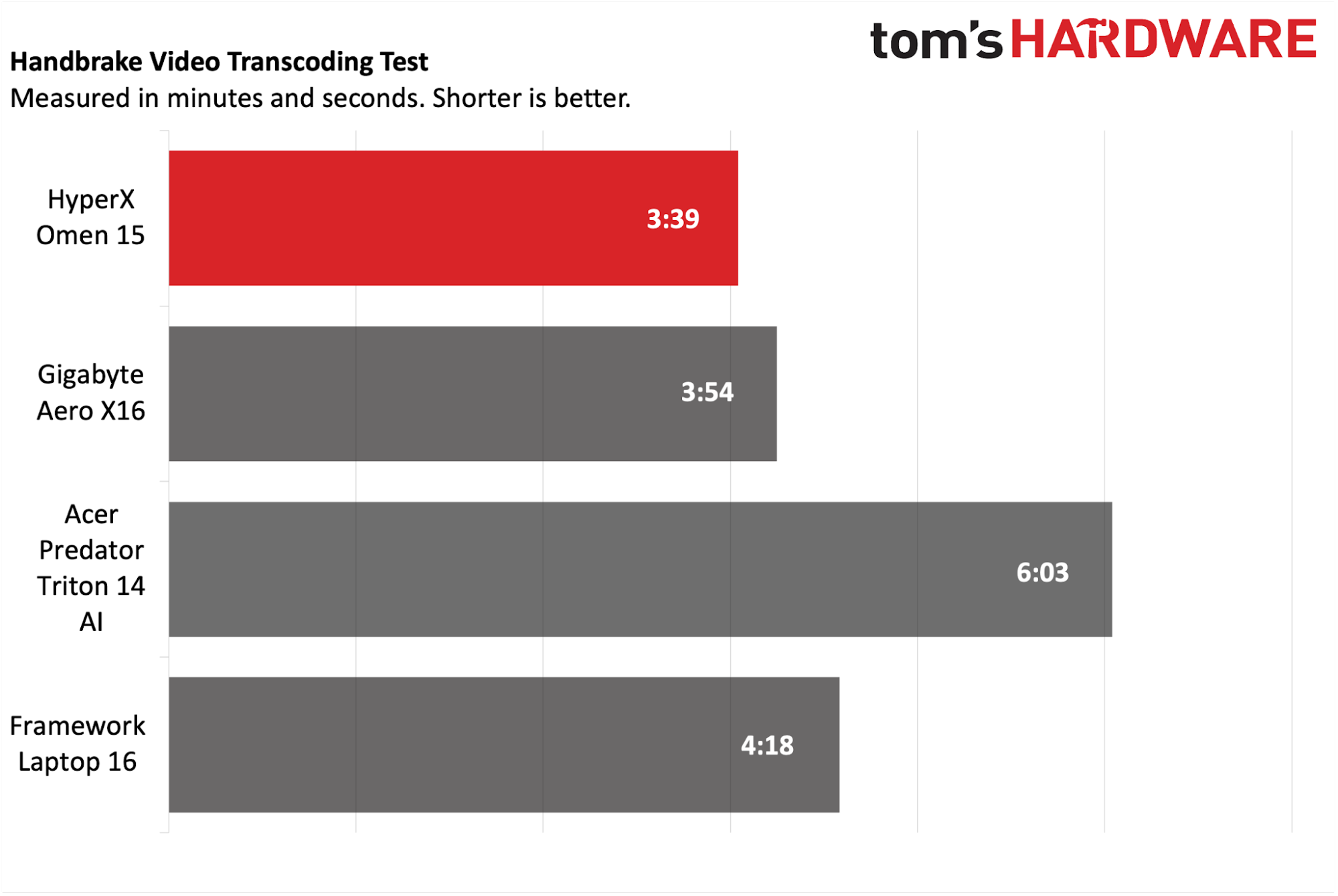
On Handbrake, the Framework transcoded a 4K video to 1080p in 4 minutes and 9 seconds, ahead of the Duo but behind both ARM-based laptops.

To stress test the system, we ran Cinebench 2026 ten times and monitored scores and CPU speeds. The scores were largely in the 3,800 and 3,900's, with a peak score of 3979.85 on run 6, before scores started dropping down slightly. In HWInfo, the CPU’s P cores averaged 3.16 GHz, while the E cores reached 2.75 GHz, and the low-power E cores measured at 2.61 GHz.

Graphics on the Framework Laptop 13 Pro

As we've seen in other Panther Lake laptops, the Intel Arc B390's Xe cores are no joke.

Framework Laptop 13 Pro

(Image credit: Framework )

The 12 cores on the X9 388H enabled the Laptop 13 Pro to achieve a score of 1,362 on 3DMark’s Steel Nomad cross-platform benchmark. It lost only to the presumably better-cooled Zenbook Duo using the same chip.

Display on the Framework Laptop Pro 13

The Framework Laptop 13 Pro marks the company's first custom display, along with the first time its 13-inch laptop has had a touchscreen (touch was previously available on the Framework Laptop 12).

The 13.5-inch, 2880 x 1920 display (one of the few 3:2 screens on the market these days) offers a variable refresh rate between 30 and 120 Hz.

Most importantly, Framework's display is exceedingly bright. In the trailer for Avengers: Doomsday, an explosion in the X-Mansion and lightning coming from Thor's Stormbreaker axe were eye-popping.

Framework Laptop 13 Pro

(Image credit: Framework )

The panel measured an astounding 709 nits on our light meter, handily surpassing the MacBook Pro's mini LED screen (558 nits) and the OLED panels on the Asus Zenbook Duo (456 nits) and HP OmniBook Ultra 14 (414 nits).

The Framework's display was largely on par with the MacBook's in terms of color volume, covering 114.3% of sRGB and 81% of the more challenging DCI-P3 color space. The MacBook was a fraction of a percent better. The bigger differences are in the benefits mini LED may bring against LCD, but the point remains that for Framework, this is an impressive display. If older Framework Laptop 13 owners take one upgrade from this system, it may well be the panel for the sake of the quality, even if they don't care about touch.

Keyboard and Touchpad on the Framework Laptop 13 Pro

Framework Laptop 13 Pro

(Image credit: Tom's Hardware)

The keyboard cover on the Framework Laptop 13 Pro is one large piece sitting on top of the components, just like previous designs. Here, the keyboard has white backlighting and 1.5 mm of key travel.

And unlike some laptops, you can feel all of that travel. As I breezed through the monkeytype.com typing test at 123 words per minute, I did note that the keys feel a bit stiffer than I'm used to on other laptops. A colleague I showed the laptop to liked the effect, though I think some people might hope the keys wear in a bit.

This laptop also marks the first time Framework has offered a haptic touchpad. This one uses four Piezo sensors to convert pressure into clicks.

On the one hand, it's a huge step up from the company's mechanical touchpads, which often felt cheap. I never had any issues with gestures or navigation. But I could sometimes see and feel the haptic touchpad flex in the keyboard deck, which could probably be fixed with a bit of extra reinforcement.

Audio on the Framework Laptop 13 Pro

The Framework Laptop 13 Pro uses a pair of 2W side-firing speakers, rather than the bottom-firing speakers on the original Framework Laptop 13 design. If you're using Windows 11, you get Dolby Atmos support (tough luck for now if you're a Linux user), including the Dolby Settings app.

Despite Framework's claims that they're louder, they're really best for personal listening. Alice Merton's "Ignorance is Bliss" only barely filled my living room. The vocals, guitars, and drums were distinguishable and sounded pretty good otherwise.

It's not uncommon for wristrests to vibrate while playing music, but on the Framework Laptop, that extended to the haptic touchpad, which would noticeably move under my finger while listening to music.

Battery Life on the Framework Laptop 13 Pro

Framework Laptop 13 Pro

(Image credit: Framework )

Framework is debuting a larger, 74 WHr battery on the Laptop 13 Pro. Even when powering the Core Ultra X9 388H, the system was long-lasting. On our battery test, which browses websites, streams video, and runs light OpenGL tests with the screen at 150 nits, the Laptop 13 Pro ran for 15 hours and 55 minutes, beating other Windows-based competitors. Only the MacBook Pro surpassed that, at 18 hours and 14 minutes.

Heat on the Framework Laptop 13 Pro

As configured, the Framework Laptop 13 Pro can get a bit toasty. Again, the Core X9 388H is running under a single fan.

During our Cinebench 2026 stress test, the keyboard hit 110 degrees Fahrenheit, which did feel warm to the touch. The haptic trackpad measured 90 F, while the hottest spot on the bottom was 117 F.

Internally, the CPU measured an average of 90.1 degrees Celsius and reported throttling for much of the back of the test.

Webcam on the Framework Laptop 13 Pro

The 1080p webcam on the Framework Laptop 13 Pro is serviceable, but not the best.

While colors were accurate enough in video and photo testing, there was graininess in both well-lit and dark images.

Additionally, this laptop doesn't sport an infrared camera for Windows Hello. Your only option is the fingerprint reader.

Software and Warranty on the Framework Laptop 13 Pro

We tested the Framework Laptop 13 Pro with Windows 11, and it was blissfully free of bloatware. Framework's dedicated shortcut on the F12 key opens up a page on its website for guides for the system.

I would like to see an easy way to customize the keyboard. VIA's web app doesn't recognize the keyboard in my testing (previously, it has only recognized the 16-incher and its various input modules). I hope to see support for that soon. (At least the key tester function worked).

Framework sells the Laptop 13 Pro with a one-year warranty. An extended three-year warranty is available that varies based on configuration. Framework told Tom's Hardware that this is because the "cost of servicing the warranty scales with the cost of the system," so more expensive systems with pricier hardware have more costly extended service plans.

Framework Laptop 13 Pro Configurations

We tested the Framework Laptop 13 Pro in a DIY configuration that's $1,799 with an Intel Core Ultra X9 388H before adding in memory, storage, an operating system, or any of the extras like the expansion cards.

If you purchased all of our components from Framework, the system was approximately $3,272 when we started testing it. In the middle of testing, the price of the memory on the DIY systems nearly doubled from $849 to $1,600, making our configuration roughly $4,023. That's without an OS, as we installed our own copy of Windows.

That being said, this configuration is backordered, and Framework isn't taking further orders: "We are working with Intel and expect to get additional allocation of X9, but we don't have timing we can communicate on when it will be available for order," Framework said through a PR representative. It's also likely to see a price increase, as the company has already announced that its X7 and X9 chip prices are going up. It's very possible that by time you read this review, any number of components may have changed price.

Framework Laptop 13 Pro

(Image credit: Tom's Hardware)

The 2TB SSD was $505, while the keyboard was $10 (for the colors), as was the bezel ($10), though both of those aesthetic options can be had for free if you opt for black or a few other color options.

The cheapest DIY Edition, with an Intel Core Ultra Series 3, starts at $1,499. If you prefer AMD Ryzen AI 300 over Intel Core Ultra Series 3, that starts at $1,399 with a Ryzen AI 7 350.

On the prebuilt side, the cheapest Intel system (with the same Core Ultra 5 325, plus 16GB of RAM and 512GB of storage) is $1,599 (up from $1,499 during pre-orders), while AMD versions begin at $2,299 (up from $2,099) with 1TB of storage and 32GB of memory.

Bottom Line

When Framework debuted the Laptop 13 Pro, it promised a "MacBook Pro for Linux users." I'm not sure I agree. The MacBook Pro has an air of utility, while the Framework Laptop Pro 13 is more playful. That alone makes it feel different.

This Framework is by far its best-built laptop, feeling more premium and rigid than ever before, along with a bright screen and a haptic touchpad. But there are some areas, like the bezels and expansion ports, that still show the gaps.

Framework Laptop 13 Pro

(Image credit: Tom's Hardware)

The new silicon is also faster and more efficient than we've seen. We've complained about battery life on some older Framework systems, but Panther Lake is efficient enough (along with a 74 WHr battery) to bring Framework in line — and ahead — of at least some premium Windows-based competitors.

Price and availability may scare off some customers. Erratic, expensive chip pricing is the norm these days, but most people don't see that firsthand. They only see the bottom line. But also, at this price, you could get an M5 Max MacBook Pro with 32GB of RAM, which would way outperform this system on multi-core and graphics performance.

There is room for improvement, especially in cooling. But the biggest issue Framework has here for its niche audience is the price of components, especially for the DIY edition. But if you happen to have parts lying around, there's no question that this design should usurp its old one as quickly as possible.

昨天 — 2026年7月27日首页

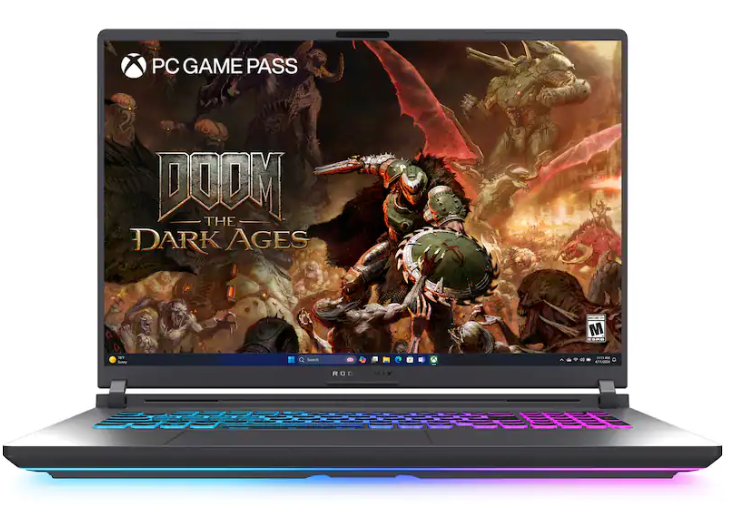
Save $1,000 on Lenovo's over-the-top RTX 5090 gaming laptop — this 18-inch monster packs 64GB of RAM and up to a 440Hz refresh rate

2026年7月27日 18:56

You can save $1,000 on a truly high-end gaming laptop that, for many, is way over the top for the average user in both hardware and price. But if you want the most powerful laptop gaming setup, or a portable desktop replacement, then this Lenovo Legion 9i gaming laptop from B&H Photo, priced at $5,799, is something you should check out. It's certainly not your average gaming laptop, as it comes with the top-tier halo components from Intel and Nvidia, and is absolutely massive at 18 inches.

Check out this deal at B&H Photo

Gaming laptops have always been more expensive than desktop gaming PCs with comparable components, even with the comparable components not being as powerful as their desktop counterparts due to the size, power, and heat limitations of stuffing hardware components into a smaller laptop chassis.

This model of the Lenovo Legion 9i contains the most powerful laptop graphics card available, Nvidia's RTX 5090 with 24GB of GDDR7 VRAM, and Intel's Core Ultra 9 290HX Plus 24-core processor, plus a massive 64GB of DDR5 RAM (2 x 32) with four RAM slots available, able to support up to 192GB of total RAM. For storage, there is a 2TB SSD, with Windows 11 Home edition pre-installed.

The luxurious 18-inch display features a detailed 3840 x 2400 resolution with a 3ms gray-to-gray response time. The display can reach up to 240Hz at native resolution and up to 440Hz when set to an FHD resolution. The display uses an IPS panel with 520 nits of brightness and a color gamut of 100% DCI-P3

Play your favorite PC games with high frame rates and smooth gameplay with an Intel Core Ultra 9 24-Core processor, RTX 5090 laptop graphics card, 64GB of DDR5 RAM, and a 2TB SSD.View Deal

The Lenovo Legion 9i also uses the latest Thunderbolt 5, WiFi 7, Bluetooth 5.4, and 2.5GbE Ethernet. The keyboard is fully RGB backlit with chiclet-style keys. This is a very powerful gaming laptop that you can also use for some serious creative work and go hard on some smaller local LLM models if you want to dabble with some AI workloads.

It is a very expensive laptop, made more costly by the price of RAM and NAND in the current economy. Still, it's also $1,000 cheaper than the usual price, so if this kind of laptop is something you're interested in, then head to B&H Photo and check out the RTX 5090-powered Legion 9i available for $5,799.

If you're looking for more savings, check out our Best PC Hardware deals for a range of products, or dive deeper into our specialized SSD and Storage Deals, Hard Drive Deals, Gaming Monitor Deals, Graphics Card Deals, Gaming Chair, Best Wi-Fi Routers, Best Motherboard, or CPU Deals pages.

You can also join the Tom's Hardware deals Discord for up-to-the-minute hardware deals.

HP OmniBook X Flip 14 Review: Premium design, middling performance

2026年7月26日 20:05

The best laptops must do more than look expensive; they need to justify their price with the right mix of design, performance, display quality, and daily usability. HP’s OmniBook X Flip 14 (starts at $1,399.99; $2,599.99 as tested) gets much of that formula right, with a sublime metal chassis, a choice of two refined colors, AMD Ryzen AI processors, and the convenience of a 2-in-1 design. It feels every bit like a high-end machine, with solid entertainment features and impressive build quality, but its high price, middling performance, and merely decent 1920 x 1200 OLED display keep it from fully standing out.

Design of the HP OmniBook X Flip 14

The OmniBook X Flip 14 is HP’s design at its best. The deep espresso finish gives the laptop a rich, almost executive character. (The other available color is atmospheric blue.) Its matte metal surfaces felt reassuringly solid in my hand. HP also claims a MIL-STD-810H durability rating.

HP OmniBook X Flip 14
Tom's Hardware
HP OmniBook X Flip 14
Tom's Hardware

At 12.32 x 8.6 x 0.57 inches, the OmniBook’s footprint is slightly larger than Dell's XPS 14, though the weight is essentially a wash: 3.09 pounds for HP versus 3 pounds flat for Dell. Lenovo’s Yoga Slim 7i is much lighter at 2.15 pounds, but HP is the only one offering a 2-in-1 form factor, with a 360-degree display hinge that lets it fold into a tablet. While its size and weight prevent it from being a good iPad replacement, the functionality can be handy in cramped places like an airplane seat where it might not be as comfortable to use it as a laptop.

The laptop offers just enough connectivity– two USB4 ports, one USB-A port (10 Gbps), HDMI 2.1, and an audio jack. The compact 65 W power adapter plugs into either USB4 port, conveniently split across both sides of the chassis. A Realtek 8922AE-VS networking card supports the latest Wi-Fi 7 standard.

HP OmniBook X Flip 14
Tom's Hardware
HP OmniBook X Flip 14
Tom's Hardware

HP OmniBook X Flip 14 Specifications

CPU

AMD Ryzen AI 9 465

Graphics

AMD Radeon 880M graphics (integrated)

Memory

32GB LPDDR5X-8533

Storage

2TB SSD (Samsung MZVL82T0HBL1)

Display

14-inch, 1920 x 1200, OLED, touch, 60 Hz

Networking

Wi-Fi 7, Bluetooth 5.4 (Realtek 8922AE-VS)

Ports

2x USB4, USB 3.2 Gen 2, HDMI 2.1, audio

Camera

5MP IR

Battery

59 Wh

Power Adapter

Type-C (65 W)

Operating System

Windows 11 Pro

Dimensions (WxDxH)

12.32 x 8.6 x 0.57 inches (313 x 218 x 15 mm)

Weight

3.09 pounds (1.4 kg)

Price (as configured)

$2,599.99

Productivity Performance on the HP OmniBook X Flip 14

We tested a high-end OmniBook X Flip 14 configuration featuring a Ryzen AI 9 465 processor, 32GB of RAM, and a 2TB PCIe Gen 4 SSD.

Our comparison systems include the 14-inch Apple MacBook Pro featuring the M5 processor (was $2,349 as tested, but is now $2,549), the Dell XPS 14 with a Core Ultra X7 358H ($2,199.99), and two Lenovo models: the Yoga Slim 7i ($1,629.99 with a Core Ultra 7 355) and the Yoga Slim 7x ($1,579 with a Snapdragon X2 Elite X2E-88-100). The OmniBook is the only 2-in-1 design in the group.

HP OmniBook X Flip 14 (2026)
Tom's Hardware
HP OmniBook X Flip 14 (2026)
Tom's Hardware
HP OmniBook X Flip 14 (2026)
Tom's Hardware
HP OmniBook X Flip 14 (2026)
Tom's Hardware

The OmniBook landed in the lower half of the pack. In Geekbench, where it scored 13,734 points in multi-core, and our Handbrake 4K-to-1080p video transcoding test, which it completed in 4 minutes and 56 seconds, it outpaced the Core Ultra 7 355-powered Yoga Slim 7i (11,555 points and 5:56), but it couldn't match the stronger Core Ultra X7 358H in the XPS 14 (16,927 points and 4:30). The MacBook Pro proved even more potent (17,926 points and 3:31) but it was outgunned by the Snapdragon-powered Yoga Slim 7x (20,563 points and 2:11).

The OmniBook's average speed in our 25GB file transfer test was 1,477.3 MBps, essentially tying the XPS 14 (1,419.76 MBps) but trailing the Yoga Slim 7i (1,659.21 MBps). The MacBook Pro (1,917.35 MBps) and Yoga Slim 7x (1,934.78 MBps) led.

Though it didn't top our charts, the OmniBook still offers performance a step above what many thin-and-light laptops offer and decent multitasking capability, with its 10-core/20-thread design.

To stress test productivity laptops, we run 10 loops of Cinebench 2026. The OmniBook started at 3,465 points and slowly descended to 3,070 points by the fifth iteration, then steadily recovered and completed the last run with 3,306 points. During the test, the Ryzen AI 9 465 CPU ran at an average frequency of 2.79 GHz.

Graphics Performance on the HP OmniBook X Flip 14

In 3DMark Steel Nomad, the OmniBook's Radeon 880M integrated graphics offered basic performance at best, outpacing the Intel Graphics in the Yoga Slim 7i (513 points), but coming nowhere near close to Adreno X2-90 GPU in the Yoga Slim 7x (1,115 points), MacBook Pro (1,122 points) or the Arc solution in Dell's XPS 14 (1,446 points), powered by the Core Ultra X7 358H.

HP OmniBook X Flip 14 (2026)

(Image credit: Tom's Hardware)

Display on the HP OmniBook X Flip 14

The HP OmniBook X Flip 14 is available with three touch display options: a 1920 x 1200 IPS, a 1920 x 1200 OLED, or a sharper 2880 x 1800 OLED. Our unit came with the middle option, the 1920 x 1200 OLED. It’s unquestionably colorful – watching Star Wars: Return of the Jedi, Endor’s green forests looked lush, and OLED’s excellent contrast provided inky blackness in space scenes.

Brightness, however, is the weak point. Stormtrooper armor didn’t have the crisp white pop that it should, and blaster bolts and lightsabers looked a bit muted. HP rates this panel for just 300 nits, which is low even by OLED standards and feels out of place given the rest of the laptop’s excellent execution.

That said, the 2880 x 1800 OLED panel should solve that problem. HP rates it for 500 nits in SDR and 1,100 nits in HDR, and it also increases the refresh rate to 120 Hz – all the other panels are limited to 60 Hz. Since the 2880 x 1800 panel is only $80 more than the 1920 x 1200 version through HP’s online configurator, it looks like the display upgrade to get.

The OmniBook is also compatible with a digital MPP 2.0 pen, which we didn’t test, but HP offers as a $30 option.

HP OmniBook X Flip 14 (2026)

(Image credit: Tom's Hardware)

Our charts confirm the OmniBook’s limited brightness, registering just 266 nits. The OLED-equipped XPS 14 and Yoga Slim 7x are considerably brighter, but none of them come close to the Yoga Slim 7i. The MacBook Pro proved the brightest, though it’s not an exact comparison since it uses a mini LED panel. Color-wise, however, the OmniBook topped the charts, with sRGB and DCI-P3 coverage just as high as the Yoga Slim 7x.

Keyboard and Touchpad on the HP OmniBook X Flip 14

The OmniBook has a keyboard that I can type on for long sessions without feeling fatigued. The keys offer just enough travel to feel engaging, with good cushioning at the bottom of the keystroke and a flex-free deck. Though key spacing is minimal, the angled edges of the keys provide a sense of separation.

On the MonkeyType test, I hit 120 words per minute with perfect accuracy, which is as quickly as I can go on any keyboard. White backlighting provides excellent visibility; toggling backlight brightness (F10) briefly brings up a handy menu to adjust backlight duration.

HP OmniBook X Flip 14

(Image credit: Tom's Hardware)

Layout-wise, the half-height up and down and full-size left and right aren’t intuitive, and dedicated home, end, page up, and page down keys are absent. The F1 key, which doubles as volume mute, offers a convenient orange LED indicator when the volume is off.

The touchpad is mechanical rather than haptic. Its nicely sized, matte surface offers seamless finger swiping – my fingers didn’t stutter or drag – and predictable clicking action.

Audio on the HP OmniBook X Flip 14

The OmniBook’s dual speakers provide decent audio for a laptop. While not loud – there’s just enough volume for movie watching in a quiet room – the setup sounds balanced and has audible bass. In Phil Collins’ “Don’t Lose My Number”, the drum hits had a satisfying sharpness and some punch at the low end. Vocal and instrument separation is good, with no hint of strain. The Chainsmokers’ “Summertime Friends” also sounded pleasant: crisp vocals, enough bass to satisfy, and an airy soundstage.

HP includes a DTS Headphone:X license (useful if you have supported headphones, which I don’t) and DTS:X decoder license via the DTS Sound Unbound app, though it doesn’t provide any equalizer controls. Confusingly, to get software EQ, you need to use the HP app, which provides music, movie, and voice presets and a graphic EQ. I found the Music preset sounded best and didn’t hear improvements while tweaking the EQ.

Upgradeability of the HP OmniBook X Flip 14

Four small Philips-head screws secure the OmniBook’s bottom panel, which are not all the same size – the fronts are shorter than the rears. I used a plastic trim tool to pop the clips securing the panel, starting along the rear edge and working my way around the edges.

Upgradeable components include the M.2 2280 SSD, M.2 2230 wireless card, and the battery. The memory is not upgradeable.

HP OmniBook X Flip 14
Tom's Hardware
HP OmniBook X Flip 14
Tom's Hardware

Battery Life on the HP OmniBook X Flip 14

The OmniBook X Flip 14 lasted a respectable 14 hours and 53 minutes in our battery test, which consists of web browsing, running OpenGL tests, and streaming videos with the screen at 150 nits while connected to Wi-Fi. It outlasted Dell’s XPS 14 (12:23) but it was almost two hours shy of the Yoga Slim 7i (16:38) and couldn’t catch the MacBook Pro (18:14) or Yoga Slim 7x (19:25). That said, the OmniBook’s numbers still make it perfectly practical for a full workday without a charger.

It’s notable that configurable models come equipped with a more powerful 70 Wh battery if they are also equipped with the 2880 x 1800 OLED panel. It's possible the higher-resolution display requires more power.

HP OmniBook X Flip 14 (2026)

(Image credit: Tom's Hardware)

Heat on the HP OmniBook X Flip 14

During our 10-loop Cinebench 2026 stress test, the OmniBook's surface temperatures peaked at 79 degrees Fahrenheit on the touchpad, 109 F between the G and H keys, and 113 F on the underside. Internally, the Ryzen AI 9 465's average temperature was 69 degrees Celsius across all cores. The laptop felt borderline hot to the touch in certain places. Without the stress of a benchmarking run, the laptop felt lukewarm at most. Its cooling fans sound unnoticeable for general use and are quiet enough to be ignored under load.

Webcam on the HP OmniBook X Flip 14

HP’s 1080p webcam delivers a balanced picture. In my living room with overhead lighting, my face was properly exposed despite a bright window in the background, which wasn’t blown out. Some noise was evident in darker shadows, but the picture looked smooth and detailed. The detail is also good – I could make out writing on my chalkboard about a dozen feet away. The webcam also offers an IR sensor for Windows Hello sign-ins and a physical privacy shutter.

Software and Warranty on the HP OmniBook X Flip 14

The main app included on the OmniBook is the HP app, which provides software updates, battery smart charge settings, touchpad gesture control, diagnostics, a virtual support assistant, and support access. Audio equalizers are also available, though spatial settings are in the tandem DTS Sound Unbound app.

HP also includes its Omni+ app for secure password management, HP Smart for connecting printers, and HP TV+ to centralize streaming apps. A McAfee trial was also installed. These apps are not unique to the OmniBook, though, and don’t directly add value.

HP covers the OmniBook X 14 Flip with a one-year warranty.

HP OmniBook X 14 Flip Configurations

We tested the OmniBook X Flip 14 in a built-to-order configuration direct from HP with a Ryzen AI 9 465 processor, Radeon 880M integrated graphics, 2K OLED display, 32GB of RAM, 2TB SSD, and Windows 11 Pro. It retailed for $2,599.99 as of this writing, though a 13% off sale briefly appeared during the review period.

Models from HP start at $1,399.99 with a Ryzen AI 5 430/Radeon 840M, 2K IPS screen, 16GB of RAM, and a 512GB SSD. Customization options include Deep Espresso or Atmospheric Blue colors, several CPU choices – a Ryzen AI 7 445/Radeon 840M, Ryzen AI 7 450/Radeon 860M, and Ryzen AI 9 465/Radeon 880M. CPUs starting with the Ryzen AI 7 445 automatically upgrade to 32GB of memory. Storage choices range from 512GB to 2TB.

HP also sells a version of this laptop with Intel Core Ultra Series 3 internals, which aren’t priced too differently from the AMD models.

Bottom Line

The HP OmniBook X Flip 14 is a polished premium convertible with excellent build quality, comfortable inputs, and practical battery life, but its high price, middling performance, and underwhelming 2K OLED display make the value equation tricky.

Lenovo’s Yoga Slim 7i offers a superior screen for less money, while Dell’s XPS 14 delivers better performance if you’re willing to sacrifice some battery life. Still, HP remains worth considering if the 2-in-1 functionality is a priority, especially if you configure it with the sharper, brighter 2880 x 1800 OLED panel.

昨天以前首页

Dell 14S review: High-class design and 20+ hour battery life

2026年7月25日 00:10

If you want the performance of Dell’s XPS family but don’t want to lay out the cash to step up to a slightly snazzier design and higher resolution display, the Dell 14S is a cheaper alternative. The 14S is Dell’s mainstream 14-inch laptop, starting at $1,269 compared to $1,589 for the XPS 14.

A nearly $300 difference is nothing to sneeze at in this economy, so we’ll take a look at the 14S and what it offers for a cost-sensitive audience. And with an as-tested price of $1,469, we’ll see whether it still represents good value compared to its more expensive sibling.

Design of the Dell 14S (2026)

Although the 14S is a lower-priced alternative to the XPS 14, it doesn't skimp on features or build quality. Like the trendier XPS 14, the 14S features an aluminum chassis finished in celestial blue on our review unit. The keyboard deck, lid, and bottom of the chassis feature a matte finish, while the edges of the chassis and lid are highly polished.

The only hint of cost-cutting to my eyes is the use of a plastic bezel around the screen. However, I wouldn’t have even noticed the material difference if Dell hadn’t explicitly pointed it out. Build quality is impeccable, with no flex in the chassis and no floppiness in the firm display hinge.

Dell 14S
Tom's Hardware
Dell 14S
Tom's Hardware
Dell 14S
Tom's Hardware
Dell 14S
Tom's Hardware

While the XPS 14 goes for a minimalist approach on the port front with just three Thunderbolt 4 ports, the 14S gives you a lot more variety. You’ll find an HDMI 2.1 port, a USB-A 3.2 Gen 1 port, and two Thunderbolt 4 ports on the left side of the chassis. On the opposite side, there’s another USB-A 3.2 Gen 1 port and a 3.5 mm jack. There’s really nothing to complain about here, and it’s nice to see that we have both USB-A and USB-C support for legacy and newer devices alike.

Dell 14S
Tom's Hardware
Dell 14S
Tom's Hardware

Our 14S review unit features a 1200p OLED touchscreen, weighs 3.28 pounds, and measures 12.35 x 8.82 x 0.61 inches. For comparison, the XPS 14 is 12.19 x 8.26 x 0.58 inches and weighs just 3 pounds. The Asus ZenBook A16 measures 13.92 x 9.54 x 0.65 inches and weighs 2.87 pounds, while the Apple MacBook Air (M5) weighs 2.7 pounds and measures 11.97 x 8.46 x 0.44 inches.
Dell 14S (2026) Specifications

CPU

Intel Core Ultra 7 355

Graphics

Intel Graphics (Integrated)

NPU

Up to 49 TOPS

Memory

16GB LPDDR5x-7467 onboard

Storage

512GB M.2 PCIe Gen 4 NVMe SSD

Display

14-inch, 1920 x 1200, OLED, 60 Hz, Multi-touch

Networking

Intel BE213 (Wi-Fi 7), Bluetooth 5.4

Ports

2x Thunderbolt 4, 2x USB-A, 1x HDMI 2.1, 3.5 mm headphone jack

Camera

2MP RGB+IR

Battery

70 WHr

Power Adapter

65W, USB Type-C

Operating System

Windows 11 Home

Dimensions (WxDxH)

12.35 x 8.82 x 0.61 inches

Weight

3.28 pounds (1.49 kg)

Price (as configured)

$1,469.99

Productivity Performance on the Dell 14S (2026)

The Dell 14S uses an Intel Core Ultra 7 355 processor, featuring 4 performance cores, 4 low-power efficient cores, and a maximum turbo frequency of 4.7 GHz. This is the same processor used in one of the XPS 14 models we tested. The Zenbook A16 uses a Snapdragon X2 Elite SoC, Qualcomm’s flagship Arm chip and an excellent all-around performer, while the MacBook Air uses Apple’s entry-level M5 Arm SoC.

Our review unit came equipped with 16GB of LPDDR5x-7467 memory and a 512GB PCIe 4.0 SSD. 512GB is rather small at this price point, considering most laptops we test come with a 1TB SSD as the baseline.

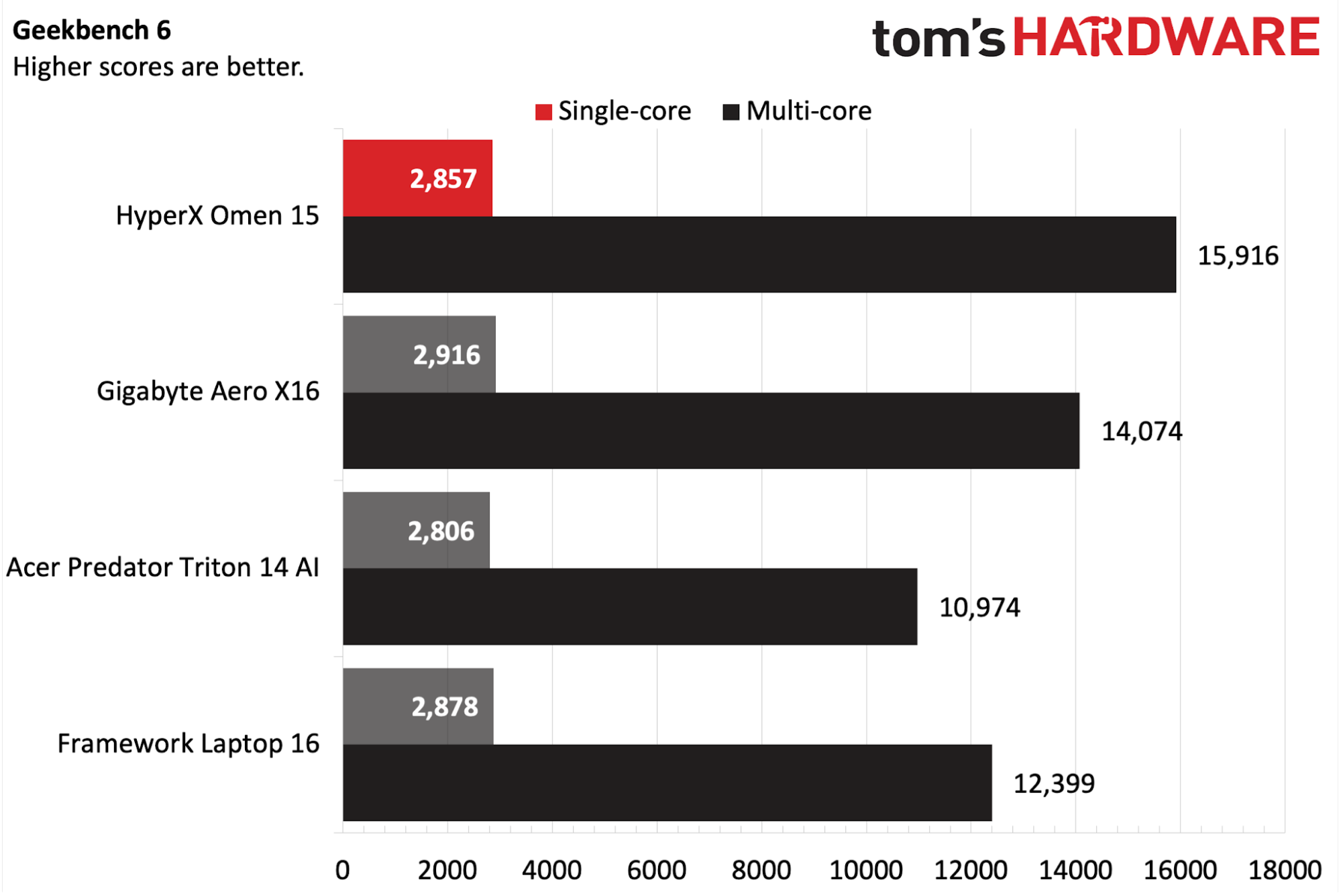
In the Geekbench synthetic CPU benchmark, the 14S's single-core performance closely mirrored that of the XPS 14 featuring the same CPU, with the former achieving a score of 2,704 versus 2,685 for the latter. However, there was a significant discrepancy between the two in the multi-core benchmark, with the 14S hitting 11,064 compared to 7,964 for the XPS 14. The Zenbook A16 proved to be an exceptional performer with its Snapdragon X2 Elite processor, with 3,807 and 22,733 on the single-core and multi-core benchmarks, respectively.

Dell 14S
Tom's Hardware
Dell 14S
Tom's Hardware
Dell 14S
Tom's Hardware
Dell 14S
Tom's Hardware

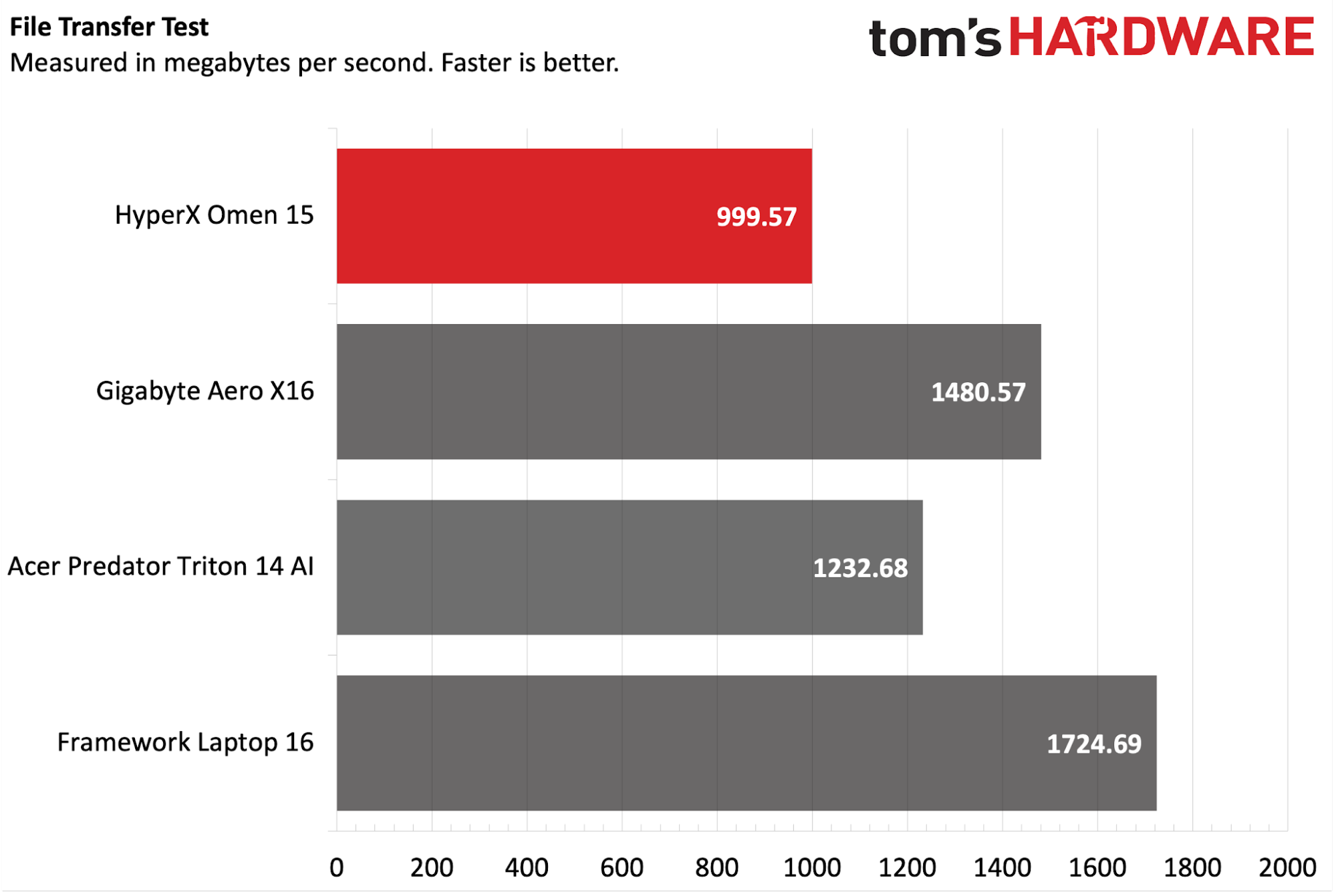
The 512GB SSD on the 14S was relegated to the back of the pack in our 25GB file transfer test, finishing at an average speed of 1,378.71 MBps. This was well behind the XPS 14 (1,730 MBps) and the chart-topping MacBook Air (1,924 MBps)

It was a similar story on our Handbrake test, in which we transcode a 4K video file to 1080p. Here, the 14S finished the test in 7 minutes and 22 seconds, nearly 40 seconds behind the XPS 14. However, the Zenbook A16 absolutely smoked all of the laptops in this test, finishing in just 2 minutes and 8 seconds.
During the Cinebench 2026 stress test, the 14S started at just over 1,600, before dipping to 1,465. It then recovered to a peak of 1,735 before settling in the 1,550 to 1,650 range for the rest of the runs.
The Ultra 7 355 P-cores averaged 2.61 GHz, while the low-power E-cores averaged 2.45 GHz.
Graphics on the Dell 14S (2026)

The Dell 14S uses integrated Intel Graphics with 4 Xe cores. On the 3DMark Steel Nomad test, the 14S achieved a score of 505, which was just below that of the XPS 14 (532).

Dell 14S

(Image credit: Tom's Hardware)

However, the Zenbook A16 once again flexed its muscle with a score of 1,262, while the MacBook Air came in at 1,005, nearly double the result of the 14S.

Display on the Dell 14S (2026)

Our 14S review unit came optioned with a 1920 x 1200 (FHD+) 60 Hz OLED touchscreen. This is a step up from the base system and features an FHD IPS display.

The display was overall quite colorful, with vivid colors and inky blanks; something that I’ve come to appreciate with OLED displays. I watched a few movie trailers, including the most recent trailer for The Odyssey and Spider-Man: Brand New Day. The trailer for Spider-Man looked especially brilliant, with the suit's iconic red and blue and the seismic destruction left by Hulk's Thunderclap.

Dell 14S

(Image credit: Tom's Hardware)

My one complaint about the display is that it wasn’t particularly bright. Dell specs the OLED panel at 300 nits, and our lab instruments measured an average of just 269 nits. The displays on all of its competitors broke the 400-nit mark, with the XPS 14 hitting 466 nits.

As for color performance, the display on the 14S reached 84.5 percent of the DCI-P3 space by volume and 119.3 percent of the sRGB space. Those numbers were right on top of the numbers we recorded for the other three laptops in this test, with just a few percentage points separating them.

Keyboard and Touchpad on the Dell 14S (2026)

The Dell 14S features an island-style backlit keyboard with springy keys and near-silent actuation. The exception to this rule was the spacebar, which seemed to bottom out easily and rewarded me with a grating “clank” every time I pressed it with my thumb.

Dell 14S

(Image credit: Tom's Hardware)

With that said, I used Keyhero.com to measure my typing speed, which was 87 words per minute with 97 percent accuracy.

Unlike the XPS 14, the 14S doesn’t feature a haptic trackpad (after all, cost-cutting has to come from somewhere). Instead, it features a top-hinged trackpad, meaning that “clicks” performed near the top of the surface, above the hinge, don’t register. You’ll need to keep your thumb near the bottom of the touchpad, where your thumb should naturally rest anyway if you’re using proper hand positioning.

Audio on the Dell 14S (2026)

The 14S uses dual 2-watt speakers, which sound reasonable enough. They’re not particularly powerful or worthy of high praise. I played the City of Angels soundtrack, culminating with the four heavenly instrumental tracks performed by Gabriel Yared.

While the strings sounded quite good, the angelic vocals that come in about a third of the way through in An Angel Falls sounded dull and lifeless. This was especially disappointing as the voices dropped into the lower registers. However, this is me being nitpicky about audio using one of my favorite albums of all time; for typical productivity-related tasks, the speakers on the 14S will do just fine. I didn’t find any third-party software to fine-tune the speakers.

Upgradeability of the Dell 14S (2026)

There are six screws (two of which are captive) that hold the Dell 14S' bottom panel in place. Once the screws are removed, the whole panel lifts off from the back.

There are two upgradeable pieces of hardware inside our review unit (besides the battery, which can be replaced): there’s an M.2 PCIe Intel BE213 Wi-Fi 7 card and a Kioxia 2230 PCIe 4.0 512GB SSD. While our unit had a 2230 SSD, the M.2 slot can accommodate up to 2280 modules.

Battery Life on the Dell 14S (2026)

One of the remarkable accomplishments of the XPS 14 that we previously tested was its battery life. The 14S also delivers on that front, lasting 20 hours and 41 minutes on our battery test, consisting of browsing the web, streaming video, and running OpenGL tests at 150 nits of brightness. This was just one minute shy of the XPS 14’s performance. Also, keep in mind that the 14S has an OLED display; our previous XPS 14 review unit used a non-touch IPS panel, so a similarly equipped 14S would likely post even better battery numbers.

Dell 14S
Tom's Hardware

For comparison, the MacBook Air, which has long been one of the reigning champs of battery life, could only muster 15 hours and 28 minutes of runtime. And the Zenbook A16, which was a performance monster in our productivity tests, couldn’t quite hit 10 hours and 30 minutes.

Heat on the Dell 14S (2026)

While running our Cinebench 2026 stress test on the 14S, we measured external surface temperatures and processor temperatures via its internal sensors.

Dell 14S
Tom's Hardware
Dell 14S
Tom's Hardware

The Core 7 Ultra 355 hit 106 degrees Fahrenheit on the keyboard between the G and H keys, around 82 F on the touchpad, and 108 F on the hottest point on the bottom. The processor measured 88 degrees Celsius.

One thing to note is that while the XPS 14 has two system fans, the 14S has just one.

Webcam on the Dell 14S (2026)

Dell's 14S uses an entry-level acceptable 2MP camera. It is by no means as clear or crisp as the 8MP unit in the more expensive XPS 14, but we weren't expecting that given its positioning. Color was quite good on the webcam, but the images were neither sharp nor grain-free. There was a lot of noise in the images, and details were quickly lost, as my facial hair looked a bit "muddy."

The camera also struggled with the overhead LED lights in my home office, causing blooming effects that marred the images.

Like many laptops, the 14S also incorporates an IR sensor for Windows Hello facial recognition.

Software and Warranty on the Dell 14S (2026)

The 14S is relatively light on included bloatware. Dell Optimizer and Dell Support Assist are installed by default. The former lets you optimize settings for the display, battery, and thermal management. The latter allows you to scan your system for issues, update software/firmware, optimize your network connection, and obtain assistance from customer service.

There are also the usual Intel utilities for graphics and security; however, I didn’t see the app shortcuts typically featured in a fresh Windows 11 installation (e.g., Dropbox, LinkedIn).

The 14S comes with one year of what Dell calls Basic Onsite Service. You can optionally add Accidental Damage Service (covering drops, spills, and power surges) for $59/year (currently on promotion for $29/year).

Dell 14S (2026) Configurations

The 14S is available with four processors (Core Ultra 5 322, Core Ultra 7 355, Core Ultra X7 358H, and Core Ultra 9 386H), Intel Graphics or Arc Graphics, 16GB or 32GB of memory, 512GB or 1TB SSD, and a 14-inch 1200p IPS or OLED display (in touch or non-touch options). You can also choose between Celestial Blue and Frost Blue for the chassis color when ordering directly from Dell.com.

The base configuration with a Core Ultra 5 322 processor, 16GB of RAM, a 512GB SSD, and a 14-inch non-touch IPS display costs $1,269.99. That is a very attractive entry point for the 14S, but options can quickly ratchet up the price. For example, a config with a Core Ultra 9 386H, Intel Graphics, 32GB of memory, a 512GB SSD, and a 14-inch touch OLED display retails for $2,019.99, while a Core Ultra X7 358H with Arc Graphics, 32GB of RAM, a 1TB SSD, and a 14-inch touch OLED display sells for $1,869.99. In the $1,800 to $2,000+ price range, you’d probably be better off going with an XPS 14.

Our review unit, featuring the Core Ultra 7 355, Intel Graphics, 16GB of RAM, 512GB SSD, and a 14-inch touch OLED display, landed about in the middle at $1,469.99.

Bottom Line

The Dell 14S attempts to mimic some of the perks of its flashier relative, the XPS 14, with a high-quality aluminum chassis, OLED display options, and stellar battery life (over 20 hours in our testing). It also adds in features you don’t get on the XPS 14, like an HDMI 2.1 port and USB-A ports.

Dell 14S

(Image credit: Tom's Hardware)

However, you also give up a bit. You don’t get the quad speakers, 8MP webcam, Gorilla Glass screen cover, or the option for a 2.8K 120 Hz OLED touch screen.

If those features aren’t important to you, consider this: our 14S review unit retails for $1,469.99. An XPS 14 with the same processor, memory allotment, storage size, and a 14-inch 2.8K 120 Hz OLED display costs $2,249.99. That’s a nearly $800 upcharge. In the grand scheme of things, the 14S is definitely living up to its “mainstream” positioning in the Dell laptop family.

45% off: Slashed to just $1,099, this bargain RTX 5060-powered gaming laptop is discounted by $900 at HP — near half-price HyperX Omen 16 is the perfect gaming laptop for heading back to school

2026年7月24日 19:21

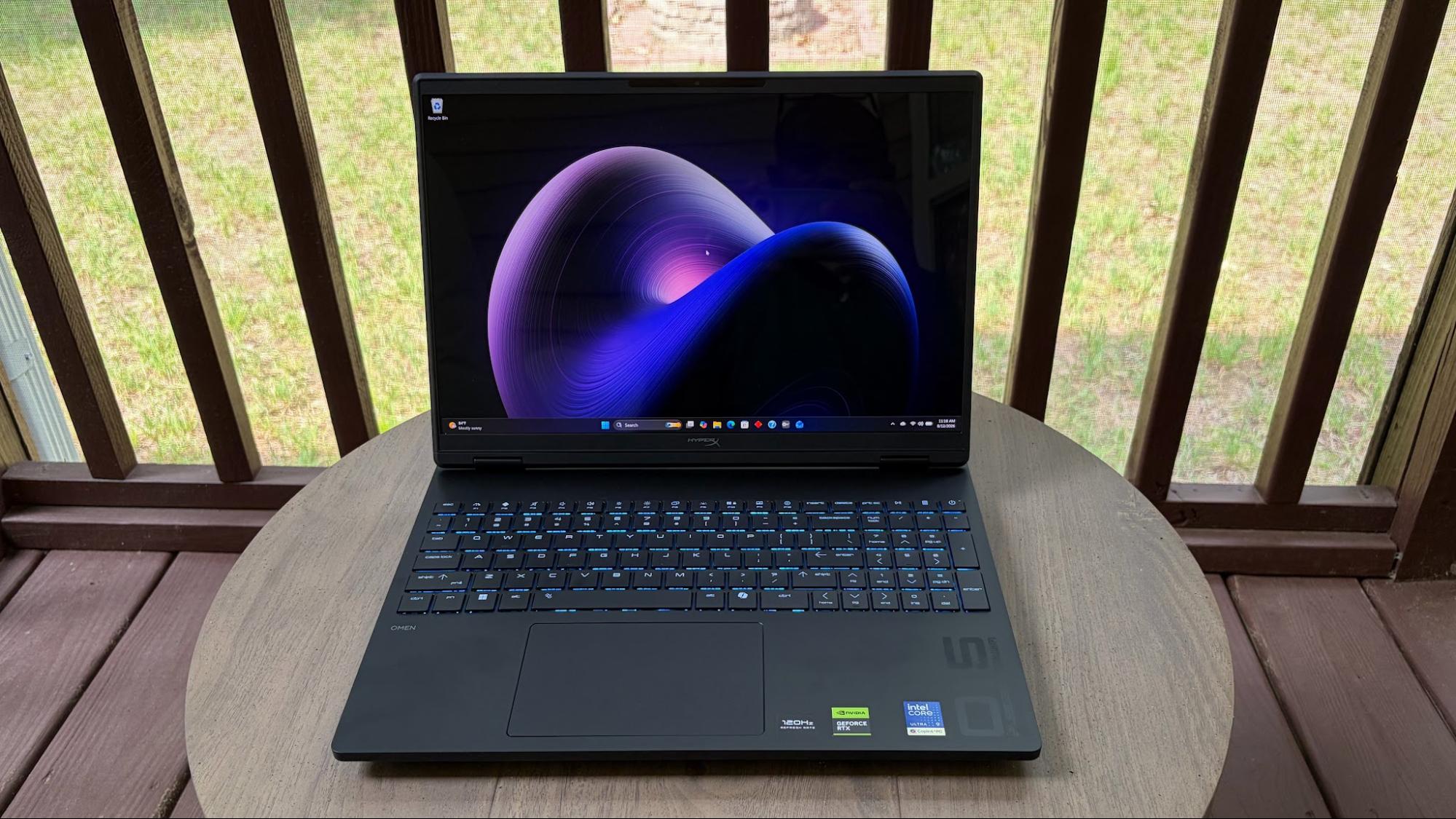
It's that time of year when you need to start thinking about prepping for starting a new semester or heading off to college. One of the handiest items to get a hold of is a competent laptop computer for doing lots of your coursework on. If that same laptop also happens to be able to play games, well, that's a big bonus. Shaving a massive $900 off the list price, HP's HyperX Omen 16 gaming laptop is now just $1,099.99. That's a superb price for a laptop that packs an RTX 5060 mobile GPU and a crisp 16-inch 2K display.

Check out this deal at HP

The HyperX Omen 16 packs some seriously good components for the price tag, as finding a capable RTX 5060 gaming laptop for near $1000 is a rarity in today's computer market. Inside the chassis of this model of the Omen 16 is an AMD Ryzen 7 8745HX processor, an Nvidia GeForce RTX 5060 laptop GPU with 8GB of dedicated GDDR7 VRAM, 16GB of RAM, and a small 512GB SSD. The display measures 16 inches diagonally and has a crisp 2K (1920 x 1200) resolution with a max refresh rate of 165Hz and a 3ms gray-to-gray response time. The IPS panel has a micro-edge display, anti-glare, low blue light emissions, a brightness of 400 nits, and 100% sRGB for the color gamut.

HP's HyperX Omen 16 features an AMD Ryzen 7 8745HX processor, an Nvidia GeForce RTX 5060 laptop GPU with 8GB of dedicated GDDR7 VRAM, 16GB of RAM, and a 512GB SSD. It's a capable gaming laptop with a crisp 16-inch IPS display and a fast 165Hz refresh rate. View Deal

We haven't had the opportunity to review this particular model of the HyperX Omen 16, so we can't fully use our Omen 16 review as a fair comparison. Our review unit used the much more powerful RTX 5080 GPU and Intel Core Ultra 9 275HX CPU. The components that are included in this model, though, are very familiar, so we do have a good idea how they will run, and the chassis, screen, and features of the Omen 16 will overlap.

The RTX 5060 will be able to run games smoothly on the 16-inch 1920 x 1200 display, and will be able to make use of Nvidia's DLSS software to increase framerates for a smoother experience on more taxing titles.

So if you're looking for a competent laptop for heading back to school, you can't go far wrong with this $1,099 deal on the HyperX Omen 16 for both work and play.

If you're looking for more savings, check out our Best PC Hardware deals for a range of products, or dive deeper into our specialized SSD and Storage Deals, Hard Drive Deals, Gaming Monitor Deals, Graphics Card Deals, Gaming Chair, Best Wi-Fi Routers, Best Motherboard, or CPU Deals pages.

You can also join the Tom's Hardware deals Discord for up-to-the-minute hardware deals.

Framework nearly doubles memory pricing for 32GB, 64GB Laptop 13 Pro overnight — CEO says absorbing LPCAMM2 supplier hikes would put 'our ability to operate at real financial risk'

2026年7月23日 04:50

Framework is adjusting the pricing for its upcoming Framework Laptop 13 Pro, the company announced in a blog post. The company says that its supplier of LPCAMM2 memory updated pricing to be "more than double" its existing inventory, while laptops and mainboards will see increases due to rises in prices for other components.

"We recently received a cost update from our LPCAMM2 supplier that goes far beyond anything we had predicted and anything we’re able to absorb without placing our ability to operate at real financial risk," wrote chief executive Nirav Patel. "Rather than the low-to-mid double digit [sic] percentage increase we had forecast from Q2 to Q3 on LPCAMM2 costs, we received prices that are more than double that of the prior inventory we had brought in."

LPCAMM2 memory is specifically in the Intel Core Ultra Series 3 version of the laptop, while models using AMD Ryzen AI 300 processors are sticking with SO-DIMMs.

But while Patel said the company has enough LPCAMM2 modules to fulfill existing pre-orders, their mix of 64GB, 32GB, and 16GB options doesn't match it exactly. Instead, the company is fulfilling as many orders of 64GB as it can before dropping down to 32GB at the original 32GB price. From there, it will drop certain 32GB to 16GB at that original price. Here's how Patel puts it:

"After evaluating a number of possible paths forward, we’re proceeding on the one that we believe minimizes the impact of this challenge. We have enough 64GB modules in inventory to cover pre-order batches through Batch 4 of laptops and Batch 7 of Mainboards. For orders beyond that configured with 64GB, we’ve updated the order configuration to use a 32GB module at the original 32GB module price. After that, we allocated the remaining 32GB modules to DIY Edition and Mainboard pre-orders configured with 32GB through Batch 4 of laptops and Batch 7 of Mainboards. For DIY Edition and Mainboard orders beyond that configured with 32GB, we’ve updated the order configuration to use a 16GB module at the original 16GB price. Note that because we don’t currently have a Core X7 Ultra pre-built configuration with 16GB of memory, we have not adjusted pre-built orders that originally contained 32GB. That is a configuration we plan to introduce later."

Framework will continue offering 16GB LPCAMM2 modules at $239, but said it will have to increase the cost once those modules run out. But the 32GB modules will now be $800 (they were previously $439), while the 64GB modules in pre-orders going forward will be an eye-watering $1,600, up from $849.

But that's not all. Framework is also raising the price of systems and mainboards in new orders. Patel wrote that X7 and X9 chips will be getting more expensive, as well as Windows license costs, and "increases in memory, storage, and other silicon costs for some of our Ryzen AI 300 Series configurations."

Patel wrote that Framework's supply chain experts have been able to bring down costs on some components, including 48GB DDR5 modules and SN850X 8TB and SN7100 1TB SSDs, while increasing costs of 16GB DDR5 modules and SN850X 1TB and SN7100 4TB drives. Patel says that pre-orders with components getting lower pricing will have their prices dropped if they're not yet fulfilled. If prices go up, Framework says it will still charge what you paid when you pre-ordered.

Patel and his team have been updating this blog, which showcases a very rocky ecosystem, more publicly than most other PC vendors.

Framework's website says that the first batch of pre-orders for the Laptop 13 Pro is set to ship in July. That gives the company a week to get these systems out the door.

Woot has slashed $600 off this RTX 5070 gaming laptop — get a Gigabyte Aero X16 with 32GB of RAM and Ryzen HX 370 for just $1,399

2026年7月22日 19:06

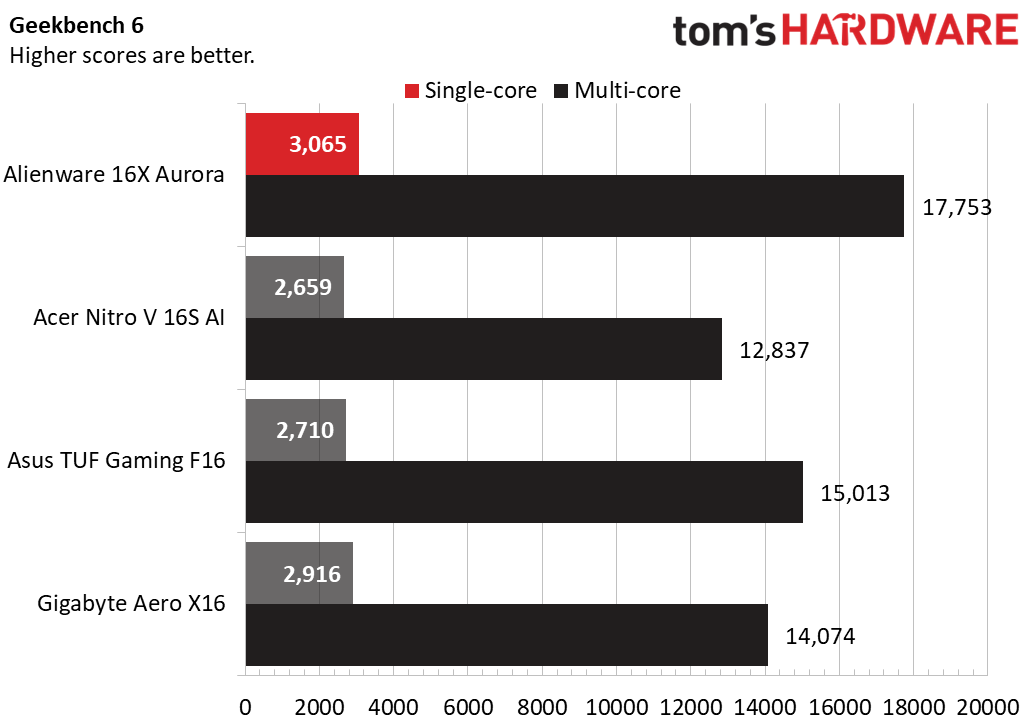
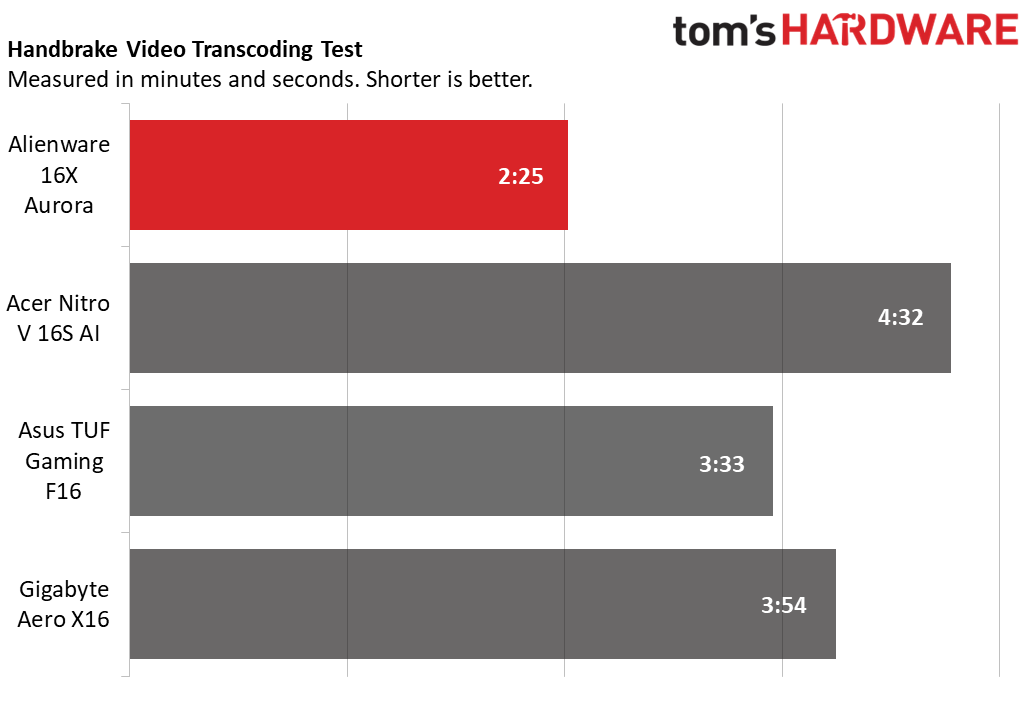
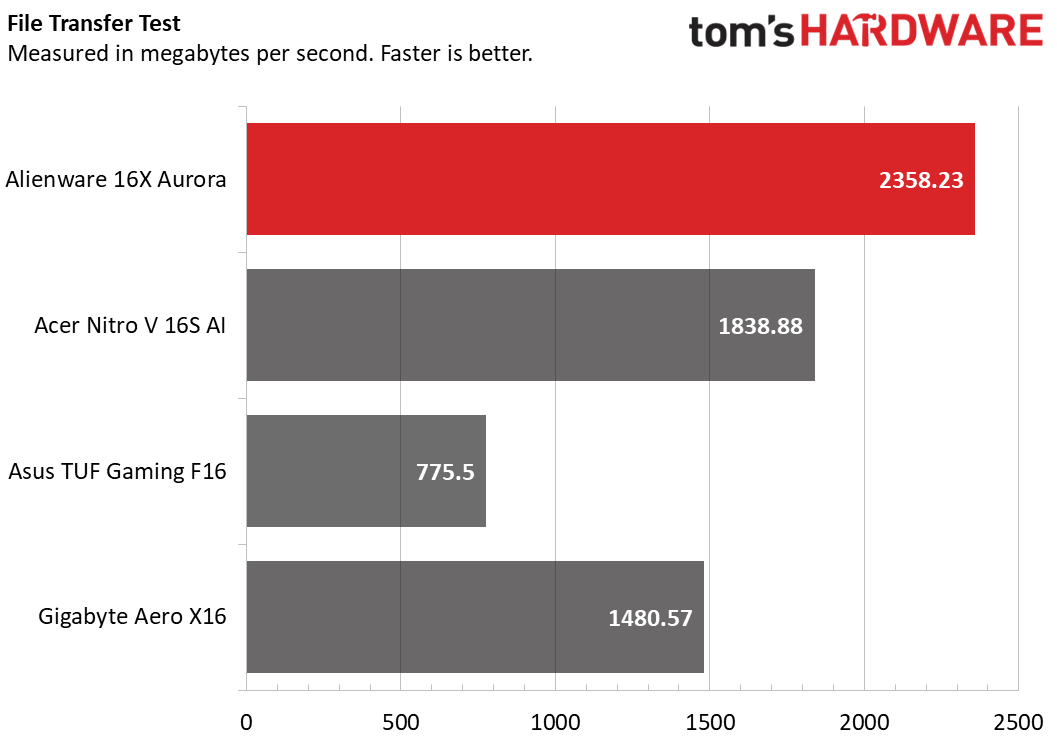
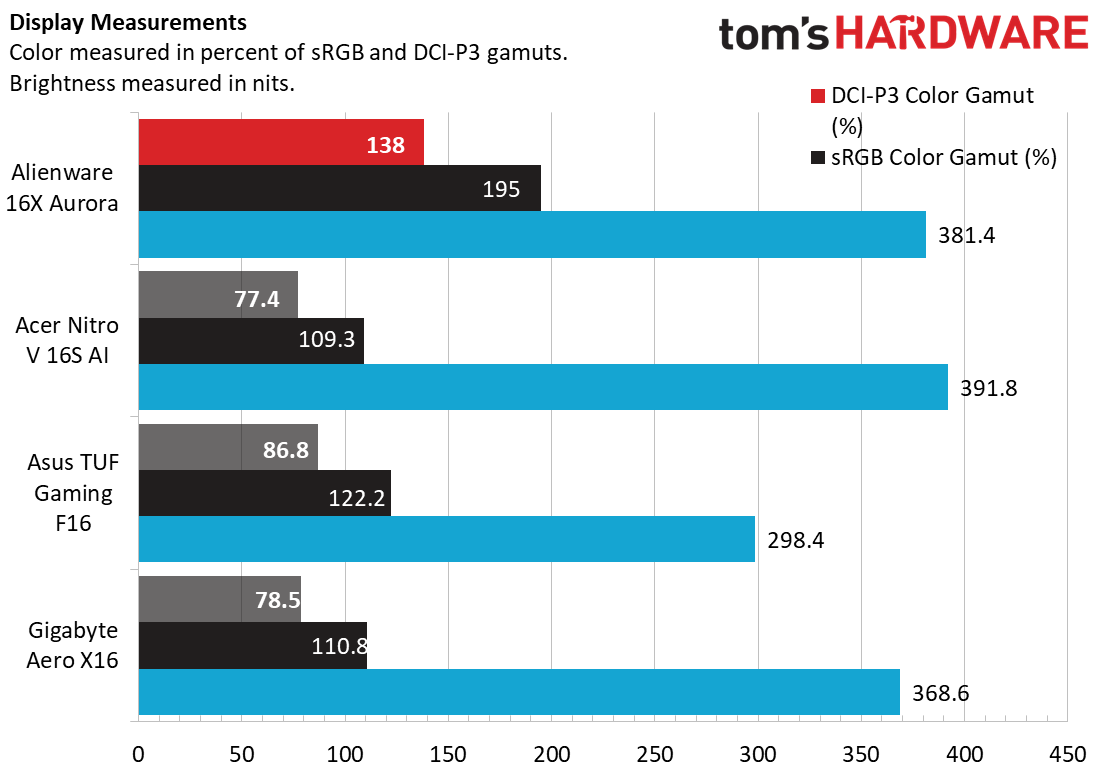
If you're in the hunt for a back-to-school gaming laptop, then look no further than this excellent Gigabyte Woot deal. Right now at Amazon's outlet, you can save 33% off the list price and get a 16-inch laptop with an Nvidia RTX 5070 for just $1,399, one of the cheapest 5070 laptops around.

For that, you get Nvidia's punchy mobile RTX 5070 GPU, 32GB of RAM for gaming and multitasking, 1TB of storage, and a nifty 2560 x 1600 WQXGA display. Given the current prices of RAM and storage, getting a laptop of this spec at this price is pretty much unheard of these days. We actually covered the HX 350 version of this laptop at $1,389 earlier this month. This deal gets you a snappier HX 370 CPU for just $10 more.

Get the Gigabyte Aero X16 with RTX 5070, 32GB of RAM, 1TB SSD, and AMD's Ryzen AI 9 HX 370, a 12-core CPU. View Deal

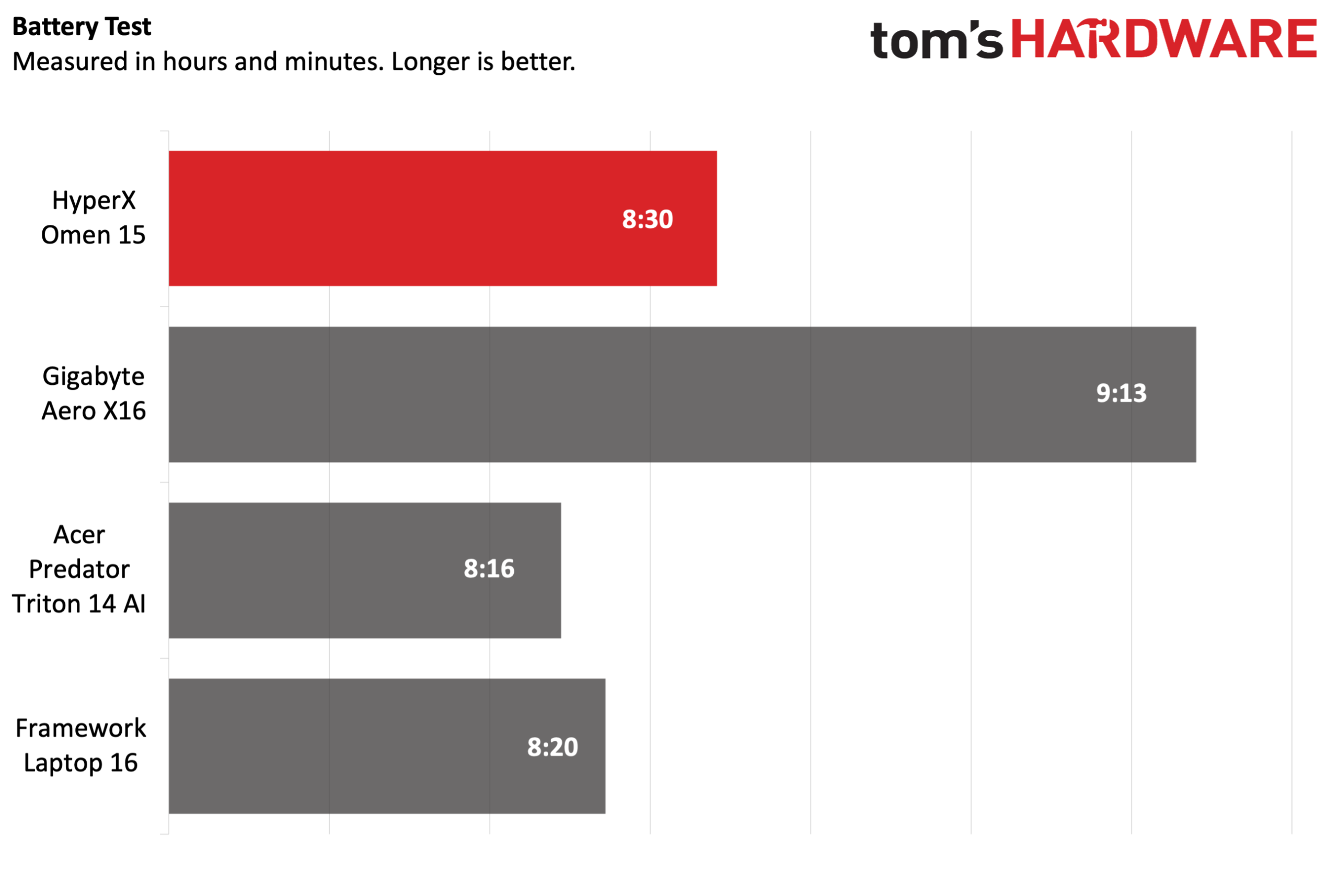
We've actually reviewed the aforementioned 350 version of this laptop, where we praised the Aero's excellent productivity performance, good battery life, and scope for upgradeability. However, it was let down by its display and performance given the price. At the $1,399 discount, however, it becomes a much more enticing prospect. As you can see, it sails past rivals in our battery test, scoring nearly an hour longer usage compared to its next-closest rival.

Gigabyte Aero X16

(Image credit: Tom's Hardware)

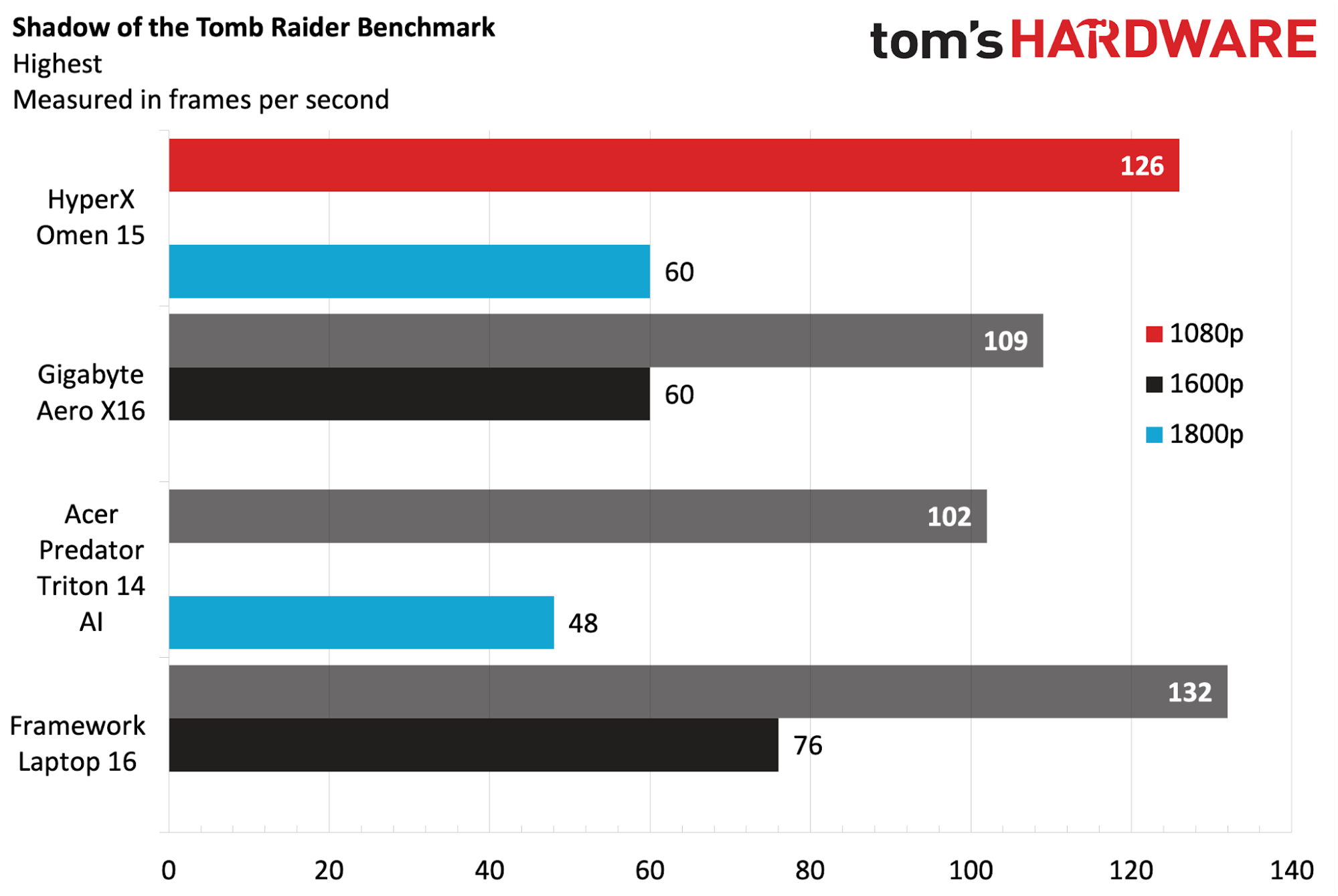
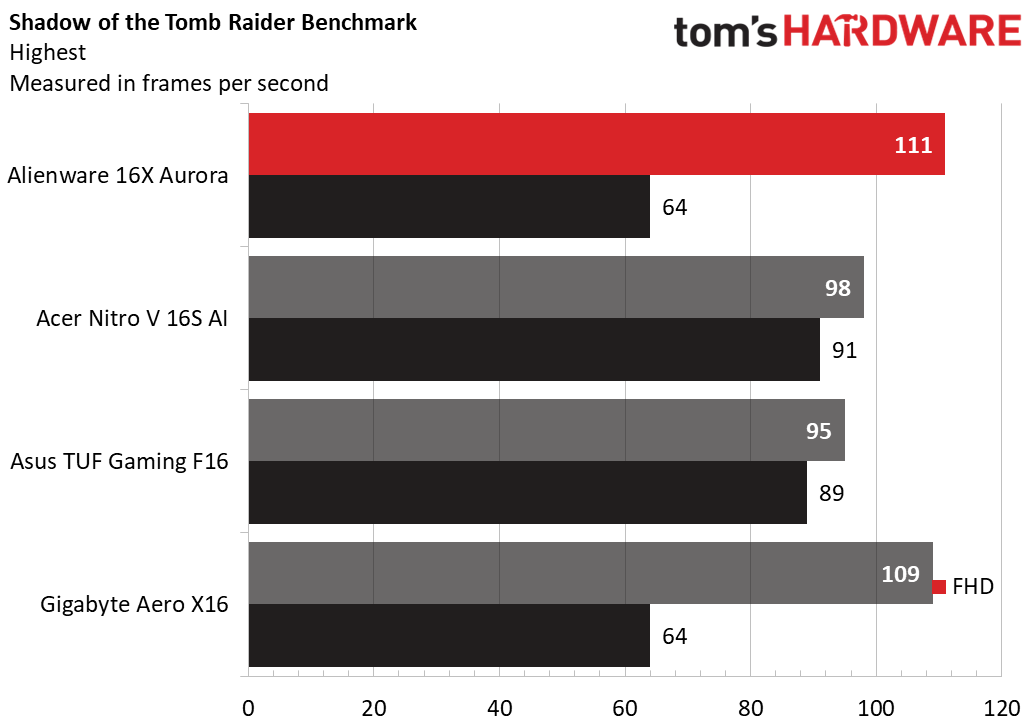
As you can see from our gaming benchmarks, the Aero X16 can easily deliver over 100 fps in Shadow of the Tomb Raider at 1080p, or 64 fps at its native 2560 x 1600. It's not the most potent gaming laptop on the market by any means, but it's one of the best-value options given the sub-$1,400 price point on offer here.

Gigabyte Aero X16
Tom's Hardware
Gigabyte Aero X16
Tom's Hardware
Gigabyte Aero X16
Tom's Hardware
Gigabyte Aero X16
Tom's Hardware
Gigabyte Aero X16
Tom's Hardware
Gigabyte Aero X16
Tom's Hardware

Our productivity testing is based on AMD's Ryzen AI 7 350 processor. This 8-core CPU delivered decent Geekbench 6 scores, so expect the 12-core 370 in this model to offer better performance still and also give gaming a much-needed boost, with 24 threads and boost clocks of up to 5.1 GHz.

The other specs of this laptop, notably the 32GB of RAM and 1TB SSD, are also impressive. 32GB of DDR5 is worth nearly $400 these days, and that'll get you all the multitasking and performance you need for work and play. While this isn't an OLED laptop, the 2560 x 1600 display offers a refresh rate of up to 165Hz.

As the 'Aero' moniker suggests, the X16 is also thin and light. It measures just 0.65 inches in thickness and weighs 4.18 lbs, making it a very portable option. You'll also be pleased to know that the laptop can be upgraded in the future, with two SODIMM memory slots and two M.2 drive slots offering you headroom to add RAM or storage later in life.

Best Tech and PC deals | Best gaming PC deals | Best RAM combo deals | Best 3D printer deals | Best RAM deals | Best gaming laptop deals | Best gaming monitor deals | Best Wi-Fi Router deals | Best GPU deals | Best SSD deals | Best hard drive HDD deals | Best CPU deals | Best gaming chair deals | Best PC building tool deals | Best PC peripherals deals | Best filament and resin deals | Best motherboard deals | Best CPU cooler deals | Best PC case deals | Best Dell and Alienware deals | Best USB charger deals | Best gaming and productivity laptop deals under $1,000 | Best laptop PC deals

Also, you can join the Tom's Hardware deals Discord for up-to-the-minute hardware deals.

Save $400 on a new 14-inch MacBook Pro M5 — 48GB of RAM, a 1TB SSD, and a 16-core processor for $2,699

2026年7月21日 19:28

There's no denying how good the build quality and construction of Apple's MacBook Pro lineup are. They are what every other high-end laptop manufacturer tries to emulate, which lets Apple charge a very high price for the privilege of owning one. If you're looking for a high-performance laptop for coding, video production, or even some light LLM/AI tasks, then this deal on the 14-inch Apple MacBook Pro with M5 chip for $2,699 is worth a look. B&H Photo has slashed $400 off the $3,099 list price to bring it down to this price, and give you the chance to pick up a powerful laptop with 48GB of memory.

Check out this deal at B&H Photo

This 14-inch MacBook Pro uses the latest M5 Pro chip, with a 15-core CPU and 16-core GPU with a Neural Accelerator in each core, delivering amazing processing power in a small package. This model sports a hefty 48GB of unified RAM, a 1TB SSD for storage, and a crisp 3024 x 1964-pixel Liquid Retina XDR display (1600 nits peak HDR brightness), with superb battery life (up to 24 hours).

Other features include a 12MP Center Stage camera with Desk View support, an in-house N1 networking chip that combines Wi-Fi 7 and Bluetooth 6, an SDXC Slot, Thunderbolt 5, and a MagSafe 3 connector.

This 14-inch MacBook Pro uses the latest M5 Pro chip with a 15-core CPU and 16-core GPU, 48GB of unified RAM, and a 1TB SSD. A gorgeous 3024 x 1964px Liquid Retina XDR display provides the visuals. View Deal

We had the chance to review the MacBook Pro 14-Inch and found that the M5 chip delivers solid performance gains over its M4 predecessor. The SSD performance has greatly improved, and the rocking speaker system is still a cut above similar laptops from competitors. In our benchmark testing, the MacBook Pro's M5 CPU delivered between a 10 to 20% improvement over the prior generation's M4 chip in CPU performance.

Apple MacBook Pro (14-inch, M5)
Tom's Hardware
Apple MacBook Pro (14-inch, M5)
Tom's Hardware
Apple MacBook Pro (14-inch, M5)
Tom's Hardware
Apple MacBook Pro (14-inch, M5)
Tom's Hardware
Apple MacBook Pro (14-inch, M5)
Tom's Hardware

If the price tag of $2,699 and 48GB of RAM are a little too high for your tastes, you can also pick up the same 14-inch MacBook Pro with M5 Pro chip, but with 24GB of RAM for $2,299, with the same hardware and features as our main deal.

If you're looking for more savings, check out our Best PC Hardware deals for a range of products, or dive deeper into our specialized SSD and Storage Deals, Hard Drive Deals, Gaming Monitor Deals, Graphics Card Deals, Gaming Chair, Best Wi-Fi Routers, Best Motherboard, or CPU Deals pages.

You can also join the Tom's Hardware deals Discord for up-to-the-minute hardware deals.

Score $1,100 off this OLED gaming laptop with RTX 5070 Ti, the ultimate Back to School powerhouse — also features a 24-core Ultra 9 290HX, 32GB of RAM, and a 1TB SSD

2026年7月17日 19:24

If you're headed back to school or college later this summer, or you're embarking on new study endeavours for the first time, then you might well be in the market for a powerhouse laptop that can tackle work and play with ease. This excellent HP Omen Max laptop is currently $1,100 off at Best Buy, netting you an RTX 5070 Ti GPU, 24-core Intel Core Ultra 9 290HX CPU, 32GB of RAM, and a 1TB SSD, all housed under a slick OLED display.

● Check out this deal at Best Buy

This laptop is not only fantastic for gaming, but the powerhouse Core Ultra 9 290HX is Intel's flagship laptop processor, with a massive 24 cores, including eight performance cores and 16 efficiency cores. That makes it great for all manner of productivity tasks, no matter what you're studying.

Get a 16-inch laptop with a 2K OLED display, Intel Core Ultra 9 290HX, 32GB of RAM, RTX 5070 Ti, and 1TB SSD. View Deal

The HP Omen Max 16 laptop is a model we've reviewed, and we like its general premium feel thanks to its aluminum enclosure, good audio, and decent webcam. The headline here is that Intel Core Ultra 9 290HX CPU. This flagship Arrow Lake Refresh CPU features boost clocks of up to 5.5 GHz. Below is a selection of laptops we've tested running this CPU, and as you can see, it delivers very impressive Geekbench 6 scores.

Asus ROG Strix Scar 18 (2026)
Tom's Hardware
Asus ROG Strix Scar 18 (2026)
Tom's Hardware
Asus ROG Strix Scar 18 (2026)
Tom's Hardware

That CPU is backed up by the punchy RTX 5070 Ti GPU. While it doesn't have the coveted 16GB of VRAM of the desktop variant, it does have 12GB, getting you more than the 8GB configurations you'll mind on the lower end of Nvidia's scale. This Blackwell GPU has 5,888 CUDA cores and should provide ample power at the laptop's native resolution of 2560 x 1600 at 240 Hz. That display is also really notable because it's an OLED panel, rather than IPS, offering much better contrast and response times for gaming and watching content.

Alongside the potent CPU and GPU combo, you get 32GB of DDR5 RAM and a 1TB SSD. The former is crucial for multitasking and gaming, while the latter should be fine to get you started with a few Steam games and your studies.

As always with the Omen Max, you get two USB-A ports, two Thunderbolt 4 with USB-C, a 3.5mm headphone jack, an Ethernet port, and HDMI 2.1.

If you'd like to compromise a little, you could get a 5080 version of this laptop for a little more. Priced at $2,949 ($1,070 off), this model comes with a slightly less potent Core Ultra 9 275HX (still 24 cores), a 2TB SSD, and the aforementioned 5080. That gives you more storage and a better GPU for $150 more.

If you're looking for more savings, check out our Best PC Hardware deals for a range of products, or dive deeper into our specialized SSD and Storage Deals, Hard Drive Deals, Gaming Monitor Deals, Graphics Card Deals, Gaming Chair, Best Wi-Fi Routers, Best Motherboard, or CPU Deals pages.

You can also join the Tom's Hardware deals Discord for up-to-the-minute hardware deals.

Get AMD’s new Ryzen 7 7700X3D with 16GB of RAM and a motherboard for just $450 — save 31% on a B650M Micro ATX and G.Skill DDR5 for an epic small build

2026年7月17日 19:22

AMD's latest CPU release is out in the wild and currently has exclusivity with Newegg. So if you want to get your hands on one, it's going to be from the Egg for now, at least. The AMD Ryzen 7 7700X3D was only recently announced at Computex 2026, slotting in between the 7600X3D and the 7800X3D in the product stack. But with a suggested retail price of $329, it's turning out not to be a great value for money compared with the prices of the existing 7600X3D and 7800X3D processors, that is, until the 7700X3D started appearing in Newegg's combo bundles. Today, you can pick up the AMD Ryzen 7 7700X3D along with the ASRock B650M Pro RS WiFi Micro ATX motherboard and 16GB of G.SKILL Flare X5 DDR5-6000 RAM for just $450 in this Newegg combo bundle.

Check out this deal at Newegg

The 7700X3D has slightly lower boost clocks than its big brother, the 7800X3D, but it gives you the same eight Zen 4 cores and 104 MB of combined L2 and L3 cache. In this bundle, it works out as a much cheaper 7800X3D alternative, with only a slight drop in overall performance. When paired with the Micro ATX motherboard, this is a great start for a budget-oriented small-form-factor gaming PC.

You're saving a tidy $202.99 (31%) on the price of this combo bundle, thanks firstly to the $153.99 combo discount and then a further $49 when you use promo code PKC337 at checkout.

Pick up a brand-new Newegg combo bundle that features the AMD Ryzen 7 7700X3D CPU with eight Zen 4 cores and 104 MB of combined L2 and L3 cache, plus ASRock's B650M Pro RS WiFi Micro ATX motherboard and 16GB of G.SKILL Flare X5 DDR5-6000 RAM.View Deal

You can also pick up the new AMD Ryzen 7 7700X3D separately for just $279.99, as Newegg has slapped the same $49 discount on the individual CPU. Use promo code PKC337 at checkout to apply the discount.

The AMD Ryzen 7 7700X3D CPU sports eight Zen 4 cores and 104 MB of combined L2 and L3 cache with a 120W TDP on the AM5 platform.View Deal

In our review of the AMD Ryzen 7 7700X3D, we found the CPU to fit between the 7800X3D and 7600X3D, as expected. The 7700X3D shaves 200 MHz off the base clock and 500 MHz off the boost clock, but surprisingly performs closer to the 7600X3D, with only a 2% difference in average performance.

AMD Ryzen 7 7700X3D

(Image credit: Tom's Hardware)

Just $450 for an AM5 7700X3D PC bundle that includes a competent gaming CPU, motherboard, and memory is good enough value, and the Micro ATX board means you could construct a small form factor build, or your own Steam Machine-type setup with superior parts. The big downside to this bundle is the single stick of RAM. It will, of course, still work, but you do take a slight performance hit from not using dual channels. However, you can always upgrade with an extra 16GB stick in future.

If you're looking for more savings, check out our Best PC Hardware deals for a range of products, or dive deeper into our specialized SSD and Storage Deals, Hard Drive Deals, Gaming Monitor Deals, Graphics Card Deals, Gaming Chair, Best Wi-Fi Routers, Best Motherboard, or CPU Deals pages.

You can also join the Tom's Hardware deals Discord for up-to-the-minute hardware deals.

Get an RTX 5080 gaming laptop for just $2,199 thanks to this HP Omen Max deal — save $1,500 on AMD Ryzen 9 beast with 32GB of RAM

2026年7月16日 18:33

With the AI price crunch driving up the price of gaming laptops, good deals are harder and harder to find these days, but HP has just slashed $1,500 off this Omen Max 16-inch gaming laptop, getting you an AMD Ryzen 9 with an RTX 5080 for just $2,199. That's a 40% saving on the $3,699 MSRP.

● Check out this HP laptop deal

As you can imagine, the focus here is on the RTX 5080, a 16GB VRAM beast, which even in its mobile format will chew through any title at the 2,560 x 1,600 resolution the display offers. However, the rest of the specs are also noteworthy, including the 12-core AMD Ryzen 9 HX 375, 32GB of DDR5, and the 1TB SSD.

Get an HP Omen Max laptop with an RTX 5080 GPU, Ryzen 9 HX 375, a 1TB SSD, and 32GB of RAM, all packed into a 16-inch chassis with a 2560 x 1600 240Hz display. View Deal

We haven't reviewed this exact spec of laptop, but we have tested the more potent RTX 5090 version of this model. As you can read in our HP Omen Max 16 laptop review, it's a little on the heavy side (5.99 lbs), but that's a trade-off for the premium look and feel of the aluminum enclosure. We also liked the excellent audio and sharp webcam.

Our testing data from other laptops shows the Ryzen AI 9 HX 375 chip easily bests Snapgradon's X Elite and Intel's Core 7 Ultra 258V in Geekbench 6 scores. With a 5.1 GHz max boost clock, 24MB L3 cache, and 12 cores, this is a solid processor.

HP OmniBook Ultra
Tom's Hardware
HP OmniBook Ultra
Tom's Hardware
HP OmniBook Ultra
Tom's Hardware
HP OmniBook Ultra
Tom's Hardware

As mentioned, the headline feature is the RTX 5080. With 16GB of VRAM and 7680 CUDA Cores, it will easily run any game at 1080p or the laptop's native resolution of 2,560 x 1,600. That display is a 16-inch WQXGA IPS panel (so no OLED, sadly), with a 3ms response time and 500 nits of brightness.

You also get the coveted 32GB of DDR5 5600 RAM, as well as a 1TB Gen 4 M.2 SSD, plenty of storage for your Steam library. Other features include Bluetooth 5.4 and Wi-FI 7, as well as battery fast charge, which gets you around 50% charge in just 30 minutes.

In terms of connectivity, the Omen Max features two USB-A ports, HDMI 2.1, a 3.5mm headphone jack, and two USB-C ports. There are also a further two M.2 SSD expansion slots, so you can open it up and increase your storage with a bit of DIY tinkering in future.

To put the value of this deal into perspective, HP is also currently selling an Intel Core Ultra 7 270HX Plus version of this laptop. Although the processor is a little better, you only get a 5070 Ti with 12GB of VRAM, 16GB of RAM, and a 512GB SSD, for $1,999. So for the extra $199, you're getting double the storage, double the RAM, and a 5080 instead of the 5070 Ti, which is a sizeable GPU performance jump.

If you're looking for more savings, check out our Best PC Hardware deals for a range of products, or dive deeper into our specialized SSD and Storage Deals, Hard Drive Deals, Gaming Monitor Deals, Graphics Card Deals, Gaming Chair, Best Wi-Fi Routers, Best Motherboard, or CPU Deals pages.

You can also join the Tom's Hardware deals Discord for up-to-the-minute hardware deals.

Best Buy has slashed $900 off this Asus 64GB 2-in-1 touchscreen gaming laptop — $2,099 RoG Flow Z13 is great for both gaming and AI use

2026年7月15日 19:24

Fancy a gaming laptop that's a little different? Something that can be used to play games, run small local LLMs, and even transform into a tablet for on-the-go use, then check out this hefty $900 saving on the Asus RoG Flow Z13 from Best Buy, now only $2099.99. The original $2,999.99 price tag is a lot to ask for, even with this laptop's exceptional amount of speedy RAM, but at the reduced price, it's a very attractive proposition.

Check out this deal on Best Buy

The Asus RoG Flow Z13 sports a 13.4-inch display with a 16:10 WQXGA 180Hz IPS ROG Nebula display and Gorilla Glass protection, with a 2560 x 1600 pixel resolution. The display is also touchscreen-enabled, and one of the quirks of this particular gaming laptop is that it can switch from an ordinary laptop setup to a tablet orientation with a built-in kickstand.

The hardware inside consists of AMD's 16-core Ryzen AI Max+ 395 processor with integrated Radeon 8060S graphics, a hefty 64GB of 8000 MT/s LPDDR5X unified memory, and a 1TB SSD for storage. You will be able to happily game on high settings at 1080p, but may need to make some compromises at 1440p to keep the frame rate high.

An AMD Ryzen AI Max+ 395 gaming laptop with a 16-core processor and integrated Radeon 8060S graphics, plus a hefty 64GB of 8000MT/s LPDDR5X unified memory. There's also a 1TB SSD for storage and the 2 in ability to transform from a laptop to a touchscreen tablet. View Deal

The chassis of the Asus RoG Flow Z13 is constructed from a CNC'd aluminum block for a solid structure, with a lightweight stainless steel vapor chamber that efficiently dissipates heat while adding extra strength to the laptop. Liquid metal thermal material is used to keep the CPU cool under load and helps to keep the noise levels of the laptop to a minimum while playing the most demanding games or using AI applications and software.

Perfect for taking on the go, this convertible 2-in-1 Asus RoG Flow Z13 laptop is a good deal at $2099.99, especially considering the extortionate price of RAM in the current climate. 64GB is considered large for a laptop, although there is a 128GB version of this laptop; the price is a lot higher, and not good value for money.

If you're looking for more savings, check out our Best PC Hardware deals for a range of products, or dive deeper into our specialized SSD and Storage Deals, Hard Drive Deals, Gaming Monitor Deals, Graphics Card Deals, Gaming Chair, Best Wi-Fi Routers, Best Motherboard, or CPU Deals pages.

You can also join the Tom's Hardware deals Discord for up-to-the-minute hardware deals.

Razer Blade 16 (2026) review: Competitive gaming performance and class-leading endurance

2026年7月14日 21:00

The Razer Blade 16 has long been leading contender among the best gaming laptops, thanks in part to its careful component selection and strong style. In this case, our review unit comes equipped with an Intel Core Ultra 9 386H processor and a flagship RTX 5090 GPU.

While the chassis remains the same as the Razer Blade 16 that we tested a little over a year ago, the 25W processor in our new review unit enabled some impressive runtimes that eclipse the competition. You’ll have to pay a considerable sum for the luxury, but the Blade 16 makes as strong a case as a compelling premium gaming laptop.

Design of the Razer Blade 16

We were impressed with the design of last year's Blade 16, and luckily, Razer hasn’t altered the formula for this year’s model. You get the same matte-black chassis that measures just 0.69 inches at its thickest point (0.59 inches towards the front). Build quality remains excellent in true Razer fashion.

The overall design is minimalist, with a minimal amount of RGBs and no obvious ventilation slats along the sides for heat management. Instead, the clean design would look at home sitting on your desk while you're gaming with an Xbox controller, or sitting on your desk in a cubicle at work. The only bit of flash that you’ll find is the RGB Razer logo on the lid.

Razer Blade 16 (2026)
Tom's Hardware
Razer Blade 16 (2026)
Tom's Hardware
Razer Blade 16 (2026)
Tom's Hardware
Razer Blade 16 (2026)
Tom's Hardware

You’ll find thin bezels around the glossy 16-inch OLED display, below which you’ll find the full-size keyboard and a large trackpad. There’s also a small status LED at the front right of the chassis (just below the Intel Core Ultra sticker on the deck). It pulses white when the laptop is in standby mode.

There’s a healthy assortment of ports on the laptop, including three legacy USB 3.3 Gen 2 Type-A ports. There’s also one Thunderbolt 4 port, one Thunderbolt 5, an SD card reader (UHS-II), a full-size HDMI 2.1 port, and a 3.5 mm combo audio jack. There’s also a proprietary power port.

The Blade 16 measures 13.98 x 9.86 x 0.69 inches and weighs 4.71 pounds. For comparison, the MSI Raider 16 HX also packs an RTX 5090, but measures 14.29 x 10.62 x 1.14 inches and weighs over a pound more (5.73 pounds). The Alienware 16 Area-51 is heavier still at 7.49 pounds, with dimensions of 14.37 x 11.41 x 1.12 inches.
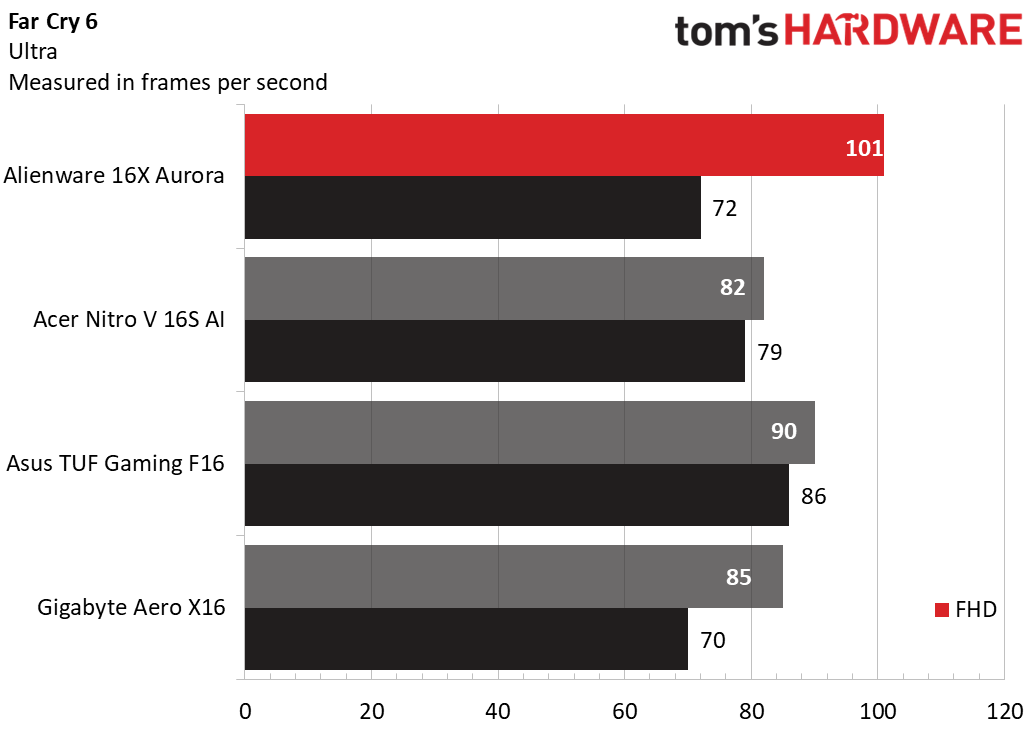
Razer Blade 16 Specifications

CPU

Intel Core Ultra 9 386H

Graphics

Nvidia GeForce RTX 5090 (24GB GDDR7, 1,597 MHz Boost Clock, 175 W Max TGP)

Memory

32GB LPDDR5X-9600 (2x 16GB)

Storage

2TB PCIe 4.0 NVMe M.2 SSD

Display

16-inch, 2560x1600, 240 Hz, 16:10

Networking

Wi-Fi 7, Bluetooth 6.0

Ports

1x Thunderbolt 5, 1x Thunderbolt 4, 3x USB 3.2 Type-A Gen 2, 1x HDMI 2.1, 3.5 mm headphone jack, SD reader (UHS-II)

Camera

1080p IR webcam

Battery

90 Whr

Power Adapter

280 W

Operating System

Windows 11 Home

Dimensions (WxDxH)

13.98 x 9.86 x 0.69 inches

Weight

4.71 pounds

Price (as configured)

$4,899.99

Gaming and Graphics on the Razer Blade 16

Our Blade 16 review unit is equipped with a Core Ultra 9 386H processor, which has 16 total cores (4 performance, 8 efficient) and a maximum performance turbo frequency of 4.9 GHz for the performance cores. There’s also 32GB of LPDDR5x memory and a GeForce RTX 5090 GPU (1,597 MHz boost clock, 175W max TGP).

This combo generally performed well across our gaming benchmark suite, with a few exceptions. While playing Battlefield 6 at native resolution in Overkill detail mode, with DLSS Quality and Frame Generation enabled, I was comfortably getting between 110 and 120 FPS, even with a lot of action happening on the screen.

For this review, the competitive set consists of last year's Blade 16 (Ryzen AI 9 HX 370 at 28W, RTX 5090 at 160W TGP), MSI Raider 16 Max HX (Core Ultra 9 290HX Plus at 55W, RTX 5090 at 175W TGP), and the Alienware 16 Area-51 (Core Ultra 9 290HX Plus at 55W, RTX 5080 at 175W TGP).

Razer Blade 16 (2026)
Tom's Hardware
Razer Blade 16 (2026)
Tom's Hardware
Razer Blade 16 (2026)
Tom's Hardware
Razer Blade 16 (2026)
Tom's Hardware
Razer Blade 16 (2026)
Tom's Hardware

As usual, we start our gaming benchmarks with the Shadow of the Tomb Raider (Highest setting) benchmark, where the Blade 16 delivered 182 FPS at 1080p. Performance at 1600p scaled down to 133 FPS. The 2025 edition of the Blade 16 was 16 FPS behind at 1080, but at the resolution that most would play at, 1600p, the older model was nearly 30 FPS faster (162 FPS versus 133 FPS).

Cyberpunk 2077 (Ray Tracing Ultra settings), the laptops were pretty evenly matched, with most running between 65 and 70 FPS at 1080p and at around 40 FPS at 1600p. For the Razer Blade 16 specifically, it achieved 65 FPS at 1080p and 42 FPS at 1600p.

Far Cry 6 (Ultra settings) saw the Blade 16 running in third place ahead of its predecessor (106 FPS at 1080p, 108 FPS at 1600p). The Alienware 16 Area-51 and Raider 16 Max HX were a few FPS ahead at each resolution, but it was still a relatively close fight among the top three.

Red Dead Redemption 2 (Medium settings) proved challenging for the Blade 16, as it lagged behind with 94 FPS at 1080p and just 71 FPS at 1600p. For comparison, last year's model eclipsed those numbers at 121 FPS and 94 FPS, respectively. The 25W CPU simply couldn’t keep up with the 28W Ryzen and 55W Intel HX chips

However, the Blade 16 was back to its fighting form in the Borderlands 3 (Badass settings) benchmark, easily slipping into second place behind the Raider 16 Max HX with 175 FPS at 1080p and 126 FPS at 1600p.

Metro Exodus is still our preferred benchmark for gaming laptop stress testing. Our review unit averaged 133.39 FPS at 1080p across 15 loops using the RTX benchmark preset. The CPU performance cores averaged 3.96 GHz, and the efficiency cores averaged 3.5 GHz. The RTX 5090 GPU also ran at 1.95 GHz.

One item of note is that the two system fans are incredibly loud while gaming, which may force you to use a pair of the best gaming headsets to block out the added noise.

Productivity Performance on the Razer Blade 16

The Razer Blade 16 uses a 16-core Intel Core Ultra 9 386H processor, 32GB of memory, and a 2TB PCIe 4.0 SSD. With some of the competition sporting upwards of 8 additional cores, the Blade 16 didn’t really break through in the multi-threaded benchmarks.

The synthetic CPU benchmark Geekbench saw the Blade 16 lag slightly behind its predecessor in single-core (2,895 versus 2,922), but pull ahead in multi-core performance (16,971 versus 16,025). However, neither Blade system was a match for the Core Ultra 9 290HX Plus processors in the Alienware 16 Area-51 and Raider 16 Max HX; the latter of which pulled numbers of 3,231 and 20,656, respectively.

Razer Blade 16 (2026)
Tom's Hardware
Razer Blade 16 (2026)
Tom's Hardware
Razer Blade 16 (2026)
Tom's Hardware

In our 25GB file transfer test, the Blade 16 took second place by the slightest of margins, hitting 1,735.09 MBps. However, this result was still 1,000 MBps behind the first-place Alienware 16 Area-51.

The multi-threaded performance shortfall crept up again in our Handbrake test, where we transcode a 4K video file to 1080p. The Blade 16 pulled up the rear in this group, even falling behind the Blade 16 with the Ryzen AI 9 HX 370. It took 3 minutes and 17 seconds to complete the task compared to just 1 minute and 51 seconds for the Raider 16 Max HX.

Display on the Razer Blade 16

As Tom's Hardware's resident monitor editor, I’m absolutely smitten with OLED panels. Thankfully, the OLED display on the Blade 16 doesn’t disappoint: it’s a 16-inch panel with a 2560 x 1600 resolution and a native refresh rate of 240 Hz.

We found that color volume was 90 percent for DCI-P3 and 127 percent for sRGB. Brightness levels were also fairly impressive, earning second place behind the Raider 16 Max HX at 408.2 nits.

Razer Blade 16 (2026)

(Image credit: Tom's Hardware)

Although the instrumented tests show some regression compared to last year’s Blade 16 in the sRGB and DCI-P3 color spaces, the display looks amazing in a vacuum. The gritty visuals while playing Battlefield 6 in Overkill mode were a delight to my eyes, with sunlight glinting through windows and concussive bomb blasts kicking up debris all around me.

Keyboard and Touchpad on the Razer Blade 16

The keyboard on the Blade 16 uses scissor switches with 1.5 mm of travel. The key presses are slightly clicky, and my fingers had no trouble getting used to typing on the keys.

I used my standard keyhero.com typing test and scored 89 words per minute with 97 percent accuracy, which is about par for the course for me.

Razer Blade 16 (2026)

(Image credit: Tom's Hardware)

The touchpad is absolutely massive, measuring 5.9 inches wide and 3.8 inches tall. It’s one of the largest trackpads you’ll find outside of Apple’s 16-inch MacBook Pros. What isn’t Apple-like is the insistence on using a mechanical linkage for trackpad actuation instead of the steadier, more consistent presses made possible by a haptic touchpad. For a laptop with a sticker price of nearly $5,000, I don’t think it’s too much to ask for some haptics here.

However, if you’re using this laptop primarily for gaming, you’ll likely be using one of the best gaming mice for your competitive sessions.

Audio on the Razer Blade 16

The six-speaker audio system on the Blade 16 is THX-optimized, and the audio quality is good, if not quite price-appropriate. While playing Battlefield 6, in-game dialog, explosions, gunfire, and vehicle noise generally sounded good, but the effects were competing with the turbine whine of the dual system fans. Cranking the volume to near-max levels helped drown out the fan noise, but at that point, I was experiencing a bit of aural overload, so I opted to put on a pair of headphones.

When the CPU and GPU weren’t heavily taxed, I was able to better enjoy the speakers, such as by playing Dave Matthews Band’s album Before These Crowded Streets for the 300th time. I cruised through the album with the volume set to a comfortable 50%, savoring the acoustic and bass guitars on “Dreaming Tree,” which always results in a relaxing frisson for me.

Similarly, I watched the Mel Gibson-helmed The Patriot to get into the mood for the Fourth of July, and reveled in the heavy dialogue, flintlock musket blasts, and cannon bursts.

You can make adjustments to the audio using the Razer Synapse software,

Upgradeability of the Razer Blade 16

Accessing the interior of the Blade 16 involves removing 10 Torx screws. Once all screws are removed, the bottom panel lifts off with minimal force. You’ll find the large 90 WHr battery at the bottom front of the chassis, and above are two M.2 slots that accept full-length 2280 SSDs.

Razer Blade 16 (2026)
Tom's Hardware
Razer Blade 16 (2026)
Tom's Hardware
Razer Blade 16 (2026)
Tom's Hardware

The right slot was populated with a 2TB Lexar NM790 PCIe 4.0 SSD, while the left slot was empty, allowing for future upgrades. Also accessible is the PCIe Wi-Fi 7 network adapter (Intel BE213).

Battery Life on the Razer Blade 16

One thing to keep in mind is that the Blade 16 maintained competitive gaming performance among its peers, while its multi-threaded performance took a back seat. However, those compromises were fully redeemed in terms of battery life.

Razer Blade 16 (2026)

(Image credit: Tom's Hardware)

The Blade 16 uses a 90 WHr battery, which delivered shockingly long endurance (for a gaming laptop) in our battery test, consisting of web browsing, video streaming over Wi-Fi, and OpenGL testing with the screen brightness set at 150 nits. The system lasted a staggering 12:46, besting the Ryzen AI 9 HX 370-equipped Blade 16 by over 5 hours and the Alienware 16 Area-51 by over 9 hours. Even the Raider 16 Max HX was no match, falling short by over 4 hours.

That is a fantastic result for such a thin and light 16-inch gaming laptop, and it is a testament to the miserly energy consumption of the Panther Lake processor.

Heat on the Razer Blade 16

While running the Metro Exodus stress test, we measured the temperature of Blade 16's aluminum-alloy chassis in various spots. The keyboard measured 102 degrees Fahrenheit (F) between the G and H keys, while the touchpad was 92 F.

Razer Blade 16 (2026)
Tom's Hardware
Razer Blade 16 (2026)
Tom's Hardware

The hottest part of the laptop was near the rear center of the bottom of the chassis, where we measured 130 F. So it’s best to keep the laptop firmly planted on your desk while gaming, lest you roast your legs.

During the Metro Exodus stress test, the CPU measured 75.3 degrees Celsius (C). Meanwhile, the RTX 5090 came in at 87 C.

Webcam on the Razer Blade 16

Razer continues to use a run-of-the-mill 1080p webcam with an IR sensor for Windows Hello support. It’s by no means a class-leading webcam, but it’s perfectly usable for Zoom or Teams meetings.

I found the colors to be mostly adequate, but there was a little lightness in the detail in my facial features.

Software and Warranty on the Razer Blade 16

One of my favorite things about Razer laptops is that they aren’t loaded down with too much added software. On our Blade 16 review unit, Razer Chroma and Synapse were preloaded.

Synapse is an all-in-one utility that lets you adjust performance profiles, keyboard macros, audio presets, and more. Chroma, on the other hand, gives you full control over system RGBs, including the per-key keyboard effects.

Otherwise, you’ll find requisite utilities, like the Nvidia app and the usual Windows app shortcuts (we’re looking at you, LinkedIn) on the Start menu.

The Blade 16 comes backed by a one-year warranty for the system itself and a two-year warranty for the 90 WHr battery.

Razer Blade 16 Configurations

Our Blade 16 review unit came configured with a Core Ultra 9 386H processor, 32GB of LPDDR5X memory, a 2TB SSD, RTX 5090 laptop GPU, and a 16-inch, 240 Hz. 1600p display. The price as-configured is a whopping $4,899.99.

There are cheaper configurations available — if you retain the Core Ultra 9 386H and opt for an RTX 5070 Ti, 1TB SSD, and 32GB of memory, the price drops to $3,499.99. Going with RTX 5080 bumps (all other hardware staying the same) takes the price to $3,999.99.

Bottom Line

Overall, the Razer Blade 16 was a strong performer in our gaming benchmarks, which is the primary reason why most people would be willing to spend nearly $5,000 for this system. More importantly, the Panther Lake-based system delivered nearly 13 hours of non-gaming battery life, outrunning its closest competitor by over 4 hours. Combine those results with the beautiful display, attractive chassis, and under-the-radar design, and you have a winning combination.

Razer Blade 16 (2026)

(Image credit: Tom's Hardware)

However, there are some detractions; the lack of a haptic trackpad at this price point is annoying, and multi-threaded performance significantly lagged the competition. Also, the $4,900 asking price is high, although not completely out of line for a system with these specs. You can save roughly $900 by going with an RTX 5080 instead of the RTX 5090 that was in our system.

But if price isn’t an issue for you, it’s hard to argue with this compelling combination of gaming performance and battery life.

Lenovo's Legion 7a gaming laptop now comes with an RTX 5070 12GB GPU option — but it costs $3,375 paired with a Ryzen AI 9 CPU, SKU was previously limited to RTX 5060

2026年7月12日 23:46

Lenovo has just updated its current-gen Legion 7a 16-inch gaming laptop with a new GPU config: the 12GB version of the RTX 5070 mobile. Previously, the laptop 5070 was limited to just 8GB of VRAM, but Nvidia recently overhauled it, splitting the 5070 SKU into two distinct variants. Lenovo is one of the first vendors to feature the 12GB 5070 in a retail device, but it doesn't come cheap — this new Legion 7a is listed for a whopping $3,375 on Best Buy right now.

Lenovo Legion 7a with an RTX 5070 12GB GPU listed on Best Buy

(Image credit: Future)

For that money, you're getting a flagship Ryzen AI 9 HX 470 CPU, 32GB of LPDDR5X-8000 memory, and a 1TB PCIe 4.0 SSD. Not to mention a gorgeous 2560 x 1600 OLED display with a 240 Hz refresh rate, solid build quality, and a plethora of cutting-edge I/O. This laptop is also the perfect recipient for the upgrade since its GPU topped out at a measly RTX 5060 before, making it less powerful than the last-gen Legion 7a devices.

Now, that RTX 5060 variant was almost $600 cheaper than this new 5070-equipped model, but it's actually expanded to a $1,000 delta right now because the 5060 SKU is on sale at the moment. When Nvidia first announced RTX 50-series laptops, it said RTX 5070 devices would start at $1,299; even if you consider the upgraded VRAM, you're paying just about double of what was initially promised to you.

In all seriousness, the Legion 7a is a premium gaming laptop with all the bells and whistles so it naturally commands a higher price, AI boom or not. The RTX 5070 in here is also rated at a 115W TGP instead of the 100W baseline Nvidia has set for the GPU. Regardless, you can still find cheaper laptops kitted with the new 12GB RTX 5070, such as Lenovo's own Legion 7i with a Core Ultra 9 290HX Plus processor.

The extra 4GB of VRAM in these devices, gained by swapping from 2GB GDDR7 modules to 3GB ones, should help improve performance in modern titles and AI workloads, especially where ray tracing is involved. Customers have already complained about Nvidia's insistence on packing 8GB video memory pools with various GPUs for years, and at this point, if you're buying a new GPU (or laptop) with that spec, you're killing any chances of future-proofing.

Asus ROG Strix Scar 18 (2026) Review: Stunning Mini‑LED, serious muscle, and a few missed steps

2026年7月10日 23:16

Asus’ ROG Strix Scar 18 (starting at $4,299.99) is an example of abundance in the world of gaming laptops, built around an 18-inch display and the latest flagship silicon: a Core Ultra 9 290HX Plus with Nvidia’s GeForce RTX 5090 in our test unit. This machine makes a loud first impression, from its stellar (albeit tricky to configure) mini-LED display to the unique scrolling marquee lighting on its lid. But at this price - $4,999.99 as tested – the Scar 18 must prove it can hold the line against Razer’s Blade 18 before it can claim a spot at the top.

Design of the Asus ROG Strix Scar 18 (2026)

At 15.71 x 11.73 x 1.38 inches, the Scar 18 has the footprint of a cafeteria tray – this isn’t a laptop you’ll be getting out on a plane. And at 8.16 pounds, this is also one of the heaviest laptops on the market. But performance is the goal here, not portability. Razer’s Blade 18 (15.74 x 10.84 x 1.1 inches) is thinner and significantly lighter, at 7.06 pounds.
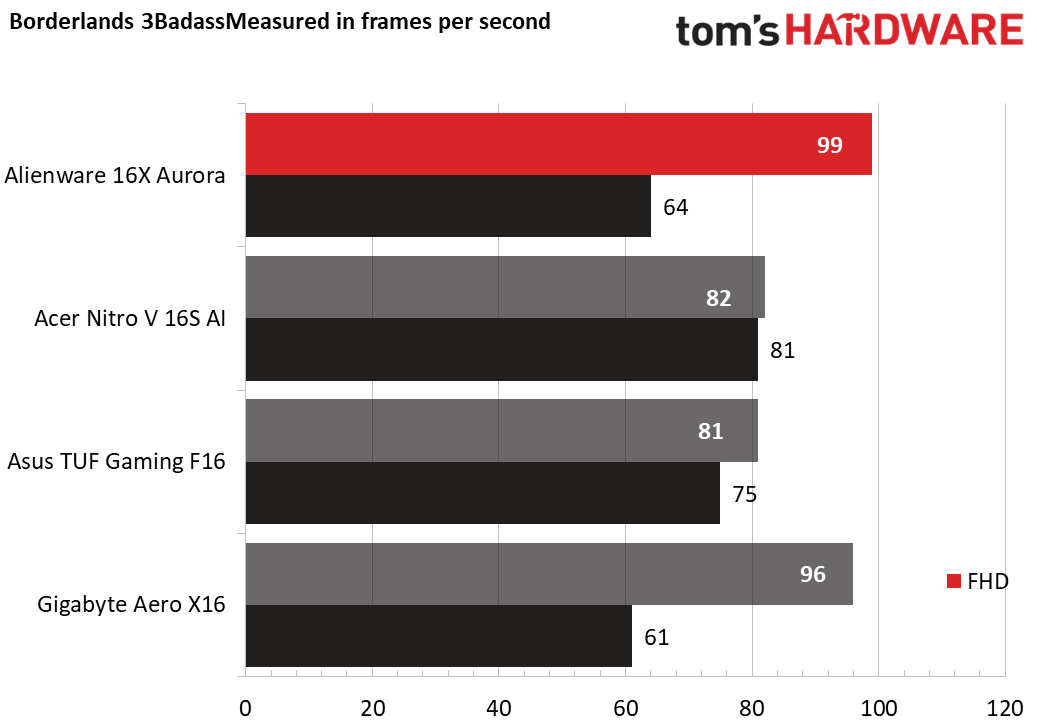
Asus ROG Strix Scar 18 (2026)
Tom's Hardware
Asus ROG Strix Scar 18 (2026)
Tom's Hardware

The vibrant Aura Sync lightbar around the base of the laptop also demands attention, as does the RGB-lit Republic of Gamers logo on the lid. Both are configurable with customizable lighting and patterns in the Armoury Crate app.

The lid also has a special feature called AniMe vision, a diagonally scrolling marquee of text via LEDs shining through holes in the lid backing. (This is extremely similar to the AniMe Matrix that debuted on the Zephyrus line years ago.) There are several preconfigured versions of the Republic of Gamers logo, and you can add your own text effects. Layered effects are possible and don’t always produce the desired effect — I had a “raining” effect enabled at the same time as my text, and the text was almost impossible to make out.
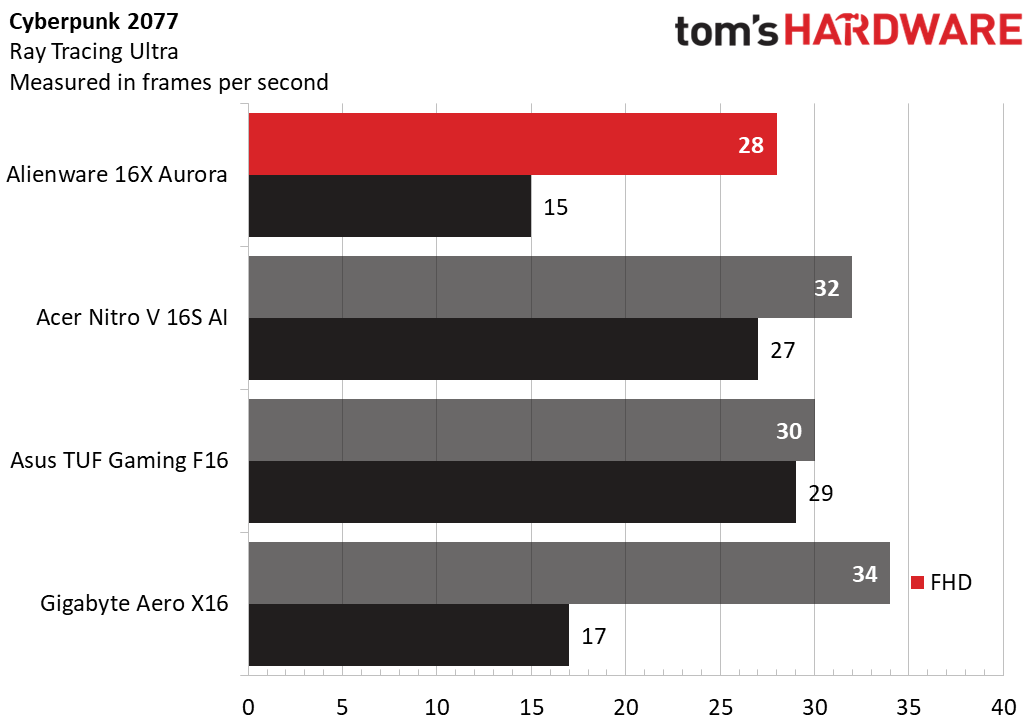
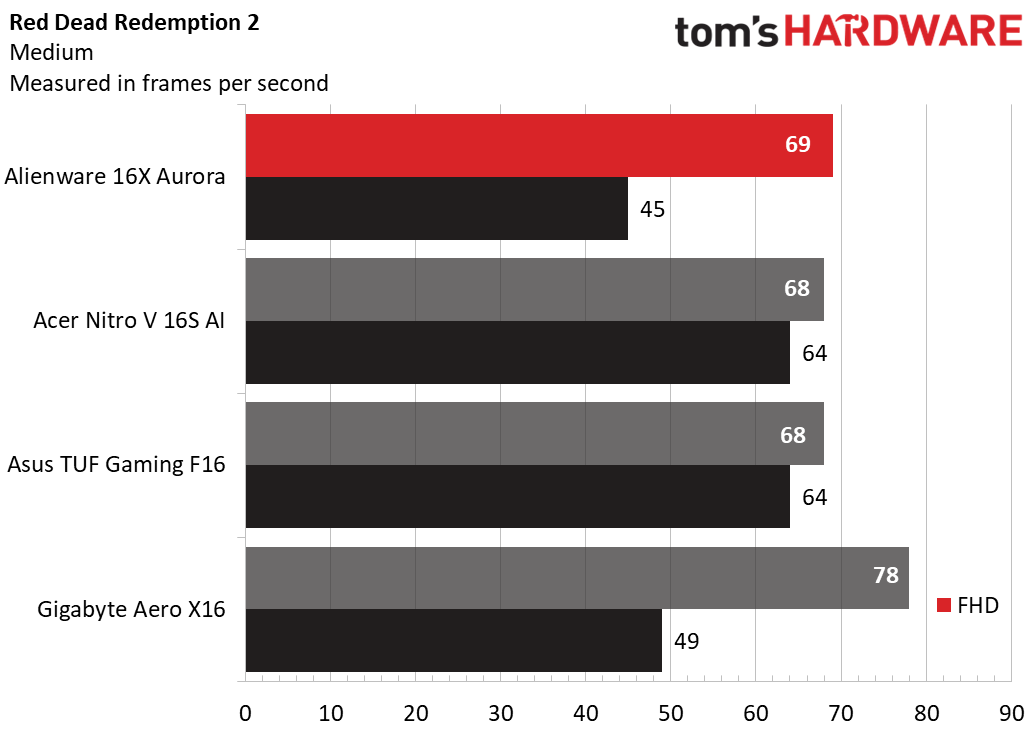
The bottom line is that the Scar 18 couldn’t do anything more to look like a gaming laptop – it is designed to be seen. Build-wise, it’s a solid machine, showing minimal flex no matter how I handled it. Only the lid is metal, with the rest of the construction thick plastic.

Connectivity is thoroughly modern: two Thunderbolt 5 (USB-C) and three USB-A 3.2 Gen 2 ports, HDMI 2.1, an audio combo jack, and 2.5 Gbps Ethernet. Internally, it offers Wi-Fi 7 and Bluetooth 5.4 from an Intel BE200 networking card. The power connector is proprietary for the 450 W power brick.

Asus ROG Strix Scar 18 (2026)
Tom's Hardware
Asus ROG Strix Scar 18 (2026)
Tom's Hardware

Specifications

CPU

Intel Core Ultra 9 290HX Plus

Graphics

Nvidia GeForce RTX 5090 (24GB GDDR7, 1,597 MHz boost clock, 175 W maximum graphics power)

Memory

32GB DDR5-6400 (1x 32GB)

Storage

1TB PCIe 4.0 SSD (HFS001TEJ9X101N)

Display

18-inch, 3840 x 2400, 16:10, Mini-LED, G-Sync, 240 Hz, anti-glare

Networking

Intel Wi-Fi 7 BE200, Bluetooth 5.4

Ports

2x Thunderbolt 5, 3x USB 3.2 Gen 2 Type-A, HDMI 2.1, 3.5 mm combo audio jack, 2.5 Gbps Ethernet

Camera

FHD IR

Battery

90 WHr

Power Adapter

450 W (proprietary connector)

Operating System

Windows 11 Home

Dimensions (WxDxH)

15.71 x 11.73 x 1.38 inches (39.9 x 29.8 x 3.5 cm)

Weight

8.16 pounds (3.7 kg)

Price (as configured)

$4,999.99

Gaming and Graphics on the Asus ROG Strix Scar 18 (2026)

We tested the ROG Strix Scar 18 in flagship form, featuring a Core Ultra 9 290HX Plus processor, RTX 5090 graphics card (175 W maximum graphics power), and 32GB of RAM. This is top-of-the-line gaming technology, though with one misstep: single-channel RAM. This might affect its performance as we’re about to see. The Task Manager confirms that only one SO-DIMM slot was used.

Asus ROG Strix Scar 18 (2026)

(Image credit: Tom's Hardware)

I put the Scar 18 through its paces playing 007: First Light at 3840 x 2400 with all detail settings maxed out. At first, this proved too demanding – I saw 26 to 32 frames per second (FPS) in most scenes. Enabling DLSS more than doubled the frame rate – I saw around 70 FPS or better, and the game was supremely playable.

Our comparison lineup includes Alienware’s 16 Area-51 (RTX 5080), MSI’s Raider 16 Max HX (RTX 5090), and Razer’s Blade 18 (RTX 5090). All laptops use a Core Ultra 9 290HX Plus and have GPUs rated for 175 W like our Asus. Their native screen resolutions, however, are different: Alienware and MSI are 2560 x 1600 while Razer has a unique dual-model display supporting both 1920 x 1200 and 3840 x 2400.

Asus ROG Strix Scar 18 (2026)
Tom's Hardware
Asus ROG Strix Scar 18 (2026)
Tom's Hardware
Asus ROG Strix Scar 18 (2026)
Tom's Hardware
Asus ROG Strix Scar 18 (2026)
Tom's Hardware
Asus ROG Strix Scar 18 (2026)
Tom's Hardware

The Scar 18 was competitive across the board at 1200p, typically a few FPS ahead of the Alienware but a few FPS behind the MSI and particularly the Razer.

Bumping the resolution to 4K, the Scar 18 trailed the Razer in most games – the delta was at or almost 10% in Shadow of the Tomb Raider, Far Cry 6, Cyberpunk 2077, and F1 23. (Red Dead Redemption 2 was the exception.) While those numbers won't make the difference between playability and unplayability, the price of these laptops makes it difficult to overlook.

Differences versus the Razer aside, the Scar 18 still demonstrates ample performance for gaming at 4K in most of the games we tested, though not all – it averaged only 21 FPS in Cyberpunk 2077 on ray tracing ultra, indicating that it won't be possible to play every game at maximum detail settings.

We stress test gaming laptops running 15 loops of the Metro Exodus stress test at RTX settings. During the test, the Scar 18 averaged 141 FPS with minimal variance between runs, starting at 141.5 FPS and finishing at 141.1 FPS. The Core Ultra 9 290HX Plus CPU averaged 4.59 GHz on its P-cores and 2.58 GHz on its E-cores while the RTX 5090 had an average boost clock of 1.98 GHz.

Productivity Performance on the Asus ROG Strix Scar 18 (2026)

We tested the Scar 18 with a Core Ultra 9 290HX Plus CPU, 32GB of RAM, and a 1TB PCIe 4.0 SSD. Not including a PCIe 5.0 drive seems like a missed opportunity at this price, though Razer does the same thing.

Asus ROG Strix Scar 18 (2026)
Tom's Hardware
Asus ROG Strix Scar 18 (2026)
Tom's Hardware
Asus ROG Strix Scar 18 (2026)
Tom's Hardware

In Geekbench 6, the single-core numbers between these laptops were almost indistinguishable as we might expect given they all use the Core Ultra 9 290HX Plus, though the Scar 18’s multi-core score of 17,629 points significantly trailed the others, which all scored over 20,000 points.

The Scar 18 landed middle of the road in our 25GB file transfer test, averaging 2,042.69 MBps, putting it ahead of the MSI (1,357.93 MBps) and Razer (1,670.53 MBps) but behind the Alienware (2,738.9 MBps).

The Scar 18 also proved competitive in our 4K-to-1080p Handbrake transcoding test, completing it in two minutes and 11 seconds to lead the Alienware (2:24) but trail the MSI (1:51) and Razer (2:01).

Display on the Asus ROG Strix Scar 18 (2026)

The Scar 18’s “Nebula” HDR display is its crowning feature. With a 3840 x 2400 (4K) resolution, mini-LED backlighting with 2,000 dimming zones, a 240 Hz refresh rate, and Nvidia G-Sync, this is quite advanced.

Tweaking is required to get this display to perform as intended, and it’s not simple. Out of the box, HDR is disabled, the refresh rate is capped at 120 Hz, and G-Sync is unavailable since Nvidia Optimus, which dynamically switches between the CPU’s integrated graphics and the RTX 5090, is enabled. To unlock maximum performance, the GPU must be put in “Ultimate” mode in Armoury Crate, which is effectively a MUX toggle that disables the integrated graphics. A restart is required for this to take effect. G-Sync, the 240 Hz refresh rate, and a special feature called “Extreme Low Motion Blur” (ELMB) then become available. The latter is aimed at esports players– it manipulates the pixels so that they turn off when switching colors, theoretically eliminating blur. (More on this in a moment.)

Those aren’t the only settings you’ll need to know about. You can toggle the mini-LED backlighting control between one zone, multi-zone balanced, or multi-zone strong. These settings produce very different images – one-zone provides the deepest contrast, multi-zone balanced is the dimmest but evens out the contrast to make dark scenes appear brighter, and multi-zone strong is the brightest and most vibrant. I stuck with the latter for nearly everything.

ELMB only works in one-zone mode without HDR. I tested it using the Blur Blusters UFO Test. It clearly made a difference – in the 240 fps scrollbar, the UFO looked crisp moving across the screen. Disabling ELMB caused it to become blurry, making it harder to see details. This feature can really matter for competitive esports.

But wait, there are even more settings! Armoury Crate includes many color modes through a feature called GameVisual — racing, scenery, RTS/RPG, fps, cinema, eyecare, vivid, and e-reading. On top of that, it also provides color temperature and gamut settings.

Then there’s the question of HDR. To get that working, it must first be enabled in the Windows Settings app. Back in Armoury Crate, you’ll find GameVisual, color temperature and gamut settings, Extreme Low Motion Blur, and mini-LED backlighting settings are no longer available. That’s the trade-off.

Complicating all this is that the settings I just mentioned are in different places in Armoury Crate. Some are in the display section, while others require going into the Devices section, selecting the Scar 18, and making changes there. It’s not straightforward, and those that simply use this laptop out of the box without tweaking won’t get the best visual experience.

After much experimentation, I played 007: First Light in GPU Ultimate mode, G-Sync enabled, a 240 Hz refresh rate, and True Color HDR enabled through Windows. The picture left little to the imagination – colors seemed to pop off the screen and the 4K resolution provided exquisite detail right down to the patches on Bond’s uniform. HDR effects from muzzle flashes and explosions were dazzling in dark environments.

When I watched Zootopia 2, I switched off HDR and used SDR multi-zone strong. Colors looked exquisite, and brightness was borderline excessive in a darker room. Bright objects like lamps almost seemed overexposed, but they weren’t – the display was simply that bright, and colors were so saturated that I found it hard to look away.

Asus ROG Strix Scar 18 (2026)

(Image credit: Tom's Hardware)

The Scar 18’s numbers are from its default out-of-the-box display settings. In color coverage, its 77.9% DCI-P3 coverage was last in the group – Alienware's OLED screen achieved 93.7% — but is still high enough to create vibrant-looking colors. Its 428.2-nit peak brightness was mid-pack, brighter than the Alienware's 368.6 nits but well back from Razer's 538 nits.

Also shown in our charts are the multi-zone strong settings, which produced 584.6 nits of brightness, with parts peaking at 625 nits. Enabling HDR, we measured an astounding 1,124 nits at 10%, 1,090 nits at 40%, and 943 nits at 100%. If you're looking for one of the brightest laptop displays around, the Scar 18 ranks high on the list.

Keyboard and Touchpad on the Asus ROG Strix Scar 18 (2026)

The Scar 18’s keyboard is great for gaming – the keys require enough actuation force that resting your fingers on WASD or the arrow keys won’t produce accidental presses. Key travel is communicative in the sense your fingers know exactly when a key is at the top or bottom of the stroke. The bright RGB backlight is sharp and easy to see.

Asus ROG Strix Scar 18 (2026)

(Image credit: Tom's Hardware)

The keyboard is less ideal for productivity. The tactile feel is rather lifeless, though I still managed 126 words per minute with 99% accuracy in my usual MonkeyType run. Layout-wise, a two-thirds-size number pad on an 18-inch laptop is a miss – there’s plenty of space to make it full-size. Additionally, the arrow key cluster isn’t separated out, resulting in no right Ctrl key, and there are no dedicated Home, End, Page Up, or Page Down keys. Asus does, however, provide five dedicated macro keys, a rarity on any laptop. These are configurable in the Armoury Crate app.

Asus’ mechanical touchpad is excellent, with an expansive surface and a smooth but fingerprint-resistant surface coating. Its clicking action is quiet.

Audio on the Asus ROG Strix Scar 18 (2026)

The Scar 18’s quad-speaker array delivers a decent, if not remarkable, audio experience. In 007: First Light, soft details like the footsteps of approaching enemies were easy to pinpoint, thanks to the expansive soundstage – there’s plenty of room to separate the speaker placement on a laptop this large. Bass is muted, though, resulting in explosions and gunfire that don’t stir up as much excitement as they could.

In Phil Collins’ “Don’t Lose My Number,” high hats on drum hits were sharp but missed low-end bump. Switching to the Chainsmokers’ “Summertime Friends,” I also noted the lack of bass, though the vocals were crisp. The overall sound signature is on the hollow side, but that can be sharpened up using the Atmos Detailed equalizer in the Dolby Access app. None of the equalizers made up for the lack of bass, though. Volume levels are also moderate – I found myself pushing at least 80% volume for most situations.

Upgradeability of the Asus ROG Strix Scar 18 (2026)

Getting inside the Scar 18 couldn’t be easier – simply slide the latch below the palm rest, slide the entire bottom panel forward, and lift it away. You don't even need tools.

Upgrade possibilities include two M.2 slots, two SODIMM slots, and the battery.

Asus ROG Strix Scar 18 (2026)
Tom's Hardware
Asus ROG Strix Scar 18 (2026)
Tom's Hardware

Battery Life on the Asus ROG Strix Scar 18 (2026)

Our battery test consists of web browsing, running OpenGL tests, and streaming videos with the screen at 150 nits while connected to Wi-Fi.

Asus ROG Strix Scar 18 (2026)

(Image credit: Tom's Hardware)

One minute shy of the five-hour mark, the Scar 18 demonstrates respectable battery life for an 18-inch gaming laptop. The Razer lasted half an hour longer (5:31) and the MSI Raider (8:34) clearly does a better job conserving power, but the Scar 18 did outperform the Alienware (3:33) by several hours.

Heat on the Asus ROG Strix Scar 18 (2026)

We measure the surface temperatures of gaming laptops while running the Metro Exodus stress test. Peak temperatures were 91 degrees Fahrenheit on the keyboard between the G and H keys, 90 F on the touchpad, and 108 F on the underside near the cooling vents. Internally, the Core Ultra 9 290HX Plus averaged 66 Celsius while the RTX 5090 ran at 64 C.

The laptop’s fans are well-behaved for daily use. Though fan noise increases while gaming, I had no trouble hearing footsteps and distant conversations in 007: First Light using the built-in speakers.

Webcam on the Asus ROG Strix Scar 18 (2026)

Asus’ FHD webcam has the minimum resolution expected on a modern laptop. The picture looks soft and washed out. Highlights aren’t handled that well – a window in the background appeared blown out – and I had trouble making out details on my face from just a few feet away. Gamers who value visual quality will want to invest in an external webcam.

Software and Warranty on the Asus ROG Strix Scar 18 (2026)

Asus includes a useful software bundle, starting with the familiar Armoury Crate. This app provides component monitoring, a macro editor, game library, an exhaustive amount of display settings, and lighting settings via Aura Sync and AniMe Vision. Accessing some settings is unintuitive since you need to go to the Device section and select the laptop. There you can access Windows key and Touchpad toggles and several display settings, including panel overdrive (240 Hz refresh rate). Most settings can be saved in profiles.

The MyAsus app is more generic. In addition to diagnostics and system updates, it provides a battery care mode, microphone noise cancelation, and networking preferences that allow prioritizing traffic to games or other apps.†

The Scar 18 also works with Asus’ GlideX app to share content across devices, including phones and tablets.

Asus includes a standard one-year warranty.

Configurations

Asus offers two Scar 18 configurations with only the GPU different between them – model G835LWG-DB96 uses an RTX 5080 for $4,299.99 while our review model, G835LXG-DB96, steps up to the RTX 5090 for $4,999.99. All other components are the same: a Core Ultra 9 290HX Plus processor, 32GB of RAM, a 1TB SSD, and the 18-inch mini-LED display.

Pricing is slightly higher than Razer’s Blade 18 with the RTX 5080 – it was $4,099 at this writing. Razer runs $5,399 with the RTX 5090, but that price also includes a 2TB SSD.

Bottom Line

The Scar 18 is an undeniably impressive machine that goes all-in on visuals. Its mini-LED “Nebula” display looks breathtaking when properly configured, producing exceptional brightness. The AniMe scrolling marquee, dedicated macro keys, and easy serviceability also elevate its appeal.

However, when it comes to performance, the Scar 18’s single-channel RAM and lack of a PCIe 4.0 SSD are significant shortcomings on a $4,999.99 machine. Several of our gaming benchmarks and multi-core CPU performance showed meaningful dips against Razer’s Blade 18. Additionally, while its display is brilliant, the maze of settings required to unlock its potential means it doesn’t provide the best experience out of the box.

Overall, the Scar 18 is a formidable and visually stunning laptop with plenty of power and one of the best displays you’ll find in a laptop. It simply doesn’t perform consistently enough to displace the Blade 18 as our top recommendation among elite 18-inch gaming laptops.

Lenovo ThinkPad X1 Carbon Gen 14 Aura Edition review: A masterclass in mobility and usability

2026年7月5日 21:10

Lenovo’s ThinkPad X1 Carbon Gen 14 (starts at $2,032; $2,217.30 as tested) enters the laptop market with the poise of a veteran. This series has spent years at the top of the ultralight business stack and shows no sign of slowing down. Light and refined as ever with Intel’s “Panther Lake” silicon and equipped with a class-leading keyboard, OLED display, and enterprise-ready tech, it’s every bit the flagship it’s intended to be. That said, consumer models like Dell’s XPS 14 have also raised the bar, so whether the ThinkPad X1 Carbon’s refinements keep it ahead of the pack remains to be seen.

Design of the Lenovo ThinkPad X1 Carbon Gen 14

The ThinkPad X1 Carbon Gen 14 may have received a refresh, but its design principles remain unmistakable. Squared edges, matte black surfaces, and functional lines keep it faithful to the lineage that IBM established long ago. The webcam notch is the quickest visual cue that this is a current-generation model. Lenovo’s only real design flourish is the colorful X1 badge on the lid for this flagship; lesser ThinkPads simply have the brand name.

Lenovo ThinkPad X1 Carbon Gen 14
Tom's Hardware
Lenovo ThinkPad X1 Carbon Gen 14
Tom's Hardware

At just 2.15 pounds, the ThinkPad X1 Carbon feels unrealistically light, to the point that I wondered if the unit I received was hollow. Rest assured, there’s a real computer inside, and the build quality is excellent. The outsides are made mostly of lightweight magnesium, with precise fitment and a premium feel. True to the product name, carbon fiber is used, mainly in the lid cover and its internal frame. Rigidity is just average, though; the palm rest and surrounding deck feel solid, but the chassis flexes more than I expected. The lid, however, is impressively stiff, and the hinges are precisely tuned for one-handed opening.

Measuring 12.3 x 8.49 x 0.6 inches, the ThinkPad X1 Carbon has a similar footprint but is much lighter than the 3.4-pound Apple MacBook Pro 14-inch and the three-pound Dell XPS 14.

Port selection is decent for an ultraportable, with HDMI 2.1, two Thunderbolt 4 (USB-C), and a headphone jack on the left and another Thunderbolt 4 and a USB-A port on the right. Intel wireless networking provides Wi-Fi 7 and Bluetooth 5.4. Cellular WAN is available.

Lenovo ThinkPad X1 Carbon Gen 14
Tom's Hardware
Lenovo ThinkPad X1 Carbon Gen 14
Tom's Hardware

Lenovo ThinkPad X1 Carbon Gen 14 Specifications

CPU

Intel Core Ultra 7 355

Graphics

Intel Graphics

Memory

32GB LPDDR5X-7467

Storage

512GB PCIe 4.0 SSD

Display

14-inch, 2880 x 1800, OLED, non-touch, 120 Hz VRR

Networking

Intel BE201 Wi-Fi 7, Bluetooth 5.4

Ports

3x Thunderbolt 4 (USB-C), USB-A, HDMI 2.1, headphone

Camera

5MP IR

Battery

58 Whr

Power Adapter

65 W, Type-C

Operating System

Windows 11 Pro

Dimensions (WxDxH)

12.3 x 8.49 x 0.6 inches (313 x 216 x 15 mm)

Weight

2.15 pounds (0.98 kg)

Price (as configured)

$2,217.30

Productivity Performance on the Lenovo ThinkPad X1 Carbon Gen 14

We tested the ThinkPad X1 with a Core Ultra 7 355 processor, 32GB of RAM, and a 512GB PCIe 4.0 SSD. This “Panther Lake” processor features four Performance and four Low Power Efficiency (LPE).

For performance comparison, we included the Apple MacBook Pro (14-inch, 10-core M5; $2,349 as tested), Asus Zenbook Duo (Core Ultra X9 388H; $2,299.99), and the Dell XPS 14 (Core Ultra 7 355; $1,699.99). These are all premium systems that you might consider if you’re cross-shopping consumer models. The Apple and Asus use significantly stronger processors, though the ThinkPad X1 Carbon and the XPS 14 can be equipped with the Core Ultra X-series to compete in that tier if you're willing to spend even more.

Lenovo ThinkPad X1 Carbon Gen 14 Aura Edition
Tom's Hardware
Lenovo ThinkPad X1 Carbon Gen 14 Aura Edition
Tom's Hardware
Lenovo ThinkPad X1 Carbon Gen 14 Aura Edition
Tom's Hardware
Lenovo ThinkPad X1 Carbon Gen 14 Aura Edition
Tom's Hardware

On the cross-platform Geekbench 6 benchmark, the ThinkPad X1 Carbon’s single-core score of 2,635 points matched the XPS 14, an expected result considering they both use the Core Ultra 7 355, but the ThinkPad trounced it in multi-core, with 11,107 points to Dell’s 7,964. Neither machine proved a match for Apple’s M5, particularly in single-core. With both Apple and Asus scoring over 17,000 points in the multi-core portion, their processors are clearly in a different league.

The ThinkPad X1 Carbon finished our 4K-to-1080p video transcoding test in 6 minutes and 12 seconds, more than 30 seconds quicker than the XPS 14 but not competitive with the Asus (4:22) and MacBook Pro (3:31).

Last, the ThinkPad X1 Carbon completed our 25GB file transfer test with an average transfer rate of 1,256.31 MBps, well behind the Asus’ 1,531.3 MBps and not anywhere close to the MacBook Pro’s leading 1,917.35 MBps.

To stress test productivity laptops, we run 10 loops of Cinebench 2026. The ThinkPad X1 Carbon scored 2,581 points in the first loop and stayed within the 2,500-to-2,600-point range for the remaining loops, demonstrating stable performance. The P-cores ran at an average clock of 3.73 GHz while the LPE-cores ran at 3.46 GHz.

Graphics on the Lenovo ThinkPad X1 Carbon Gen 14

We run 3DMark Steel Nomad to gauge raw graphics horsepower. Scoring 596 points, the Intel Graphics inside the ThinkPad X1 Carbon are adequate for basic use but little else. The Arc B390 integrated chip in the Asus’ Core Ultra X9 proved far more robust, leading the group with 1,483 points, followed by the MacBook Pro with 1,122 points.

Lenovo ThinkPad X1 Carbon Gen 14 Aura Edition

(Image credit: Tom's Hardware)

Display on the Lenovo ThinkPad X1 Carbon Gen 14

Our ThinkPad X1 Carbon uses the 2880 x 1800 OLED panel, an upgrade over the base 1920 x 1200 IPS screen. It produces memorable visuals no matter what you’re viewing. In Dune: Part One, I noted the brilliant white sands of the desert and the inky depths of space. Disney’s Zootopia showed its deep, vibrant color that kept me watching longer than I intended. The anti-glare surface does a commendable job of reducing glare. This panel doesn’t support touch, but you can option touch versions of both the 1920 x 1200 IPS and OLED panels.

Lenovo ThinkPad X1 Carbon Gen 14 Aura Edition

(Image credit: Tom's Hardware)

The ThinkPad X1 Carbon’s numbers leave little doubt that it has an excellent display. Its color coverage – 82% of DCI-P3 and 115% of sRGB – were within a percentage point of the MacBook’s, just shy of Asus’ 87% and 123%, and ahead of the Dell’s 71% and 101%. Its 473-nit peak brightness is impressive considering it uses an OLED panel, which are often close to or just shy of 400 nits.

Keyboard and Touchpad on the Lenovo ThinkPad X1 Carbon Gen 14

The ThinkPad X1 Carbon maintains Lenovo's standard for excellent input devices. The keyboard feels more cushioned than my older ThinkPad X13 yet still provides plenty of key travel for engaging feedback – my fingers intuitively knew when I reached the top and bottom of the keystroke. Keystrokes sound slightly rubbery, with less clack than my older ThinkPad, but still pleasant. The keyboard deck is rock solid and doesn't flex. Highly visible white backlighting makes typing in the dark a breeze.

Lenovo ThinkPad X1 Carbon Gen 14

(Image credit: Tom's Hardware)

The layout is highly intuitive, with an inverted-T arrow cluster, dedicated Home/Page Up/Page Down/End/Delete keys, and a programmable F12 shortcut key. The power button at top right is also a fingerprint reader. Classic ThinkPad users will notice Lenovo switched to the mainstream left Ctrl and Fn key arrangement, but they can be swapped in the Vantage app.

The ThinkPad X1 Carbon touchpad that we tested is mechanical, but a haptic version is available as a no-cost option on customized models. The pad's top-hinged design works reliably and delivers a firm, satisfying click. The three buttons above the pad couple with the classic TrackPoint pointing solution in the middle of the keyboard. ThinkPads are the only laptops that have them anymore.

Audio on the Lenovo ThinkPad X1 Carbon Gen 14

I listened to my test audio tracks multiple times on the ThinkPad X1 Carbon since the speakers sounded that good – who would have thought a business laptop could so easily double for entertainment?

In William Black & Luka's "Bleed 4 U", I heard crisp vocals, well-separated instruments, and detailed, impactful bass -- this setup didn't skip a beat or distort in any way when the drops hit.

The Atmos Detailed preset in the Dolby Access app (its default setting) evened out the soundstage for a clearer tone. I switched to the Detailed preset to sharpen the drum hits and vocals in a vinyl rip of "Shattered Dreams" by Johnny Hates Jazz, which also didn't show any distortion even at maximum volume. The realistic volume limit is around 80%, after which the setup doesn't get audibly louder. This setup is easily loud enough for personal listening.

Upgradeability of the Lenovo ThinkPad X1 Carbon Gen 14

User-upgradeable components in the ThinkPad X1 Carbon are limited to its M.2 2280 SSD and battery pack; models with WAN can also have that module upgraded. Access through the bottom panel is straightforward – four captive Philips-head screws loosen it, then the clips need to be popped along the back edge, which were snugger than I thought. Lenovo maintains an excellent hardware maintenance manual and even provides a video walkthrough on YouTube.

Lenovo ThinkPad X1 Carbon Gen 14
Tom's Hardware
Lenovo ThinkPad X1 Carbon Gen 14
Tom's Hardware

Lenovo advertised a 9/10 iFixIt score, citing that the keyboard, daughter I/O board, and USB-C ports are also customer replaceable.

Battery Life on the Lenovo ThinkPad X1 Carbon Gen 14

The ThinkPad X1 Carbon lasted 13 minutes and 10 seconds in our battery test, which consists of web browsing, running OpenGL tests, and streaming videos with the screen at 150 nits while connected to Wi-Fi.

Though not a leading time – the Zenbook Duo lasted 14:23 with one screen active while the MacBook Pro went for 18:14 – it’s still an impressive showing considering it uses an OLED panel. Dell’s XPS 14 lasted an astounding 20:41, but that’s with the IPS screen; equipped with an OLED screen and more powerful processor, it lasted only 12:23 (not shown in the charts), and that’s with a 70 Wh battery whereas the ThinkPad X1 Carbon’s is rated for just 58 Wh.

Lenovo ThinkPad X1 Carbon Gen 14 Aura Edition

(Image credit: Tom's Hardware)

Heat on the Lenovo ThinkPad X1 Carbon Gen 14

During our 10-loop Cinebench 2026 stress test, the ThinkPad X1 Carbon's surface temperatures peaked at 72 degrees Fahrenheit on the touchpad, 94 degrees between the G and H keys, and 106 degrees on the underside. Internally, the Core Ultra 7 355 averaged 91 degrees Celsius across all cores.

Webcam on the Lenovo ThinkPad X1 Carbon Gen 14

This ThinkPad's 1440p webcam produces an impressively sharp and well-lit picture. I could make out the wood grain on a door about 10 feet away and even the individual hairs on my cat who was looking over my shoulder. Bright lights, like windows and lamps, were properly exposed, and didn't cause my person to be underexposed. The webcam includes an IR sensor for facial recognition and the security of a sliding privacy shutter.

Software and Warranty on the Lenovo ThinkPad X1 Carbon Gen 14

Lenovo’s main app is Commercial Vantage, a hub for support access, system updates, and user settings. Those settings include battery smart charging, OLED power settings (taskbar, background, and display dimming), Fn/Ctrl key swap, F12 user shortcut key configuration, and keyboard backlighting brightness. Some settings have moved out of this app into Windows Settings, such as presence detection and display color temperature.

Vantage also provides access to the Aura Edition’s special Smart Modes: Working, Gaming, Creating, Entertainment, Meeting, and Learning. The system automatically switches between the modes depending on the user’s activity. These modes are a combination of settings, some of which are or aren’t enabled for a given mode: auto-prompt VPN (launches a configured VPN client), attention timer (a time limit where notifications are silenced, with a default of 30 minutes), distracting domains (automatically blocks popular social media sites), Wi-Fi fencing (only connects to wireless networks that you designate “safe”), Dolby Audio (sets the mode to Voice, Movie, Music, and so on), and microphone noise canceling mode and listening range. If you move between different environments, like an office to a crowded café, you could tweak the settings and get some usefulness out of this, though I wouldn’t consider it an essential selling point.

As for other apps, Lenovo Smart Share lets you share content from your phone, such as photos, and assists connecting Bluetooth devices.

The ThinkPad X1 Carbon comes with a one-year minimum warranty with mail-in service, though preconfigured models often include three years with onsite coverage. Coverage and service plans are available up to five years with accidental damage protection.

Lenovo ThinkPad X1 Carbon Gen 14 Configurations

We tested a midrange ThinkPad X1 Carbon Gen 14 Aura Edition with a Core Ultra 7 355 processor, Intel Graphics, 32GB of memory, a 512GB SSD, and a non-touch OLED display, retailing for $2,217.30.

The starting model is $2,032 at this writing, though Lenovo’s frequent sales can change the price. CPU options begin with the Core Ultra 5 335 and top out with the vPro-enabled Core Ultra 7 365. Models with the Core Ultra X7 are also supposed to be available but I didn’t see them on Lenovo’s site at the time of writing. Memory is available in 16GB, 32GB, or 64GB configurations depending on the processor. The base 1920 x 1200 IPS display can be upgraded to a 2880 x 1800 OLED panel, with either panel available with touch, though only OLED offers a 120 Hz refresh rate. A privacy screen option only comes in 1920 x 1200 display.

Bottom Line

Lenovo’s ThinkPad X1 Carbon Gen 14 delivers everything that a flagship ultraportable should. Its featherweight chassis, best-in-class keyboard, vibrant OLED display, and competent everyday performance make it an ideal fit for professionals or prosumers who take their work with them. It even doubles as a surprisingly capable entertainment machine thanks to its impressive speakers.

While consumer rivals like Dell’s XPS 14 offer similar performance, the ThinkPad X1 Carbon remains the productivity go-to because of its superior keyboard, broader port selection, and enterprise-ready options like vPro and WAN availability. For those willing to accept a thicker and heavier machine and use macOS, Apple’s 14-inch MacBook Pro remains the performance benchmark in this category.

Overall, the ThinkPad X1 Carbon Gen 14 remains an impeccable blend of portability, polish, and practicality, a mix that earns it a place among our recommendations.

HP OmniBook Ultra 14 review: Potent Snapdragon performance, great endurance, premium pricing

2026年7月3日 21:34

Qualcomm has steadily iterated on its Arm SoC efforts in the Windows space and made further gains with the launch of the Snapdragon X platform.

Now we’re seeing a wave of new systems using Qualcomm’s Snapdragon X2 series of Arm processors, and the HP OmniBook Ultra is the latest to take a bow. Our review unit is powered by a new flagship Snapdragon X2 Elite (X2E-90-100) SoC, paired with a generous 64GB of memory and a capacious 2TB SSD, and features an all-new chassis design.

The OmniBook Ultra proved to be a top contender in performance benchmarks and is a great all-around system, but about that price…

Design of the HP OmniBook Ultra 14

Our OmniBook Ultra 14 review unit arrived with an entirely new design language compared to the Ryzen AI 9 HX 375-equipped system that I tested in 2024. This year’s design features a more angular look and is finished in a color that HP calls “Stone Blue.” The edges of the forged aluminum-alloy chassis are highly polished to a mirror-like finish. It has a decidedly more upscale appearance compared to its predecessor, although the overall quality feels the same (which is to say, excellent).

HP OmniBook Ultra

(Image credit: Tom's Hardware)

Upon opening the OmniBook Ultra, you’ll notice “OmniBook Ultra” printed vertically along the forward right palm rest of the keyboard deck. “OmniBook” is printed on the chassis, while the Ultra is actually engraved with the same polished finish as the chassis edges. A massive 5.4 x 3.4-inch trackpad sits at the center of the deck, while the keyboard is directly above, with the keys finished in dark “stone blue” plastic. One thing of note: the fingerprint reader integrated into the power button on the 2024 model is missing this time around.

The 14-inch display has tiny bezels on the left and right, and thicker ones along the top and bottom. The bottom bezel also features “HP” branding in the middle. The display is covered with a glossy glass, which does wonders for improving image vibrancy but tends to increase reflections.

HP OmniBook Ultra
Tom's Hardware
HP OmniBook Ultra
Tom's Hardware
HP OmniBook Ultra
Tom's Hardware
HP OmniBook Ultra
Tom's Hardware
HP OmniBook Ultra
Tom's Hardware
HP OmniBook Ultra
Tom's Hardware

I complained about the fussy USB-A port on the previous-generation OmniBook Ultra, which was partially covered by a spring-loaded door. This time, HP just ditched the USB-A port entirely and replaced it with another USB-C port. As a result, the new OmniBook Ultra has a single USB-C port and a 3.5 mm jack on its left side, and two USB-C ports on its right side. None of the ports support Thunderbolt, although they do feature USB Power Delivery 3.1, DisplayPort 1.4, and a 40 Gbps signaling rate.

The OmniBook Ultra measures 12.25 x 8.49 x 0.42 inches and weighs 2.81 pounds. The Asus Zenbook A16 is just a hair heavier at 2.87 pounds, while the 13-inch MacBook Air is a smidge lighter (2.7 pounds). The previous generation OmniBook Ultra tips the scales at 3.4 pounds.

HP OmniBook Ultra 14 Specifications

CPU

Qualcomm Snapdragon X2 Elite X2E-90-100 (5 GHz, 18 cores)

Graphics

Qualcomm Adreno Graphics (integrated)

NPU

Qualcomm Hexagon, up to 85 TOPS

Memory

64GB LPDDR5x-9523 onboard

Storage

2TB M.2 PCIe Gen 5 NVMe SSD

Display

14-inch, 2880 x 1800, OLED, 120 Hz, Multi-touch

Networking

Qualcomm FastConnect 7800 (Wi-Fi 7), Bluetooth 5.4

Ports

3x USB4 Type-C, 3.5 mm headphone jack

Camera

5MP IR

Battery

70 WHr

Power Adapter

65W, USB Type-C GaN charger

Operating System

Windows 11 Home

Dimensions (WxDxH)

12.25 x 8.49 x 0.42 inches

Weight

2.81 pounds (1.27 kg)

Price (as configured)

$2,879.99

Productivity Performance on the HP OmniBook Ultra 14

The OmniBook Ultra is among the first laptops we’ve tested to use the new Snapdragon X2 Elite SoC (up to 5.0 GHz clock speed, 18 cores), with the first being the Asus Zenbook A16. As we learned in our review of the ZenBook A16, the Snapdragon X2 Elite is a strong performer, and it’s made even more potent by the inclusion of 64GB of LPDDR5x-9523 in our review unit, paired with a 2TB PCIe 5.0 SSD.

The Snapdragon X2 Elite also includes an integrated Hexagon NPU, which delivers up to 85 TOPS of compute performance.

The OmniBook Ultra made a strong showing in the Geekbench 6 CPU benchmark, securing a single-core score of 3,942, putting it in second behind the MacBook Air with its M5 SoC (4,168). The ZenBook A16 wasn’t far behind with 3,807. Looking at multi-core performance, the ZenBook A16 jumped up in the lead with 22,733 compared to 20,075 for the new OmniBook Ultra. The new OmniBook Ultra was also well ahead of the Ryzen AI 9 HX 375 model (2,846 single-core, 14,838 multi-core).

HP OmniBook Ultra
Tom's Hardware
HP OmniBook Ultra
Tom's Hardware
HP OmniBook Ultra
Tom's Hardware
HP OmniBook Ultra
Tom's Hardware

HP has opted for a PCIe 5.0 SSD on the OmniBook Ultra, and our review unit came in at a healthy 2TB of capacity. The laptop dominated our 25GB file transfer test, delivering 2,620.91 MBps compared to 1,924.84 MBps for the second-place MacBook Air.

The Snapdragon X2 Elite in the OmniBook Ultra again flexed its muscle in our Handbrake test, which involves transcoding a 4K video file to 1080p. Here, the OmniBook Ultra completed the task in 2 minutes and 11 seconds, putting it just three seconds behind the ZenBook A16. Both the AMD-equipped UltraBook Ultra and the MacBook Air took well over 4 minutes to complete transcoding.

We run Cinebench 2024 through ten loops to stress-test ultrabooks. The first run delivered the highest score at 1,099. The subsequent runs fell short of that high mark, settling between 920 and 950 towards the end of the test. The 12 Prime cores averaged 4.03 GHz, while the 6 Performance cores averaged 3.05 GHz.

Display on the HP OmniBook Ultra 14

HP is using a 14-inch 2880 x 1800 display on the OmniBook Ultra, and it, like many in this segment, is an OLED panel. The panel has a 120 Hz refresh rate and a glossy finish. However, with the brightness cranked to the max, stray reflections were hardly noticeable.

I used the OmniBook Ultra to watch about half an hour of Marvel’s Thunderbolts on Disney Plus, and spent a good chunk of time watching the San Antonio Spurs blow the biggest lead in an NBA championship series via Sling TV. In both instances, the display looked great with accurate colors and excellent contrast.

In our testing, the OmniBook Ultra covered 87% of DCI-P3 and 122%of sRGB, placing it at the top of the rankings among the assembled laptops. Maximum brightness measured crested 400 nits, specifically hitting 414 nits. While impressive for an OLED display, the ZenBook A16 (429.4 nits) and MacBook Air (458.8 nits) were brighter still.

HP OmniBook Ultra

(Image credit: Tom's Hardware)

The display on the OmniBook Ultra is multi-touch-capable, and I had no trouble navigating the Windows interface or using swiping gestures. However, reaching out to touch the screen isn't a natural movement for me, and it isn’t very ergonomic. I was perfectly fine using the humongous trackpad.

Keyboard and Touchpad on the HP OmniBook Ultra 14

The OmniBook's keyboard is full-size and backlit, and the lattice-free keys themselves felt good under my fingers. There’s no clickiness to the keys, and you’ll hear a gentle, low “thud” as you type along. There’s plenty of key travel, and I was comfortable typing on the keyboard for an extended period of time. My only complaint concerns the half-height up and down arrows squeezed between the full-size left and right arrows.

HP OmniBook Ultra

(Image credit: Tom's Hardware)

Using my trusty keyhero.com typing benchmark tool, I managed 87 words per minute with 97 percent accuracy. This was roughly equivalent to what I scored with the keyboard on the previous-generation model.

Complementing the keyboard is a haptic touchpad measuring a large 5.4 x 3.4 inches. It’s a haptic touchpad that provides a satisfying “click” no matter where you press on its surface. While some top-hinged touchpads require additional force to register a click as you move towards the top of the mousing surface, there are no such limitations on the OmniBook Ultra.

Audio on the HP OmniBook Ultra 14

The OmniBook Ultra 14 features quad downward-firing speakers on the underside near the front of the chassis. The speakers sounded excellent, with little to no distortion at higher volume levels (80% and higher), and were loud enough to fill my home office.

I played a wide variety of music, ranging from Steve Wonder’s keyboard-heavy and soft vocals on Superwoman from 1972 to the ear-splitting screaming and electric guitars of Linkin Park’s Lying from You, from the band's early 2000’s sophomore album.

Interestingly, no sound utilities are installed by default to tune the speakers further.

Upgradeability of the HP OmniBook Ultra 14

Hopping inside the OmniBook Ultra is incredibly easy – there are only four screws to remove from the bottom panel, which is at least half as many as you’ll typically find on a thin laptop.

HP OmniBook Ultra
Tom's Hardware
HP OmniBook Ultra
Tom's Hardware

Once the bottom panel is removed, there’s not much that’s replaceable. The battery is at least easily accessible, with four screws securing it and one cable connecting it to the motherboard. You also have access to the PCIe 5.0 SSD, which sits beneath a heat shield. That’s about it when it comes to upgrades for the OmniBook Ultra.

Battery Life on the HP OmniBook Ultra 14

Our OmniBook Ultra 14 review unit came powered by a 70 WHr battery, which is topped off using a 65-watt GaN USB-C charger. Our battery life test includes web browsing, video streaming, and WebGL tests, with the display set to 150 nits.

HP OmniBook Ultra

(Image credit: Tom's Hardware)

We were able to extract 13 hours and 27 minutes out of the OmniBook Ultra, exceeding the runtime of the ZenBook A16 with the same Snapdragon X2 Elite chip by 3 hours. It also outlasted its predecessor by over half an hour. The only laptop that stood in its way was the MacBook Air, which lasted an impressive 15 hours and 28 minutes.

Heat on the HP OmniBook Ultra 14

Heat output on the OmniBook Ultra was measured while running our Cinebench 2024 stress test. The keyboard measured around 95 degrees Fahrenheit between the G and H keys, while the hottest part of the laptop was the bottom rear near the exhaust vents, at 118 F.

HP OmniBook Ultra
Tom's Hardware
HP OmniBook Ultra
Tom's Hardware

The touchpad stayed cool to the touch at 77 degrees, the ambient temperature in the room at the time.

While we usually mention CPU temperatures in this section, HWInfo, in its current iteration, does not provide the specific values we need for reporting.

Webcam on the HP OmniBook Ultra 14

HP has included a 5MP webcam on the OmniBook Ultra, which has IR capabilities to support Windows Hello biometric authentication. Like the previous generation, the image quality was decent, but not segment-leading.

My face and shirt looked slightly blurry, and my skin tones were "off." This performance would be passable for a laptop costing in the $1,000 to $1,500 range. But for a laptop with an MSRP of nearly $2,900, it's a tough pill to swallow. The Lenovo Yoga Slim 7i Aura Edition I recently tested, with an MSRP of $1,700, had a far better onboard webcam.

Software and Warranty on the HP OmniBook Ultra 14

HP loads plenty of its own utilities on the OmniBook Ultra, which seems a bit excessive. There’s an HP app that provides limited system information and access to HP’s online store to purchase accessories. There’s also HP Documentation, HP Energy Star (lets you purchase Energy Star-compliant appliances… why?), HP Privacy Settings, HP System Event Utility, and HP TV+. Finally, there’s Find My HP by Absolute, which allows you to track/locate, remote lock, and remote wipe your laptop.

And of course, there’s also the usual Windows bloat in the form of app links to Booking.com, Dropbox, and various other services. And we can’t forget McAfee, which is always an instant delete when I set up a new PC for friends and family.

The OmniBook Ultra comes with a 1-year manufacturer's warranty.

HP OmniBook Ultra 14 Configurations

There are several prebuilt versions of the OmniBook Ultra with Snapdragon X2 Series chips, the cheapest starting at $1,249.99. It features a Snapdragon X2 Plus processor, a 512GB PCIe 5.0 SSD, 16GB of RAM, and a 14-inch 1920 x 1200 OLED display.

The next prebuilt system comes with a Snapdragon X2 Elite processor, 32GB of RAM, a 1TB SSD, and a 2880 x 1800, 120 Hz OLED display for $2,399. For an extra $300, you get the same specs with a 2TB SSD.

Finally, our review configuration can only be obtained through the “Customize and Buy” option, which gives you a wide pricing range to play with. It has the Snapdragon X2 Elite processor, 64GB of RAM, a 2TB SSD, and a 2880 x 1800 OLED display, priced at $2,879.99.

Bottom Line

HP has built a solid foundation with the OmniBook Ultra and the Snapdragon X2 Elite SoC. Our review unit came fully loaded, with 64GB of memory and a capacious 2TB SSD. The ultrabook excelled in our productivity benchmarks, including a stellar run on our storage test. In addition, its battery endurance was only topped by the 13-inch MacBook Air. The laptop also has a beautiful 120 Hz 3K OLED panel and comes standard with a Wi-Fi 7 radio.

HP OmniBook Ultra

(Image credit: Tom's Hardware)

On the other hand, the biggest knock against our particular unit is the price: nearly $2,900 is a tough pill to swallow for an ultrabook, primarily due to its lofty memory and storage configurations. However, if you go light on options, you can dramatically lower that price. If you go light on the options, you can opt for a Snapdragon X2 Elite chip, 32GB of RAM, 512GB SSD, and a 3K OLED display for $1,719.99, or add a 1TB SSD for an additional $120.

At that price, the OmniBook Ultra makes a lot more sense and would help us overlook the lack of Thunderbolt ports and the so-so webcam.

HP has slashed $1,300 off this colossal 5080 gaming laptop for July 4 — 34% discount gets you 32GB of RAM and 24-core Arrow Lake mobile gaming for $2,499

Gaming laptops are harder and harder to find at good prices thanks to the ongoing AI component crisis, but this HP Omen Max discount in honor of July 4 is pretty excellent. Right now at HP, you can save $1,300 on this Omen Max 16-inch beast with an RTX 5080, Intel Core Ultra 9 275HX, 32GB of RAM, and a 1TB SSD.

Check out this HP laptop deal

The headline spec on this laptop is the RTX 5080 GPU. Even though it's only the mobile version, it still packs 16GB of VRAM and 7,680 CUDA cores, which should make light work of pretty much every title at the 2560 x 1600 resolution you'll be playing.

Get an HP Omen Max laptop with an RTX 5080 GPU, Intel Core Ultra 9 275HX, a 1TB SSD, and 32GB of RAM, all packed into a 16-inch chassis with 2560 x 1600 240Hz display. View Deal

While we haven't reviewed this exact spec, the Omen Max 16 with RTX 5090 scored well in our HP Omen Max 16 laptop review. It is a little on the heavy side, but the aluminum enclosure gives it a premium look and feel. As you can see from our Geekbench testing, productivity performance beats out rivals with the same CPU in both single- and multi-core testing. That CPU is Intel's Core Ultra 9 275HX, a capable 24-core processor with 8 performance cores and boost clocks of up to 5.4GHz.

HP Omen Max 16
Tom's Hardware
HP Omen Max 16
Tom's Hardware
HP Omen Max 16
Tom's Hardware

The display here is IPS rather than OLED, but you'll still get up to 240Hz refresh rates and 500 nits of brightness.

Other noteworthy features include 32GB of RAM, which is becoming increasingly rare in this economy due to the impact of AI on PC components. The 1TB SSD is Gen 4, so it should be plenty quick enough for gaming and workloads. You also get speedy Ethernet and Wi-Fi 7, as well as two USB-A ports, HDMI 2.1, and a 3.5 mm headphone jack.

For your troubles, you'll also get a copy of the new LEGO Batman: Legacy of the Dark Knight, a nice addition to any Steam library. As mentioned, this 34% discount is part of HP's July 4th sale, so there's no guarantee as to how long this deal will last. If you're interested, act sooner rather than later.

If you're looking for more savings, check out our Best PC Hardware deals for a range of products, or dive deeper into our specialized SSD and Storage Deals, Hard Drive Deals, Gaming Monitor Deals, Graphics Card Deals, Gaming Chair, Best Wi-Fi Routers, Best Motherboard, or CPU Deals pages.

The bifurcated laptop landscape of Computex 2026 – MacBook Neo competitors with 8GB of RAM, and expensive Nvidia laptops promising an agentic-focused future of Windows on Arm

2026年7月1日 19:00

With no new GPUs or major mobile CPU platform launches surrounding the show, the laptop announcements at Computex this year fell into two disparate categories, appealing to users with very different budgets. There were devices trying to compete with the MacBook Neo, like Dell’s attractive XPS 13 ($599 to start, with a limited-time student discount) and Qualcomm’s Snapdragon C platform, which promises laptops as low as $300 (we saw it in person in the as-yet-unpriced Acer Aspire Go 15). Both of those, like Apple’s competing Neo, will start with just 8GB of RAM (actually, Acer says “up to 8GB”), thanks to the ongoing AI-driven memory crisis.

On the opposite end of the Computex laptop spectrum, there was, of course, Nvidia’s long-anticipated Windows-on-Arm announcement: RTX Spark Superchip for laptops (formerly N1X), which pairs a 20-core Arm CPU with 6,144 CUDA cores. And since Nvidia and its partners (both laptop makers and Microsoft) are pitching RTX Spark as the agentic computing platform of the future, Spark laptops get all the RAM that portable, local AI PCs could ask for – up to 128GB of LPDDR5X.

A representation of the RTX Spark platform

(Image credit: Nvidia)

The specs sound impressive, but let’s just say I am curious to see how Microsoft and Nvidia’s partnership will implement local agents into Windows 11 in the coming months, and how much useful and intuitive functionality will exist specifically for RTX Spark laptops by the time they actually launch. It’s not like Microsoft has the best track record when it comes to Copilot features, both in Windows and elsewhere. At Build, Microsoft focused on running OpenClaw in Windows with execution containers that create boundaries, such as certain files or programs.

And while we don’t yet know pricing for the RTX Spark laptops, with similarly configured DGX Spark desktops selling for close to $5,000, it’s a safe bet that high-end RTX Spark laptops are going to be well out of the price range of most consumers – although lesser versions based on N1 silicon (and with far less RAM) may slip below the $2,000 mark. While gaming performance on top-end Spark laptops is expected to be roughly similar to an RTX 5070, I suspect pricing will make the platform a tough sell for those primarily interested in gaming, just as it is for AMD’s Strix Halo – and AMD’s x86 silicon doesn’t have the gaming complications that Spark’s Arm CPU will have to navigate.

So it feels like AI developers (and I suppose well-heeled AI tinkerers) will be the primary early adopters of RTX Spark laptops when they begin shipping (this fall, according to Nvidia). By then, we’ll also likely know more about both Qualcomm’s Snapdragon C SoC and Dell’s Intel Wildcat Lake-powered XPS 13 (including how much it will cost to configure it above the baseline 8GB of RAM or with a Panther Lake processor). But as limiting and backward-looking as an 8GB laptop may be in 2026, so far I find these more traditional, more affordable laptops more interesting than RTX Spark – in part because while I don’t know exactly how they will perform, I do know generally what I will and won’t be able to do with them when they arrive.

And given how expensive seemingly everything is these days, it’s nice to see a few companies focused on making things look and feel nice while remaining relatively affordable. It may have taken a big push from Apple and its MacBook Neo. But if Windows wants to remain relevant as a platform, it needs both forward-looking options like RTX Spark and affordable options that still look and feel great, like Dell’s XPS 13. I just wish the latter could happen with more RAM than the laptop I bought in early 2019.

❌
❌