普通视图

发现新文章,点击刷新页面。
昨天以前IT News

Pro-Ukraine group claims it helped hack Russian drone air defense system, shooting down Su-57 in friendly fire incident — Moscow confirms fifth-generation fighter jet crashed in 'technical malfunction'

2026年7月25日 18:30

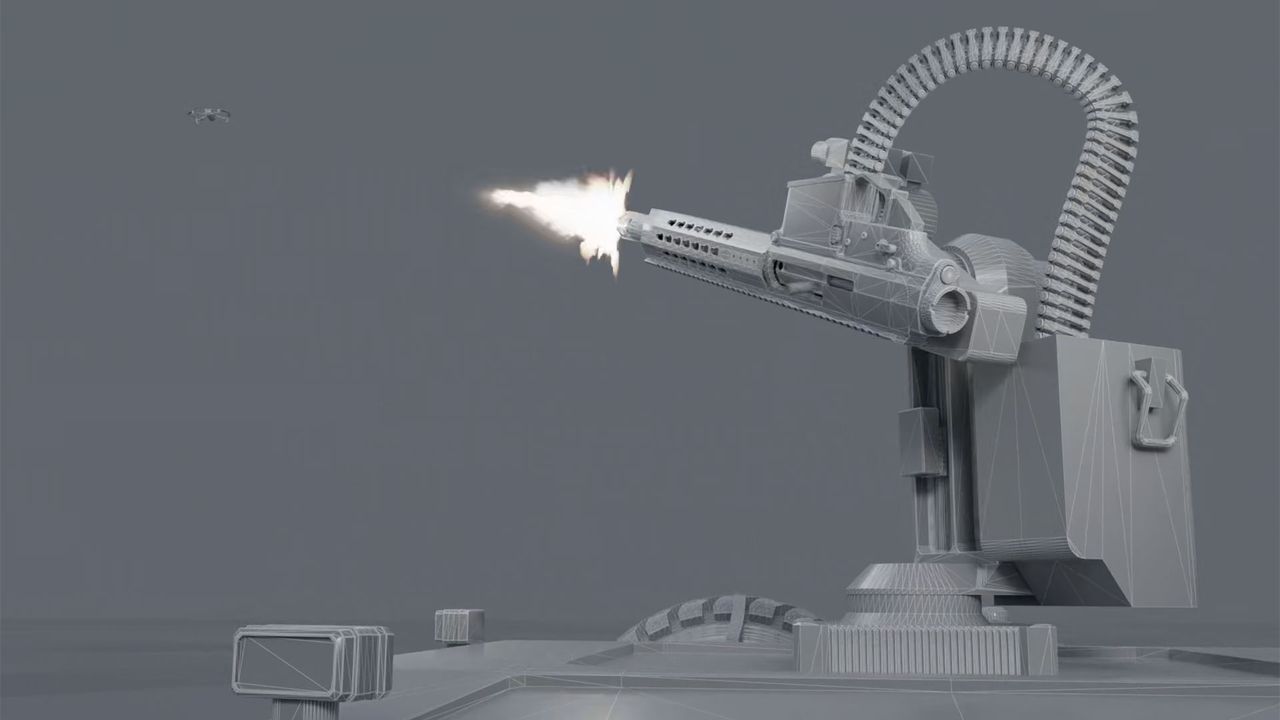
A Pro-Ukraine group claims it helped facilitate a cyberattack on a Russian BARS drone defense system near Moscow, resulting in the shooting down of an advanced Russian fighter jet. The Su-57 stealth fighter crashed spectacularly “during a routine training mission in the Moscow region on Thursday,” say reports published by Russian state media. The pilot ejected safely, and the jet smashed into an uninhabited area. However, what the Russians are characterizing as an accident due to “a technical malfunction,” some Ukrainian open-source intelligence (OSINT) agencies are claiming as successful sabotage.

Ексклюзив InformNapalm. Як російську ППО змусили працювати проти російського Су-57 💥Сьогодні міжнародна розвідувальна спільнота InformNapalm частково розкриває деталі успішної HUMINT+CYBINT-операції, одним із практичних результатів якої стало знищення російського винищувача… pic.twitter.com/2JCHWu6TTSJuly 23, 2026

Russian accident or Ukrainian scalp?

Above you can see that InformNapalm, a well‑known Ukrainian volunteer intelligence collective, claims that the Su-57 was “shot down” by the Russian ‘BARS Moscow’ air defense system. That would indeed be a kind of technical malfunction, as the Russians admit, but InformNapalm says that Ukrainian cyber specialists turned Moscow’s anti-drone shield against the Russian jet. Specifically, in this instance, the Russian anti-drone system shot down the confirmed crashed Su-57 stealth fighter.

The explosive-if-true claim from Ukrainian OSINT comes with a background story. InformNapalm says that it shared “secret documents from the Russian manufacturer of components for this aircraft's systems” last year. These were acquired and leaked by HUMINT and CYBINT operations backed by Ukrainian intelligence services. Additionally, the Ukrainians mounted a combined cognitive and cyber influence operation that affected the operation of the BARS Moscow air defense unit. The purported result was that the drone defense unit set up around Moscow in June shot down the Su-57.

InformNapalm attempts to add veracity to its claims by sharing some less sensitive but still relevant evidence of espionage. The video embedded in the Tweet (above) is purported to be footage from a training range where Russia's BARS Moscow crews were in training to counter Ukraine’s long-range drones. There’s also an intelligence brief excerpt mentioning Russian hardware, software, combat algorithms, and system vulnerabilities.

Russia is thought to only have a handful of these advanced Su-57 aircraft, which can launch Kh-59 and Kh-69 missiles, so efforts put into sabotaging them are high among Ukrainian military priorities. Ukraine has previously targeted and claimed successful strikes against Su-57s sitting on the ground at Akhtubinsk airfield (2024), and Shagol airfield (May this year).

Lockheed Martin unveils counter-drone system that can ‘neutralize up to 50 enemy drones in a single mission’ — sensor-agnostic system uses High Power Microwave to purge enemies from the sky

2026年7月25日 18:00

Lockheed Martin has unveiled a counter-drone system that can “neutralize up to 50 enemy drones in a single mission.” The new Morfius X-Rotor is a ground-launched one-to-many drone-kill system designed to be sent up to neutralize large enemy drone swarms. This reusable and field‑recoverable drone utilizes a high‑power microwave to disable drones without explosives, reducing collateral damage. It boasts a “significantly low cost per kill.”

The MORFIUS™ X-Rotor is a portable, cost‑effective counter‑drone system that can neutralize up to 50 enemy drones in a single mission. Designed for rapid reuse and rapid deployment. pic.twitter.com/J3tvFrgkufJuly 20, 2026

The video shared on social media looks impressive, with a trio of Morfius X-Rotor drones sent into the skies, the video of the target acquisition HUD, and then several microwave blasts. We don’t know whether the video contains any live-action test footage or is just a rendered animation.

The U.S. defense tech company notes that swarms of hostile drones are fast becoming the biggest threat to allied forces on today's battlefields, and this is why the Morfius X-Rotor was created. It also fits into the U.S. Department of War's 2025-2028 Rapid Response Counter-UAS Roadmap.

Lockheed Martin Unveils MORFIUS X-Rotor
Lockheed Martin
Lockheed Martin Unveils MORFIUS X-Rotor
Lockheed Martin
Lockheed Martin Unveils MORFIUS X-Rotor
Lockheed Martin
Lockheed Martin Unveils MORFIUS X-Rotor
Lockheed Martin
Lockheed Martin Unveils MORFIUS X-Rotor
Lockheed Martin
Lockheed Martin Unveils MORFIUS X-Rotor
Lockheed Martin

Lockheed claims the Morfius X-Rotor is also remarkable for being “the only ground-launched, field-reusable airborne HPM system capable of delivering more than 50 drone kills per flight using any command and control system and no dependence on fire control radars.” So, it doesn’t need dedicated radar or guidance sensors to acquire and take down targets, which could be a winning quality in heavy EW environments.

Another feather in this one-to-many drone-kill system’s cap is that it is built on a proven platform of Morfius variants which have been flying since 2017, with recent field tests taking place across several U.S. states. A Lockheed VP sums up that what we see in the video demo represents “a new benchmark for counter-drone capability - delivering a high kill rate while keeping the cost per kill low.”

We have reported on microwave anti-drone and weaponry systems before. Among the former was the ground vehicle-based Epirus Leonidas system, which "neutralized 61-of-61 drones" during a recent live fire trial in Indiana last year. We've also reported on an incredibly powerful 20-gigawatt microwave weapon designed in China, dubbed the TPG1000C, and described as “Starlink’s worst nightmare.”

‘Phantom Twist’ drone spins so fast that it is nearly invisible — flying device adds motion blur to the real world

2026年7月19日 21:27

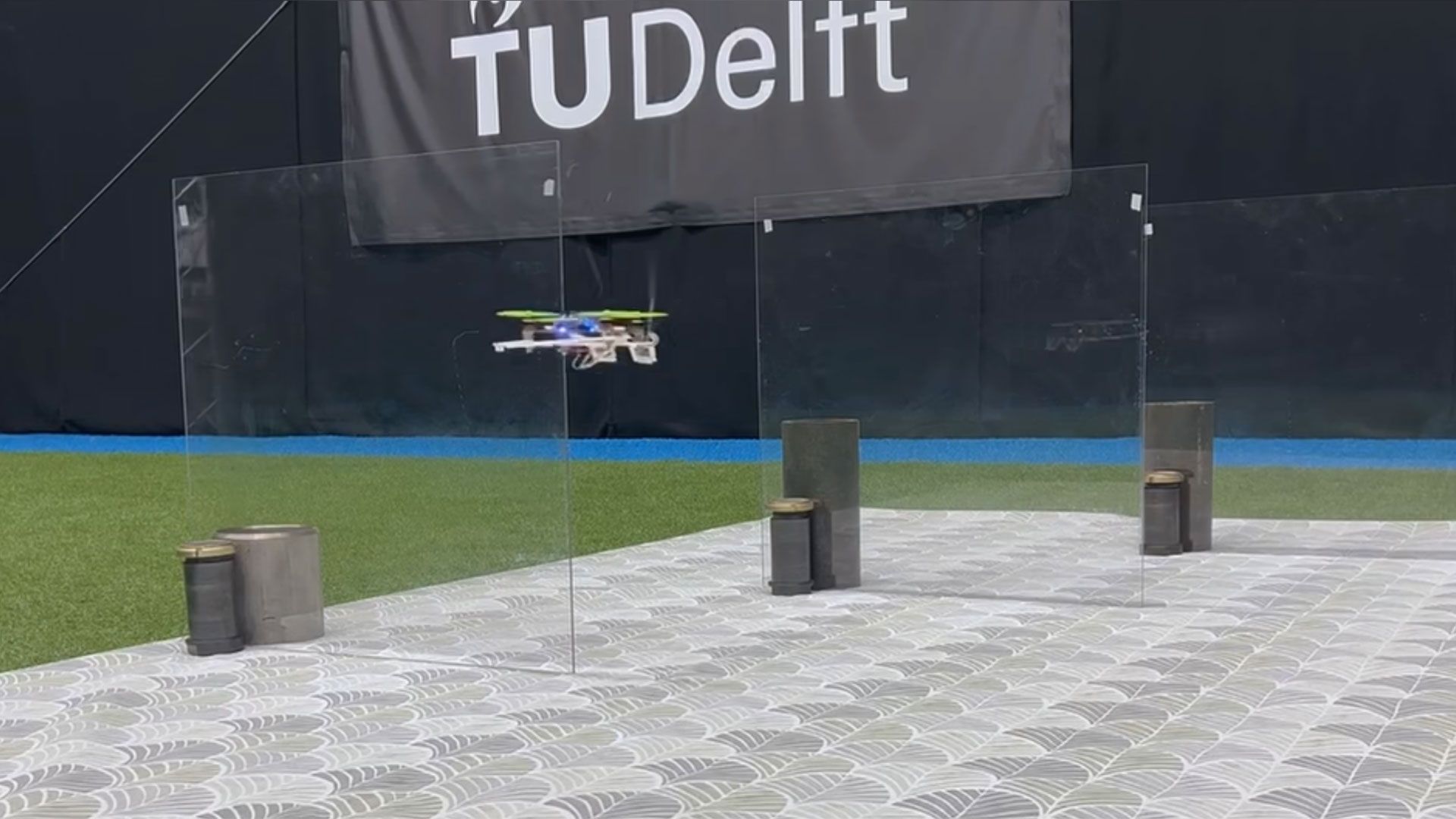
Researchers from Northwestern University in Illinois have built a drone that rotates so fast that it is cloaked by motion blur. The new Phantom Twist drone spins at 25 times per second, which, thanks to a quirk of human vision, makes it appear like a faint smudge in the air. The video below shows it off to great effect, but I hope they can do something about the whiny noise.

The first demonstration of the Phantom Twist took place as part of a Robotics: Science and Systems 2026 presentation on Thursday. “Most efforts to hide drones focus on making them look like their surroundings,” said Northwestern’s Michael Rubenstein, who led the work. “Instead, we asked whether we could design the drone itself around the way humans perceive motion. This idea of low visibility through persistent motion is something few people have explored.”

The stationary photo of the Phantom Twist reveals a rather unique drone design, far removed from the now traditional quadcopter. It has just one motor and one propeller, and while the propeller spins in one direction, and the rest of the drone spins in the opposite direction, explains the Northwestern University blog.

The Phantom Twist invisible drone

The design of the Phantom Twist (Image credit: The Northwestern University blog)

AI was used to refine the design

The researchers tasked a computational model to generate roughly 20,000 drone configurations capable of stable flight. Subsequently, they applied AI and other optimization algorithms to repeatedly rearrange the drones’ major components, including a motor, propeller, circuit board, counterweight and batteries.

After narrowing down the candidates to around 500, the engineers superimposed simulated drones in flight over a hundred real-world backgrounds. A perception model then whittled down the designs based on their visibility scores. According to Rubenstein this entire process was automated, and only “when we were confident that a drone met all our criteria, we built it.” The demonstrated Phantom Twist drone is apparently “10 times less visually perceptible than a conventional quadcopter” according to the researcher’s visibility metrics.

Yes, the team knows that the Phantom Twist drone is rather noisy, and the visual impact of its wires and support rods could be reduced. Thus, work is planned to utilize more transparent materials and / or quieter propulsion systems in upcoming revisions.

Russian drones spotted using screwed-on magnetic compasses as navigation aids — the on-board camera can occasionally tilt down to check bearings if satellite comms are lost

2026年7月19日 20:05

Ukraine, which is fighting a years-long war of attrition against Russian aggression, has seen a lot of combat innovations, especially in drone warfare. But even as modern technologies like Starlink-powered long-range drones and jam-proof fiber optic drones enter the battlefield, troops on both sides are also relying on their own ingenuity and deploying “field upgrades” on their equipment. Just like during the Second World War, when some American tankers welded thick metal plates to increase the armor on their vehicles to counter the feared German Panzers, the Defence Blog reports that Russians are crudely installing $2 magnetic compasses on some Molniya drones to combat electronic warfare.

Система навигации российского беспилотника. Саморезами прикрутили компас, на который смотрит камера, чтобы сверяться с курсом. Аналогов нет. Уверен, в документах пишут: Навигационное оборудование, основанное на принципах магнетизма Земли. pic.twitter.com/DncTH3ff1zJuly 17, 2026

The Molniya is a cheap, medium-range drone that relies on the open-source ExpressLRS radio control system, which lets operators control it from a potential maximum range of up to 62 miles (100 kilometers). Some versions also used Starlink connections to combat the jamming efforts of Ukrainian electronic warfare units, but Ukraine’s requirement to register Starlink units in the country before they can be used has supposedly made this strategy unviable.

The drone can also be equipped with a fiber optic cable, which renders it impervious to any sort of electronic interference. Although this limits the potential range of the Molniya to just 18 miles (30 kilometers), it allows the drone to be more effective as it reduces the chances that the operator will lose control of the unit.

GPS jamming is also a common occurrence in Ukrainian airspace. This means that drone operators could potentially get lost on their way to their targets. Because of this, many frontline Russian units have started crudely installing magnetic compasses on their drones. This navigation tool is typically installed just below the FPV camera, allowing the operator to glance down to confirm their bearings. When combined with other telemetry data, the drone pilot could locate their relative location even without GPS.

One leaked image shows that the compass is just attached to the panel near the FPV camera with five Philips screws, suggesting that this isn’t a factory modification. Some people are mocking the development of this “add-on,” saying that it’s a step backward for the supposedly “advanced” Russian arsenal. But no matter how rough and primitive it looks, the fact that it helps the Russians achieve their missions means that it’s still a cheap, effective, and rather deadly modification.

Autonomous micro-drone achieves first air-to-air insect kill on the way 'towards completely eradicating mosquitoes' — 40-gram unit uses car parking sensors, can eliminate insects at up to 26 feet

2026年7月18日 17:00

A micro-drone designed to locate and eradicate mosquitoes has passed an important milestone. Tornyol Systems shared a video where the eponymous autonomous drone chalked up its first live air-to-air kill. For some reason (perhaps demonstration visibility), the 40g (1.4 ounce) drone’s first confirmed kill on video features a moth. Tornyol boldly claims that the demo shows a significant stride has been made “towards completely eradicating mosquitoes.”

Extremely excited to announce our first air-to-air kill of a flying moth by an autonomous micro-drone. This is a big step towards completely eradicating mosquitoes. pic.twitter.com/UhtNqwXCQIJuly 14, 2026

Tornyol Systems co-founder Alex Toussaint shared the above Tweet, congratulating the engineering team that has worked alongside him on the project. On the company website, there is a mosquito-hostile manifesto laid out, which provides insight into the company’s primary drone development goal.

“Mosquitoes are one of humanity's oldest and worst enemies. They kill more than 700,000 people each year — more than all current wars,” according to the firm’s mission statement. “More than 700 million people contract a mosquito-borne disease each year. They impact many countries, including the West, with thousands of cases of West Nile Virus in the US alone.” It aims to use technology, including this “small, inexpensive, and yet very fast” micro-drone, to “completely eradicate mosquitoes from areas where humans live.”

The underlying motivation of Tornyol Systems first became apparent back at Hackaday Supercon 2024 when Toussaint shared a presentation about How to Detect (and Kill) Mosquitoes With Off-the-Shelf Electronics.

Autonomous micro-drone achieves air-to-air insect kill
Tornyol Systems
Autonomous micro-drone achieves air-to-air insect kill
Tornyol Systems
Autonomous micro-drone achieves air-to-air insect kill
Tornyol Systems

Tornyol's technology

Since those initial presentations, it looks like the tech has been significantly refined and miniaturized. Currently, the platform is dependent on the LeSonar2 phased array sonar base station with 380 smartphone microphones and an Artix-7 FPGA to map the world in 3D.

This feeds the drone enough information to measure 0.1 mm movements and identify mosquitoes through their unique wingbeat signature. The micro-drone is sent commands by a PC, which also leverages “car park assist sensors, and some clever DSP” to seek and kill mozzies up to 8m (~26 feet) away.

We’ve previously reported on ground-based AI-enhanced mosquito zappers, but this is the first time we’ve seen an air-to-air solution. Tornyol says that it is rolling out deployment on embedded hardware “in the next few weeks.” I guess that's removing the need for a PC.

U.S. residents interested in purchasing an autonomous Tornyol drone and base station are being asked to stump up a refundable $100 deposit. Then, there are two payment plans available. Choose a $50-a-month subscription or an “own it forever” $1,100 one-time fee.

Ukraine conducts record drone strike of 2,500km after 12-hour flight — $55,000 unit made of plywood halts operations at Russia's largest gasoline producer

2026年7月15日 17:29

Ukrainian FP-1 drones struck the Gazprom Neft oil refinery in Omsk, Siberia, on July 6 after flying roughly 2,500 km over more than 12 hours, halting operations at Russia's largest gasoline producer, according to a report from UK pub The Telegraph. It was the longest-range Ukrainian drone strike of the war, carried out by an aircraft built around a plywood load-bearing structure, foam wings, and a two-cylinder piston engine, at an estimated cost of $55,000 per unit.

Despite its lightweight structure, the drone managed to cause some pretty severe damage, setting fire to the CDU-10 crude distillation unit per Reuters, which handles 24,580 metric tons of crude per day and accounts for around 38% of the plant's processing capacity. A second unit, CDU-11, responsible for a further 37%, was shut down after network links vital to its operation were damaged. The refinery, which processed 22 million metric tons of crude (about 440,000 barrels per day) in 2024, stopped selling gasoline and diesel on the St. Petersburg International Mercantile Exchange the following day.

The FP-1, built by Kyiv-based Fire Point, is engineered not for sophistication or as cutting-edge drone tech, but for mass production. The airframe uses plywood structural elements and foam wings skinned in fiberglass or carbon fiber, with a twin-boom layout, a roughly five-meter wingspan, and no landing gear. A solid rocket booster launches it from a fixed platform or a truck, and a two-cylinder engine driving a propeller carries it the rest of the way.

The drone's original design range was 1,600 km with a warhead of up to 60 kg. At the Eurosatory defense exhibition in Paris last month, Fire Point showed an upgraded FP-1 with an additional fuel tank integrated into the wing, extending its range to 2,700 km. That variant put Omsk, and most of Russia's refining capacity, within reach. The Telegraph reported that the drones used in the strike were lightened, with lengthened wingspans and enlarged fuel tanks, and that Fire Point co-founder Denys Shtilerman said Ukrainian planners spent more than a week plotting a route around Russian air defenses. Navigation relies on a purpose-built algorithm designed to resist GPS spoofing, with inertial and satellite guidance layered together.

Fire Point produces around 100 FP-1s per day, and the aircraft now accounts for roughly 60% of Ukraine's deep strikes inside Russia, according to company CEO Iryna Terekh. Each drone costs less than a single interceptor missile fired by the multimillion-dollar S-400 and Pantsir batteries tasked with stopping it, and Russia simply can't field enough of those systems to cover a country spanning 11 time zones.

This design takes advantage of Russia's air defense network, which was designed to detect fast, high-flying jets and ballistic missiles, not slow, low-altitude aircraft with small radar signatures. Moscow scrambled Su-57 stealth fighters against the Omsk raid, but several drones still got through. Kyle Glen, an open-source investigator, told The Telegraph that Russia appears to concentrate its defenses around Moscow and St. Petersburg, leaving "almost nothing behind it to stop them" once drones penetrate the outer layer.

Ukraine's General Staff recorded 172 deep strikes last month, up from 85 in February, and Omsk was the sixth major Russian refinery forced to fully or partially shut down since the start of June. Last month, President Volodymyr Zelensky said that a new Fire Point drone can reach targets at 3,000 km, and the company's FP-5 Flamingo cruise missile, carrying a 1,150 kg warhead over the same distance, has begun striking Russian weapons facilities as air defenses thin out.

Electric drone breaks world air speed record at 434 mph, designed for anti-aircraft interceptor roles — German firm convincingly smashed the official 409 mph record, hopes to get stamp of approval from Guinness soon

2026年7月6日 20:39

Quantum Systems Group reckons it has broken the flight speed record for an electric drone. During internal testing last month, the Munich-based firm recorded its Apex Recordhunter drone hitting a top speed of 699 km/h (434 mph) in straight and level flight. That incredible result convincingly outpaces the current world record holder with a recorded top speed of 657.59 km/h (409 mph). However, a Guinness World Record entry is pending, with a formal attempt to crack that achievement expected to take place in the coming weeks, reports ComputerBase (machine translation).

According to the official press release, the Apex Recordhunter drone was developed over the last year and serves as a technology demonstrator for next-gen electrically powered drones. Tellingly, Ukrainian engineers are also working on this project under the auspices of WIY Drones, a branch of Quantum Systems. It will also be attempting record-breaking speed challenges in Ukraine, as the Apex Recordhunter is being assessed for future interceptor drone programs.

Specifically, the WIY Drones plans include record attempts to break speed records for an FPV interceptor drone carrying a 0.5 kg payload, and for an anti-aircraft class FPV interceptor drone. These could well become the Ukrainian answer to the increasingly fast and maneuverable aerial threats that the Russians are sending over the border.

So, we might have a flurry of new drone speed records on the way, and it wouldn’t be a great surprise if the Apex Recordhunter drone pushes past the 700 km/h (435 mph) milestone.

Kiwi speed challengers

The Europeans aren’t the only ‘Recordhunters.’ In May, we reported on another unofficial drone world speed record. Drone builders Aidan and Ben from New Zealand recorded maximum speeds of up to 453 mph (730 km/h) in tests of their Blackbird drone, which leverages exotic sawtooth carbon fiber propeller blades.

Like with the Apex Recordhunter drone, the Blackbird speed record remains unofficial, as they haven’t had a verification that requires a certified independent observer, verified measurement equipment, documentation including a submission, followed by a controlled two-way run.

DARPA plans 30-year endurance nuclear waste batteries to power next-gen drones, says report — project SYMPHONEE aims to harvest Strontium-90 to power persistent military drones

2026年7月5日 18:49

Batteries that can last decades between recharges or renewals are the stuff of tech enthusiast dreams. However, DARPA’s ‘Rads to Watts’ program could bring forth unrivaled portable power, lasting decades, via the development of a new class of radiovoltaic devices. Morgan State University recently won a $3.37M DARPA contract to advance this tech, and a report by Defense One suggests upcoming nuclear waste-powered batteries could last as long as 30 years and power next-gen drones.

Morgan State now has a considerable sum to keep its researchers employed on a project dubbed SYMPHONEE (Strontium-Yttrium Multi-junction PIN-based High-Density Output Nano-system for Extreme Environments). Radioisotope power sources have been used for quite some time in low-power draw applications such as smoke detectors and space systems for decades. However, the new initiative, led by Morgan State and with team members such as Northrop Grumman, PNNL, Project Omega, ARA, and Widetronix, aims to take the tech into the next generation. More specifically, under the auspices of (and with funds from) the 'Rads to Watts' program, they are aiming to build next‑generation radiovoltaic micro‑power systems for extreme environments.

The proposed next-gen power cells make use of radioisotopes extracted from nuclear waste, especially Strontium‑90. Research partner Project Omega has already made some devices and will build the DARPA prototype. We noticed that it has published a promotional video that highlights sea drones with a 10-year battery life, for example. Coordinated by Morgan State researchers, PNNL labs will handle nuclear materials/testing, Northrop Grumman and ARA will provide AI-driven modeling, with Widetronix designing nuclear micro‑generator radiovoltaic converter architectures.

“Our team is pushing the boundaries of radiovoltaic technology, developing high-power, long-life systems that were not previously achievable,” said Professor Michael Spencer, the technical lead for the project. “By integrating advanced materials, device engineering, and nuclear science, we are laying the foundation for a new generation of persistent power systems for extreme environments.”

radiovoltaic battery advances
Project Omega
radiovoltaic battery advances
Project Omega

With this research, development, and fabrication powerhouse assembled, it is hoped a step change will be achieved to boost radiovoltaic micro‑power system power density. The goal is to be able to power persistent autonomous operations in remote or difficult-to-access environments like space, underwater, and contested regions – for decades. A Northrop Grumman rep emphasized the potential of a ‘persistent power source’ becoming available for “next-generation defense systems.” Project Omega is also interested in developing “persistent underwater security systems” – sea drones.

It is also somewhat positive to imagine that substances long considered to be highly undesirable waste products could end up being strategic assets.

Acoustic mapping app uses thousands of networked old Android phones to hunt Shahed drones — crowd-sourced microphone network spots small, low-RCS military targets

2026年6月21日 18:30

A Lithuanian startup developed an Android app that lets verified users monitor the general area for the acoustic signature of Shahed-type drones used by Russia to strike targets and report their approximate location. According to state broadcaster Lithuanian National Radio and Television, the app uses an embedded algorithm to isolate and analyze targets from environmental noise. It reports a possible detection on a public map. With the app running on enough devices, the system could determine the potential location and direction of these drones and warn both civilians and the military of an impending strike.

Shahed-type drones have been widely employed in Russia’s invasion of Ukraine, which is quite effective for its relatively low price compared to other, more advanced missile systems. Ukraine has been taking steps to counter this threat, including requiring users inside the country to register their Starlink units to avoid getting blocked because Russia has been using the service to guide its drones as late as last year. Other nations are experimenting with cost-effective countermeasures, too, including microwave drone swarm killers and man-portable anti-drone laser systems.

What makes these drones deadly is their price — because they’re so cheap, it’s easy for an enemy to launch them en masse and overwhelm defenses. However, if you can catch them far from their targets, they’re quite vulnerable (at least for the older propeller-driven models); even gunners armed with a shotgun or assault rifle seated inside a 50-year-old single-propeller trainer aircraft can reliably shoot them down.

The biggest issue for air defense systems is that these drones are quite small and made of lightweight materials, which gives them a relatively low radar cross-section (RCS). A Shahed-type drone usually measures around eight to 12 feet in length and has a wingspan of around eight feet. Although they could be detected by standard radar systems, their speed and size mean that the radar receiver would also pick up a lot of other clutter, such as birds, making it hard to distinguish relevant targets from background noise. These characteristics, combined with their low flight cruising altitude, mean that ground-based radars have trouble picking them up unless they’re flying relatively close.

However, their low flight path also means that they could easily be heard by observers on the ground. So, if enough people can detect their aural signature and report it to a central database, defense forces could mobilize and engage these threats while they’re still distant from their targets and away from population centers. This is similar to the acoustic mirrors and acoustic locators that militaries used in World War I before the advent of radar, wherein they built massive concrete dishes aimed upward, or used smaller, more portable metal horn arrays, crewed by trained personnel listening in to detect the low-frequency sound coming from aircraft piston engines from far away.

We expect this to be far more accurate, though, because it uses advanced algorithms and thousands of detectors operated by verified users. While using this system alone is probably not enough to accurately detect these drones, pairing it with modern radar systems could make the radar operators’ job far easier, as they would have another data source to confirm whether they’re actually seeing drones on their screens or just a flock of birds.

China unveils man-portable anti-drone laser that can burn through a drone 1,600 feet away in four seconds — backpack-sized 2-kilowatt weapon uses AI for targeting, weighs 55 pounds, and can be carried by a single soldier

2026年6月20日 18:30

Chinese defense supplier Harbin Xinguang Optic-Electronics Technology demo’d two man-portable anti-drone lasers at a Beijing arms expo this week, putting backpack-scale directed-energy hardware alongside the mounted platforms that have so far dominated the space. The Lijian II and Lijian III, shown at the Defence Information Equipment & Technology Exhibition 2026 that opened Tuesday, weigh 30kg (66 pounds) and 25kg (55 pounds), draw around 2 kW, and cost about 2 million yuan (US$295,000) each, according to the South China Morning Post. It also uses AI for targeting.

Each portable unit splits into a laser emitter, an air cooler, and a handheld control terminal, light enough for one or two soldiers to carry. The emitter accounts for about 15kg, and the cooling system for roughly 10kg. Both models have a pitch angle above 90 degrees and reach about 500 meters (1,640 feet). The Lijian III burns through a drone in 4 seconds and needs under 5 seconds to cool before firing again, the company said.

The same line includes a fixed-position model, the Lijian-10G, that draws around 10 kW and reaches 1,200 meters (3,900 feet), but requires a large liquid-cooled box rather than a backpack. Harbin Xinguang said the portable units are "easier to operate and can be quickly deployed and recovered," in comments from a product promoter as reported by SCMP.

Those weight savings, of course, come out of the overall power budget of the laser. At roughly 2 kW, the portable Lijian models sit below the 3 kW-class NI-L3K counter-drone lasers that China showed at DSA 21026 in Malaysia, and far below the heavier directed-energy systems built elsewhere. The U.S. Army is currently testing a vehicle-mounted 20kW LOCUST system on the Oshkosh JLTV platform, and Israel's 100kW Iron Beam became the first high-power laser to enter service late last year. Obviously, those trade portability for the wattage needed to engage longer-range targets.

A 2 kW suits small, low, and slow targets at close range, with a much more favorable cost per shot. Burning down a quadcopter or FPV drone using a laser consumes energy rather than shoulder-fired munitions, which can cost tens of thousands of dollars per round. Zhao said the core technology reached maturity in 2023, as the war in Ukraine reshaped thinking around drone warfare.

Rather troubling is the fact that the Lijian series uses AI to identify targets and engage drones that enter its range, cued by external sensors such as radar. Harbin Xinguang said the weapons have already been placed at some Chinese facilities, including military airfields, and that it’s seeking further orders through the exhibition.

All the specifications come from the manufacturer's exhibition materials and a company representative and haven’t been independently tested.

Ruko U11MINI 4K drone: A pocket-size powerhouse for aerial creators

2025年6月4日 23:00
Photo of Ruko U11mini 4K drone flying over a body of water toward land.

For creators who value portability and performance, the U11MINI 4K drone is a dream come true. It's lightweight but packs advanced features.

(via Cult of Mac - A 24/7 website publishing the latest Apple news, rumors, reviews, how-tos and deals.)

Price drop: Get a 4K drone with dual cameras for less than $65

2024年7月8日 01:15
This 4K camera drone with dual cameras is now under $70 before Black Friday.

Grab this beginner drone with camera (and intelligent obstacle avoidance) and start capturing stunning aerial photos and video.

(via Cult of Mac - Apple news, rumors, reviews and how-tos)

❌
❌